

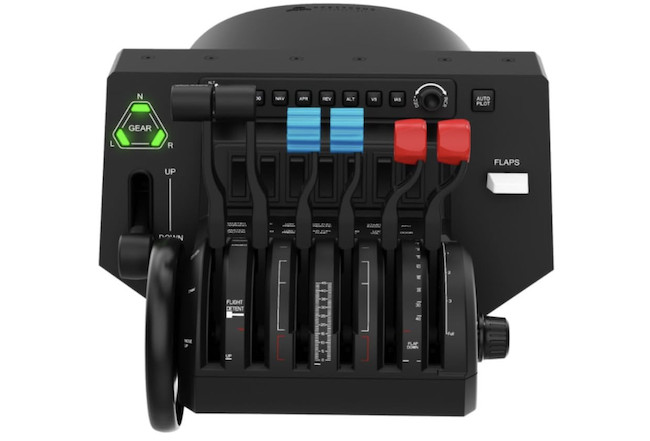
The best flight simulator controls for a Mac in 2026 are the Honeycomb Alpha Flight Controls yoke, Bravo Throttle Quadrant and Charlie Rudder Pedals. Honeycomb explicitly lists macOS and X-Plane support for this range, which makes it a much safer buy for Mac owners than much of the older flight-sim hardware still sold online.
If you want a smaller, more affordable starting point, the Honeycomb Foxtrot Takeoff Kit combines a flight stick and throttle in one compact setup and is also listed as Mac-compatible.
The important change for 2026 is this: do not assume that a controller works properly on a Mac simply because it works on a Windows flight sim. A yoke or pedal set may appear in macOS as a USB device, but that does not guarantee that its configuration app, LEDs, autopilot panel or aircraft profiles will work. This guide prioritises products whose manufacturers currently state Mac compatibility, then explains where older Logitech/Saitek gear still makes sense.
For the software side, see our guide to the best flight simulators for Mac. If you specifically want a stick rather than a yoke, see our guide to the best joysticks for X-Plane on Mac.
How we chose: every main recommendation below has a current manufacturer listing for Mac compatibility and X-Plane support. We have not treated a generic USB connection, an old forum post or a Windows driver as proof that all of a product’s features work on macOS.
Quick Recommendations
| Product | Best for | Why it is a good Mac choice | Main limitation |
|---|---|---|---|
| Honeycomb Alpha Flight Controls | Best overall yoke | Explicit Mac and X-Plane 11/12 support; 180° yoke rotation and integrated switch panel | You still need a separate throttle and pedals for a complete cockpit |
| Honeycomb Bravo Throttle Quadrant | Best throttle quadrant | Explicit Mac support; works with single-engine aircraft through to airliners | Its lights, autopilot controls and aircraft-specific functions need careful in-sim setup |
| Honeycomb Charlie Rudder Pedals | Best premium pedals | Explicit Mac support, Hall-effect sensors and proper toe brakes | Large, heavy and relatively expensive |
| Honeycomb Foxtrot Takeoff Kit | Best compact starter setup | Mac-compatible stick, throttle box and twist rudder in a much smaller footprint | A stick is less authentic than a yoke for general-aviation flying |
| Honeycomb Sierra TPM Module | Best general-aviation throttle | Mac-compatible vernier throttle, propeller and mixture controls, plus trim | Purpose-built for piston/GA aircraft rather than airliners |
| Air Manager | Best Mac-friendly instrument panel | Native macOS desktop app that connects to X-Plane and can use an iPad as a panel | It is a screen-based panel, not a replacement for a yoke or pedals |
Are Flight Simulator Controls Compatible With Macs?
Yes, but compatibility is much more product-specific than it is on Windows.
An Apple Silicon Mac can use USB flight controls, and a modern simulator can map their axes and buttons directly. The key distinction is between:
- Mac-compatible hardware: the manufacturer explicitly lists macOS and the simulator you use.
- Generic USB hardware: it may be detected and can often be manually mapped, but the maker does not promise Mac support.
- Windows-only accessories: these depend on Windows drivers or configuration software, so their lights, displays and switches should not be treated as Mac-compatible.
For a full desktop cockpit, X-Plane 12 is still the safest place to start. It is a current native Mac flight simulator with detailed joystick calibration and assignment controls. Its own developer documentation also notes that Windows, macOS and Linux can identify a controller’s axes differently, so do not assume a Windows profile will transfer cleanly to a Mac.
X-Plane is not the only option. Aerofly FS 4 also has Mac-specific controller settings and lets you assign buttons, switches and axes in the simulator. However, X-Plane remains the better focus if you want a yoke, throttle quadrant, pedals, third-party aircraft and a growing cockpit over time.
Important: Microsoft Flight Simulator is still not a native Mac app. Cloud streaming can be enjoyable with a conventional controller, but it is not the route we would choose when buying a yoke, panel or a multi-device cockpit. For that, use a native Mac simulator and verify the hardware against it before buying. See our guides to Microsoft Flight Simulator on Mac and Xbox Cloud Gaming on Mac if that is the route you plan to take.
1. Honeycomb Alpha Flight Controls — Best Flight Yoke for Mac
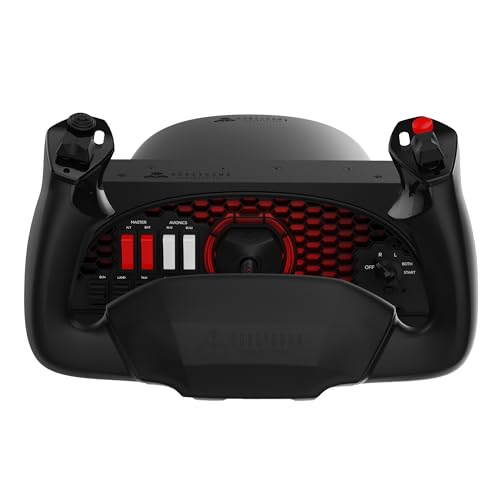
The Honeycomb Alpha Flight Controls is the best flight yoke for most Mac users because Honeycomb explicitly lists PC and Mac compatibility, plus support for X-Plane 11 and 12.
It is a substantial desk-mounted yoke with 180° rotation, a self-centring mechanism, programmable buttons and switches on the handles, plus an integrated starter/switch panel. That makes it much closer to a real light-aircraft setup than a basic joystick and particularly suits Cessna-style flying, instrument practice and airliners.
The Alpha is also a much stronger starting point than the old Logitech/Saitek yoke if you are buying new. It was designed with a modern Mac/X-Plane setup in mind rather than depending on legacy Windows driver software.
Why we recommend it
- Manufacturer-listed Mac and X-Plane 11/12 support
- 180° yoke rotation for more natural aileron control
- Integrated ignition, avionics, master and light switches
- Includes a proper desk-mounting system
- A natural base for adding the Bravo throttle and Charlie pedals later
Watch out for
- It is large: measure the depth beneath your desk before ordering.
- It does not include a throttle quadrant or rudder pedals.
- The Xbox-focused Alpha XPC version is also Mac-compatible, but its Xbox support is not a reason by itself to pay more if you only fly on a Mac.
Best for: anyone building a serious Mac flight-sim setup around X-Plane.
2. Honeycomb Bravo Throttle Quadrant — Best Mac Throttle Quadrant
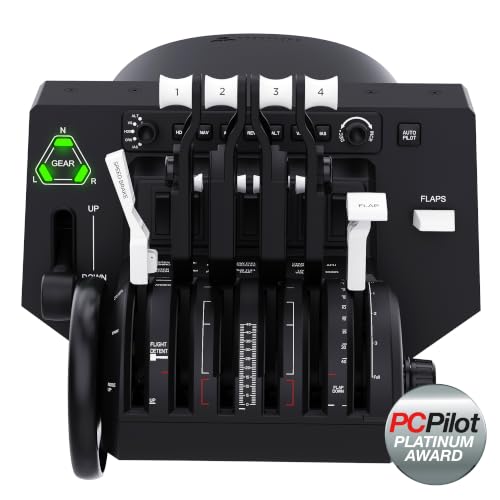
The Honeycomb Bravo Throttle Quadrant is the best companion to the Alpha yoke. Unlike a simple three-lever throttle, it can be configured for single-engine general aviation, twins and four-engine airliners.
It includes interchangeable general-aviation and commercial-aircraft lever caps, six lever positions, a trim wheel, an autopilot section, a flap lever, switches and annunciator lights. Honeycomb lists Mac support and X-Plane 11/12 compatibility, and its downloads page provides a Mac X-Plane package.
That makes it the sensible way to add physical throttles and cockpit controls to a Mac. It is also a better recommendation than buying several legacy Logitech panels separately, because its core controls are part of one current Mac-supported product.
There’s also a cheaper, Honeycomb Bravo Throttle Quadrant Lite that just features throttles for twin engines.
Why we recommend it
- Explicit Mac support and current X-Plane downloads
- Works across a wide range of aircraft types
- Excellent range of physical controls without needing several separate panels
- Includes both GA and airliner-style lever caps
- Mounts neatly below or alongside the Alpha yoke
Watch out for
- Assign every axis and button in X-Plane before your first flight; do not rely on a Windows profile.
- The more advanced lights and autopilot functions can depend on the aircraft and plugin you use.
- It is a premium product, so the simpler Bravo Lite is a better fit if you only need the essentials.
Best for: Mac pilots who want one throttle quadrant that can grow from a Cessna to an Airbus or Boeing cockpit.
3. Honeycomb Charlie Rudder Pedals — Best Premium Rudder Pedals for Mac

The Honeycomb Charlie Rudder Pedals are the best premium choice if you want realistic rudder control and differential toe braking. Honeycomb lists Mac compatibility and uses Hall-effect sensors rather than conventional potentiometers, which should give more consistent input over time.
Rudder pedals make a more noticeable difference than many first-time simmers expect. They improve taxiing, crosswind landings, take-offs and coordinated turns, while toe brakes make ground handling far more natural than a keyboard key or trigger.
The pedals have adjustable tension, adjustable foot angles, a metal construction and both carpet spikes and rubber feet. They are genuinely substantial, so they suit a semi-permanent desk or cockpit better than a setup you put away after each flight.
Why we recommend them
- Manufacturer-listed Mac compatibility
- Hall-effect sensors and adjustable resistance
- Separate left and right toe brakes
- More robust and realistic than entry-level plastic pedals
Watch out for
- They take up considerable floor space and weigh more than basic pedals.
- Honeycomb’s product page should be checked for the latest X-Plane package and profile before you order, especially after a major simulator update.
- If you are still deciding whether flight simulation is for you, buy a yoke or stick first; pedals are the best second or third upgrade.
Best for: committed X-Plane pilots who want realistic ground handling and landings.
4. Honeycomb Foxtrot Takeoff Kit — Best Compact Flight Controls for Mac
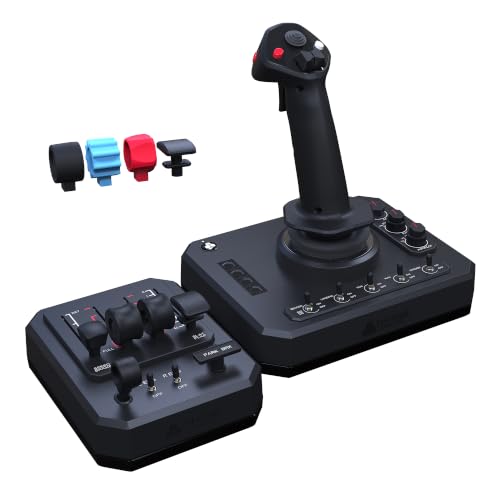
The Honeycomb Foxtrot Takeoff Kit is the best option if you want a complete Mac-compatible control setup without turning your desk into a permanent cockpit.
It combines the Foxtrot Aviation Stick with a compact throttle box. The stick uses 16-bit Hall-effect sensors, has adjustable axis tension and includes a twist-rudder axis, while the throttle box provides four levers and essential cockpit controls. Honeycomb explicitly lists both Mac compatibility and X-Plane 11/12 support.
This is the practical starting point for a MacBook user, anyone flying from a small desk or anyone who prefers a stick-controlled aircraft. The twist rudder means you can begin without separate pedals, then add them later if you find yourself flying regularly.
Why we recommend it
- Compact stick-and-throttle package rather than several separate devices
- Listed as compatible with Mac and X-Plane 11/12
- Hall-effect sensors and adjustable tension
- Twist rudder avoids the immediate need for pedals
- Easier to store than a full yoke, throttle and pedal setup
Watch out for
- A yoke is still the more convincing choice for Cessnas and other light aircraft.
- Twist rudder is convenient, but separate pedals give better control during taxiing and crosswind landings.
- As a recent product, UK availability can vary; check a retailer’s return policy rather than importing without support cover.
Best for: beginners, MacBook users and anyone with limited desk space.
5. Honeycomb Sierra TPM Module — Best General-Aviation Throttle for Mac
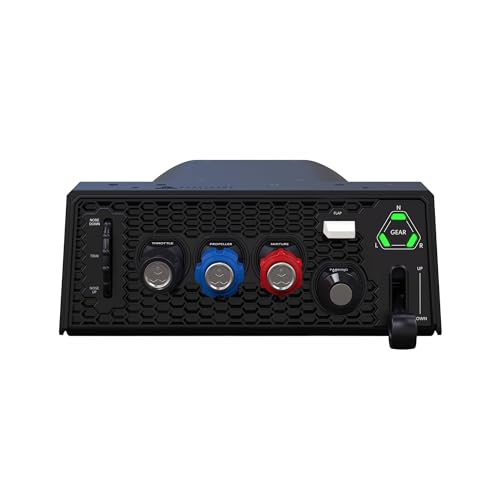
If you mostly fly single-engine piston aircraft, the Honeycomb Sierra TPM Module is a more authentic alternative to a broad airliner-style throttle quadrant.
TPM means throttle, propeller and mixture. The Sierra has three vernier controls, a trim wheel, flap lever, parking brake and landing-gear lever. It is designed for the sort of hands-on engine management used in aircraft such as a Cessna 172, rather than the multiple thrust levers used in an airliner.
Honeycomb lists the Sierra as Mac-compatible and supports X-Plane 11/12. Pair it with the Alpha yoke if your flying is mainly VFR, flight training or general aviation.
Why we recommend it
- Proper GA-style vernier throttle, propeller and mixture controls
- Integrated trim, flap, parking-brake and gear controls
- Explicit Mac and X-Plane support
- A more focused and realistic choice for piston aircraft than the Bravo
Watch out for
- It is a specialist choice, not the best throttle for multi-engine airliners.
- You will still need a yoke or stick, and ideally pedals, for a complete setup.
Best for: Cessna, Piper and other general-aviation flying on a Mac.
6. Air Manager — Best Instrument Panels for a Mac Cockpit
Rather than buying an ageing USB radio or autopilot panel, consider Air Manager. It is a native macOS desktop app that connects to X-Plane and lets you create or run instrument panels on a second display, iPad or another computer on your network.
Air Manager includes ready-made panels and a large instrument library, so it is a flexible way to add a G1000-style display, radio stack or other gauges without filling your desk with hardware that may rely on Windows-only drivers. Its desktop version can also work with supported physical interfaces if you later want to build a more customised cockpit.
It is not a substitute for a yoke, stick, throttle or pedals. Think of it as the Mac-friendly way to add instruments and touch controls after you have bought the primary flight controls.
Why we recommend it
- Runs on macOS and connects to X-Plane
- A flexible alternative to old dedicated USB panels
- Can use a spare iPad or display as a cockpit screen
- Better long-term upgrade path for a custom cockpit
Watch out for
- The desktop edition is paid software.
- macOS does not offer touch input on a normal Mac display, so an iPad or touch-capable second device is the more natural panel surface.
Best for: simmers who want a radio stack, gauges or a second-screen cockpit without relying on legacy Mac drivers.
What About Logitech and Saitek Flight Controls on a Mac?
The older Logitech G/Saitek Pro Flight Yoke System, rudder pedals and panels are still widely available, particularly used or discounted. They can be tempting because they are cheaper than current Honeycomb hardware.
However, we can no longer recommend them for using with Macs.
Logitech’s current material for its Multi Panel and Switch Panel specifies Windows support, and the panel features rely on Logitech software and simulator plugins. That means you should not buy a Radio Panel, Multi Panel, Switch Panel or Instrument Panel expecting all of its LED displays and special controls to work in macOS.
The yoke, throttle and rudder pedals may be detected as generic USB controllers in a simulator and can be manually mapped. That is different from official Mac support. If you find them cheaply, buy only from a seller with a straightforward return option, then test every axis, switch and brake in your chosen simulator before the return window closes.
Our 2026 advice: use older Logitech/Saitek equipment as a budget or second-hand experiment, not as the foundation of a new Mac cockpit. Do not install an old Windows-only Saitek driver on macOS in an attempt to unlock a panel.
How to Set Up Flight Controls on a Mac
The exact labels vary slightly by simulator, but this is the safest process in X-Plane 12:
- Update the simulator first. Use the latest X-Plane 12 release and check the manufacturer’s current Mac download or support page for your hardware.
- Connect one primary controller directly. Start with the yoke or stick before adding every peripheral. This makes it easier to identify an incorrect axis or a USB problem.
- Open X-Plane’s joystick settings. Calibrate each axis and assign pitch, roll, yaw, throttle, propeller, mixture and toe brakes deliberately.
- Check for duplicate assignments. A common cause of strange behaviour is a second device, such as a game controller, still being assigned to pitch, roll or throttle.
- Map a few essential buttons. At minimum, assign trim, brakes, flaps, parking brake, push-to-talk or view controls. Add more only after the core controls work.
- Save the Mac configuration. X-Plane can save a default configuration for a device. Keep it on the Mac instead of importing an untested Windows profile.
- Test in a simple aircraft. A default Cessna is ideal for confirming every axis before you use a complex add-on aircraft with its own profile or plugin requirements.
If a product is recognised but a button or LED does not work, first check the simulator assignment and the manufacturer’s current Mac instructions. Do not assume the controller is faulty, but do not assume a Windows-focused feature is supported either.
USB-C Hubs, Adapters and Power
Most flight controls still use USB-A, USB-C or a supplied mixed USB cable. Before you buy several devices, check the ports on your specific Mac and the computer end of each supplied cable.
For a multi-device setup, a good-quality powered USB hub or dock is sensible. It gives you enough data ports and avoids relying on a string of cheap adapters. This is particularly worthwhile once you add illuminated panels, pedals, a yoke, a throttle and a second input device.
Do not buy a powered hub because you expect it to cure poor simulator performance or the spinning beach ball. It will not. Its job is to provide reliable ports and power for peripherals; X-Plane performance depends far more on your Mac’s graphics capability, settings and the scenery or aircraft you are using.
Which Mac Flight Control Setup Should You Buy?
Choose the setup that matches the way you fly rather than buying an entire cockpit at once.
For a first setup or a small desk: start with the Honeycomb Foxtrot Takeoff Kit. It gives you pitch, roll, rudder and throttle control in a compact package.
For general aviation and flight training: choose the Honeycomb Alpha yoke, then add the Sierra TPM Module and Charlie Rudder Pedals as your budget and space allow.
For airliners and a growing home cockpit: choose the Honeycomb Alpha yoke, Bravo Throttle Quadrant and Charlie Rudder Pedals. Add Air Manager for instruments rather than buying several older USB panels.
For a bargain used setup: a Logitech/Saitek yoke and pedals can be worth trying only if the price is right and you can return them. Treat the panel accessories as Windows-first products, not guaranteed Mac hardware.
FAQ
Do flight yokes work on Apple Silicon Macs?
Yes. The safest choices are yokes whose manufacturer explicitly lists Mac support, such as Honeycomb’s Alpha range. Apple Silicon is not the main problem; the important question is whether the yoke, its configuration software and your chosen simulator all support macOS.
Is X-Plane the only Mac flight simulator that supports external controls?
No. X-Plane 12 is the main recommendation for a full Mac cockpit because of its detailed controller setup and ecosystem, but Aerofly FS 4 also supports controller assignment on macOS. Always check the simulator’s own controller settings and the hardware maker’s Mac support before buying.
Do Logitech/Saitek panels work on a Mac?
Do not count on it. Logitech’s current product information for its panel accessories is Windows-focused. A basic button may be detectable in a simulator, but the displays, LEDs, plugins and configuration tools are not a dependable Mac purchase.
Can I use these controls with Microsoft Flight Simulator on a Mac?
Microsoft Flight Simulator is not a native Mac application. Playing Microsoft Flight Simulator on a Mac via Xbox Cloud is fine for casual controller play, but it is not a dependable basis for a yoke, throttle, pedals and panels. Use X-Plane or another native Mac simulator for a hardware cockpit.
Do I need rudder pedals?
No. A stick with twist rudder or a yoke plus keyboard controls is enough to begin. Rudder pedals are the upgrade that makes taxiing, take-offs, crosswind landings and differential braking feel far more realistic.
Do I need a powered USB hub?
Not for one yoke or stick. It becomes worthwhile when you connect several controls or illuminated panels, especially if your Mac has limited ports. Buy a reputable hub or dock with the data ports your equipment actually needs.
Final Verdict
For a proper Mac flight-sim cockpit in 2026, start with X-Plane 12 and buy hardware that explicitly supports macOS. The Honeycomb Alpha Flight Controls is the best yoke, the Bravo Throttle Quadrant is the best all-round throttle, and the Charlie Rudder Pedals complete a premium setup.
If you have less room or want to start more affordably, the Honeycomb Foxtrot Takeoff Kit is the most sensible compact alternative. For a more complete cockpit, add Air Manager rather than relying on old Windows-first USB panels.
That approach gives you a setup that is genuinely Mac-focused, expandable and much less likely to be derailed by an unsupported driver or display.