

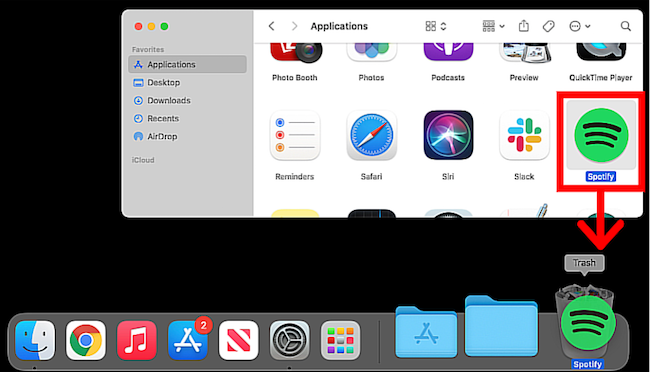
If you want to uninstall apps on a Mac, the quickest way is to open the Applications folder, drag the app to the Trash, and then empty it.
However, this doesn’t always remove everything. Many apps leave behind hidden files that take up storage space.
In this guide, you’ll learn how to completely uninstall apps on a Mac, including removing leftover files and stubborn applications that won’t delete.
For tips like this, check our full switching from Windows to Mac guide.
Quick Answer: How to uninstall apps on a Mac
- Open Finder
- Go to Applications
- Drag the app to the Trash
- Right-click Trash → Empty Trash
That removes most apps from your Mac.
How To Completely Uninstall Apps on a Mac
To completely uninstall an app on a Mac, you must remove the app itself and any leftover files stored in the Library folders. Most users only delete the app, which leaves behind hidden data.
If you want to fully uninstall apps (including hidden files), follow the methods below.
1. Uninstall Apps Using the Trash (Fastest Method)
This is the simplest way to uninstall apps on a Mac.
Steps:
- Open Finder
- Click Applications in the sidebar
(or press Command + Shift + A) - Find the app you want to remove
- Drag it to the Trash
or press Command + Delete - Empty the Trash by right clicking on it and select “Empty Trash”.
Important note:
Some files may still remain in your system (preferences, caches, support files). See below on how to get rid of these.
Some apps may not delete if they’re locked or still running. If that happens, see our guide on how to uninstall locked apps on a Mac.
2. How To Completely Remove Leftover App Files on Mac
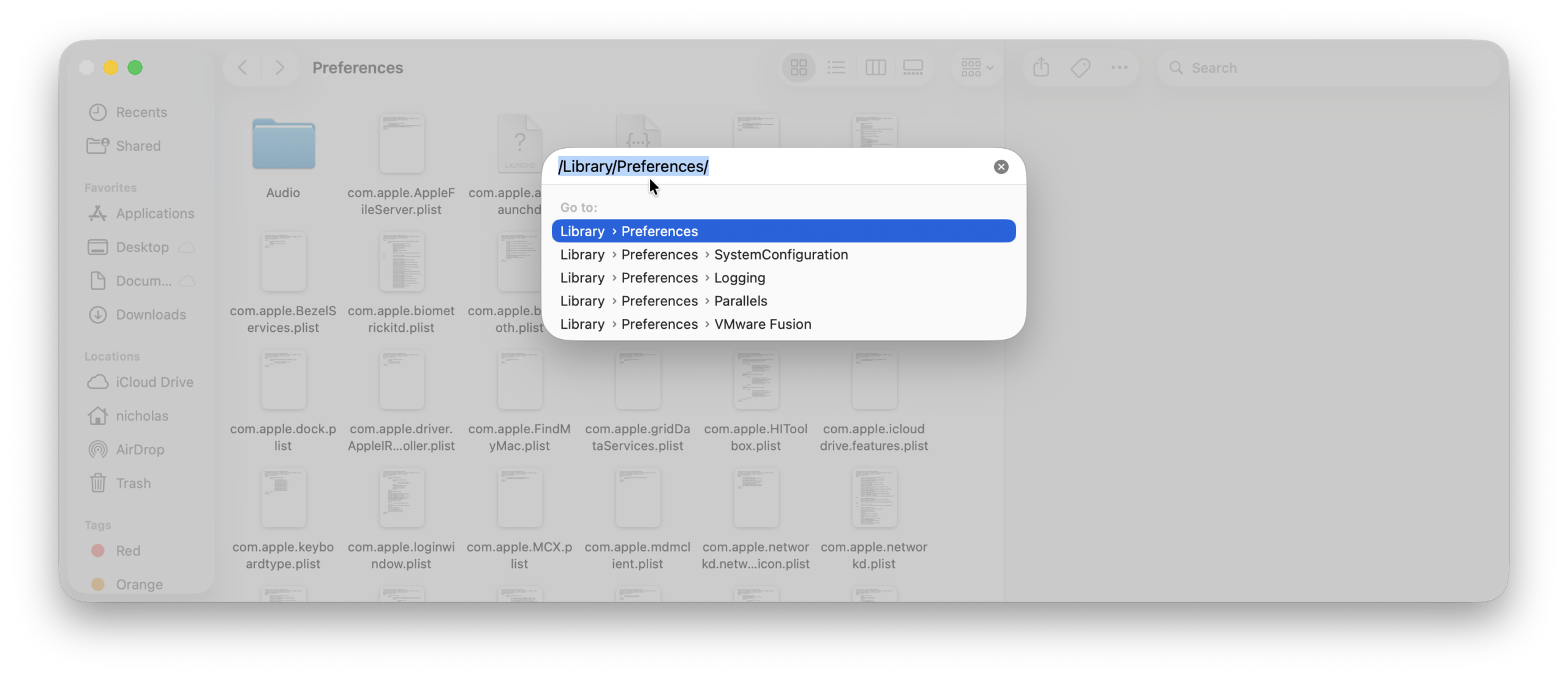
Even after deleting an app, files may remain on your Mac.
To fully uninstall apps on a Mac:
Steps:
- Open Finder
- Click Go > Go to Folder
- Enter: ~/Library/
- Check these folders:
- Application Support
- Caches
- Preferences
- Delete any files related to the app
Why this matters:
These leftover files can:
- Take up storage space
- Cause reinstall issues
- Create conflicts with drivers or updates
3. Use a Built-in Uninstaller (Best For Larger Apps)

Some apps include their own uninstaller.
Steps:
- Open Finder > Applications
- Open the app folder
- Look for Uninstall [App Name]
- Run the uninstaller
- Follow the on-screen steps
Examples of software that often include uninstallers:
- Adobe apps
- Autodesk apps
- Microsoft Office
- Creative tools
4. Uninstalling Apps Using the Terminal
This method should only be used if other options fail. This way of removing apps from a Mac is rarely needed and should only be used by advanced users.
Example command:
sudo rm -rf /Applications/AppName.app
Steps:
- Open Terminal
- Enter the command above
- Press Enter
- Enter your Mac password
Warning: This permanently deletes files. If used incorrectly, it can remove important system data.
5. Uninstalling Apps Using Third-Party Tools
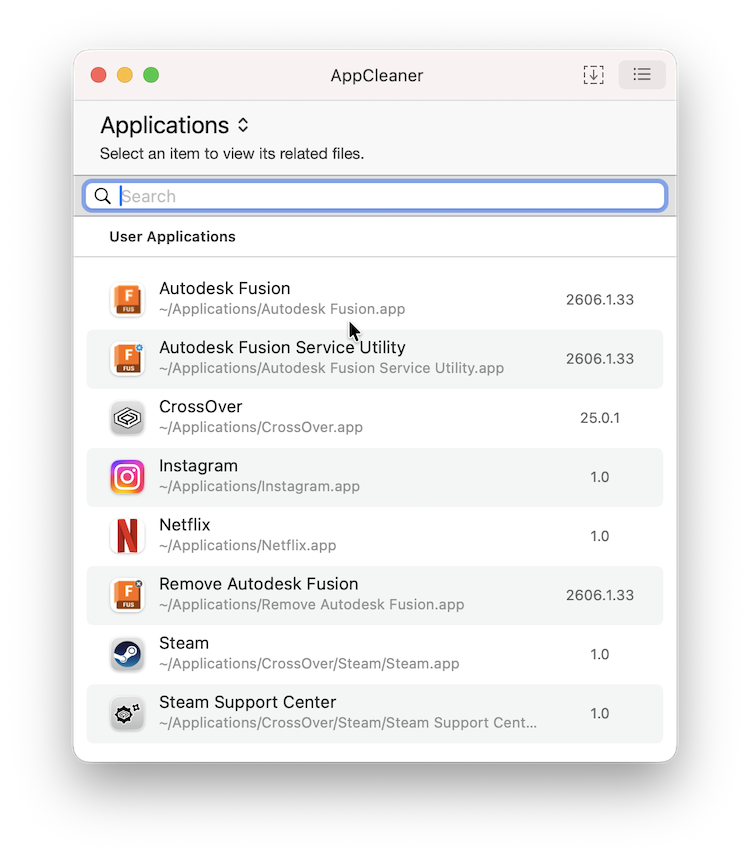
If you want a simple way to fully uninstall apps on a Mac, use a dedicated uninstaller.
The best one we’ve tried is AppCleaner which is free and very easy to use.
What it does:
- Removes the app
- Deletes leftover files automatically
- Helps clean hidden system data
Why it’s useful:
- Fastest full removal method
- Reduces risk of leftover files
- Good for bulk app cleanup
Simply open AppCleaner and search for the program/application you want to remove or select it from the list by clicking on the list icon in the top right corner of the app.
AppCleaner also categorizes your apps by ‘Last Used,’ to help you identify apps you don’t use anymore and get rid of them.
6. Uninstalling Apps Using the Launchpad
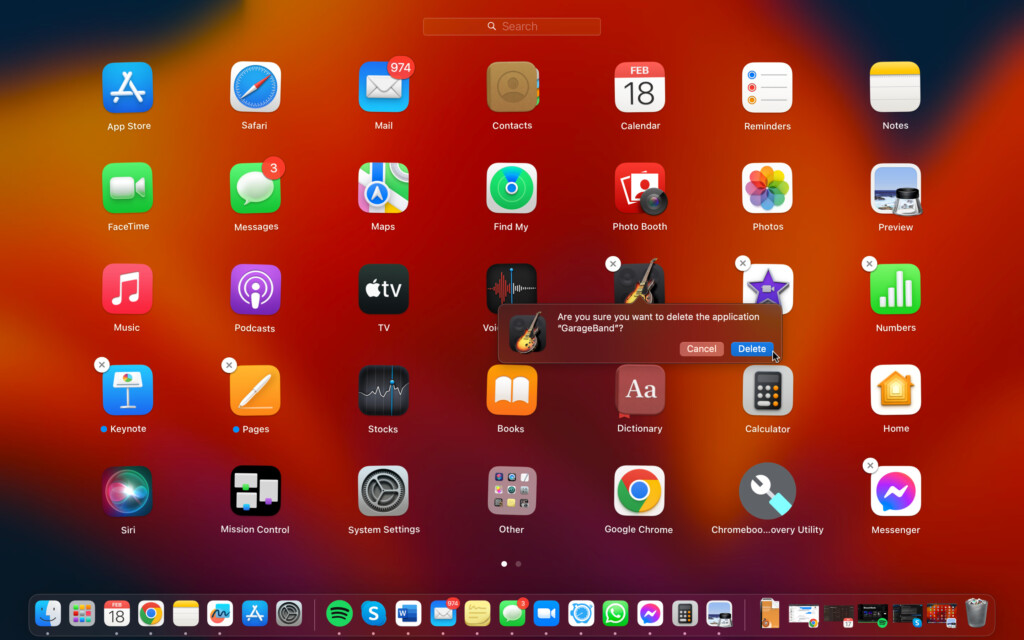
If you downloaded the app from the App Store, you can remove it using Launchpad. Note that this only works for App Store apps, not apps you’ve downloaded and installed from anywhere else.
Steps:
- Open Launchpad
- Find the app
- Click and hold until icons shake and an “X” appears above apps that can be uninstalled
- Click the X
- Select Delete
If you don’t see an “X”, the app was not installed from the App Store.
Limitations:
- Only works for App Store apps
- Doesn’t always remove all system files
What To Do If An App Won’t Uninstall
If an app won’t delete on your Mac, it’s usually because it’s still running, locked, or protected by macOS.
Try this:
- Use an uninstaller tool like AppCleaner
- Force quit it
(Command + Option + Esc) - Try deleting again
- Restart your Mac
If the app is locked or still won’t delete, follow our full guide on how to uninstall locked apps on a Mac
How To Remove Apps From The Menu Bar (Without Uninstalling)
Some apps stay in your menu bar even after installation.
To remove them:
- Open the app’s Settings/Preferences
- Look for:
- “Show in menu bar”
- Disable it
Or:
- Right-click the menu bar icon Remove/Quit
FAQ
Why can’t I delete some apps on Mac?
Some apps are:
- System apps
- Still running
- Protected by macOS
Does deleting an app remove everything?
No. Many apps leave behind:
- Cache files
- Preferences
- Support folders
How do I uninstall stubborn apps on Mac?
Try:
- Force quit
- Safe Mode
- AppCleaner (or similar tool)
Is dragging to Trash enough?
Yes for basic removal, but not for full cleanup.
Final Tip
If your Mac is running slow or storage is full, leftover app files are often the hidden cause – not the apps themselves.