

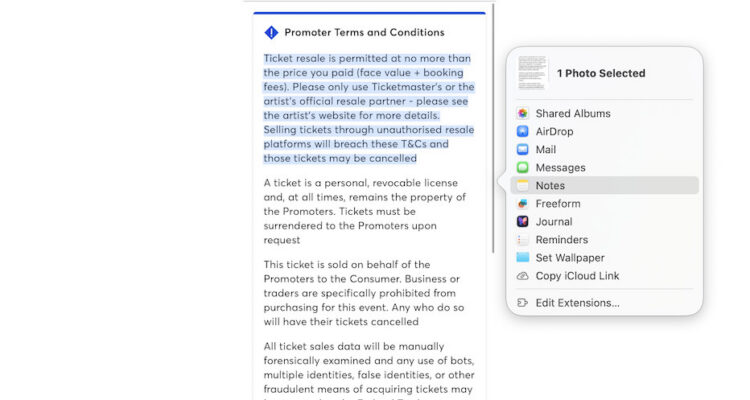
Let’s be clear from the start: free OCR software has improved a lot, especially on Macs – but it still has limits.
If you want consistently accurate OCR, proper formatting preservation, and reliable batch scanning, paid software still delivers the best results. That’s why our top recommendation for serious OCR work remains ABBYY FineReader PDF for Mac, which continues to outperform free tools in accuracy, layout retention, and multi-page documents.
That said, thanks to Apple Silicon, on-device machine learning, and AI-powered PDF tools, free OCR on macOS is now far more capable than it was even a few years ago. For light scanning and quick text extraction, you may not need paid OCR at all.
Below, we look at the best free OCR software and tools for Mac users in 2026, ranked by usefulness, accuracy, and practicality.
Before You Use Free OCR on a Mac
To avoid disappointment, it’s worth understanding the main limitations of free OCR tools:
- Accuracy depends heavily on document quality
Clean scans at 300 DPI or higher produce far better results than low-resolution images or photos. - Formatting is rarely preserved
Most free OCR tools extract raw text only. Complex layouts, tables, and images are often lost. - Batch scanning is limited or unavailable
Many free tools only scan one page at a time. - Privacy can be an issue with online OCR
Cloud-based services require uploading files to external servers. - Handwriting recognition is still inconsistent
Some tools handle neat handwriting, but results vary widely. For this we recommend using dedicated Handwriting OCR software.
If formatting, speed, or volume matter, paid OCR software remains the better choice.
With these points in mind, here is a look at the best free OCR software and utilities in 2026 for Mac users.
1. macOS Live Text (Built-in OCR)
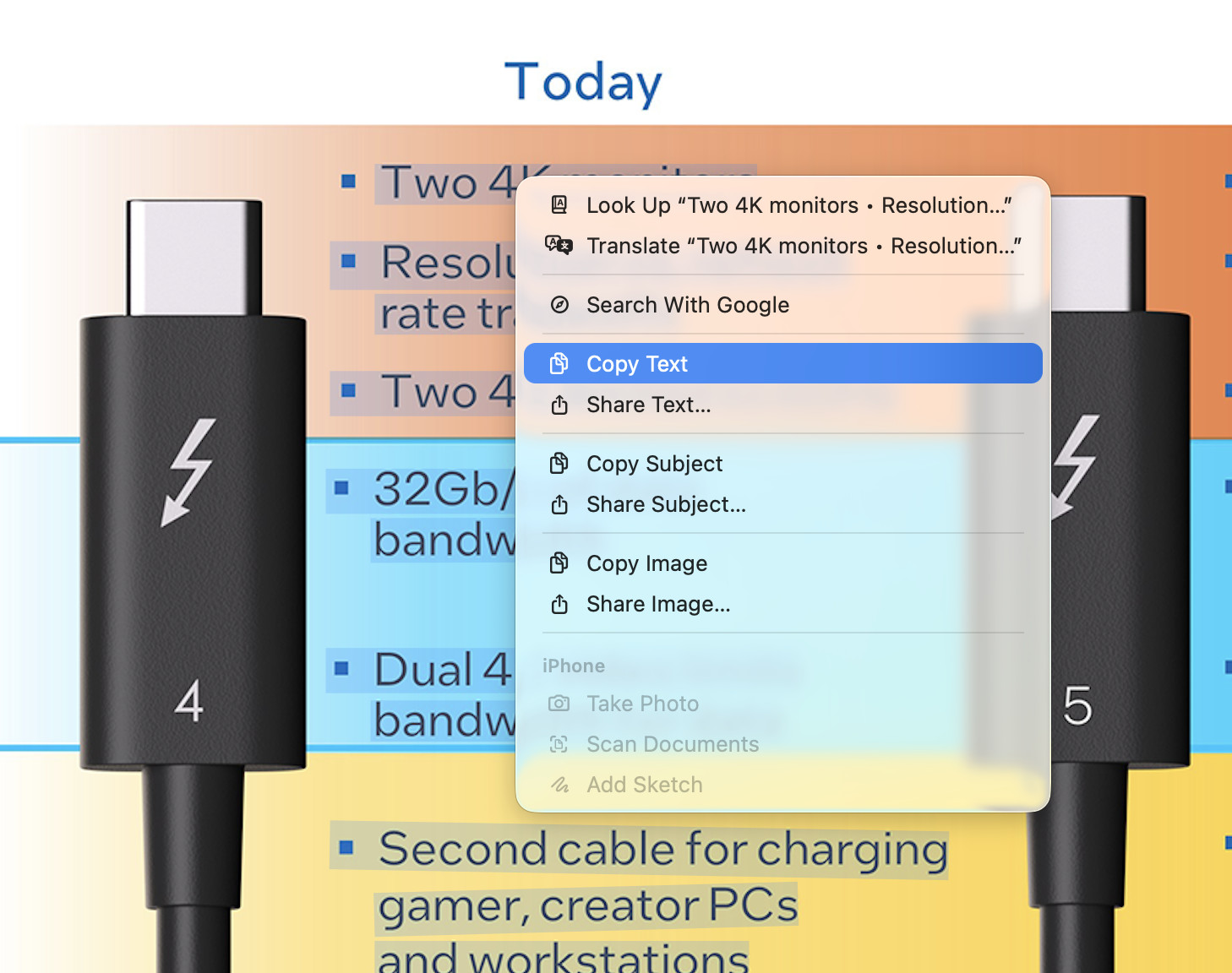
Apple’s built-in OCR – known as Live Text – is one of the most overlooked free OCR tools on macOS.
Available in Preview, Finder, Photos, Safari, Quick Look, and screenshots, Live Text lets you select, copy, and search text directly from images and PDFs, entirely on-device, with no uploads.
Live Text is powered by Apple’s on-device machine learning and is fully optimized for Apple Silicon Macs. In practice, this means OCR happens instantly and privately, with no internet connection required. Accuracy for printed text is excellent, especially with clean scans and modern PDFs, and it works just as well with screenshots, photos taken on an iPhone, and scanned documents opened in Preview.
However, Live Text is designed for quick text extraction rather than full document conversion. There are no batch OCR tools, export options, or formatting controls, and you can’t convert scanned PDFs into fully editable documents in one step. For occasional OCR tasks and privacy-conscious users, Live Text is more than sufficient, but for large documents or layout-sensitive work, dedicated OCR software is still the better choice.
Read our guide on how to extract text from images and screenshots with Live Text for more.
Pros
- Free and built into macOS
- Excellent accuracy for printed text
- Works instantly in Preview and Finder
- Fully private (on-device processing)
- Apple Silicon optimized
Cons
- No batch OCR export
- Limited formatting retention
- No OCR settings or controls
2. PDFgear (Free)
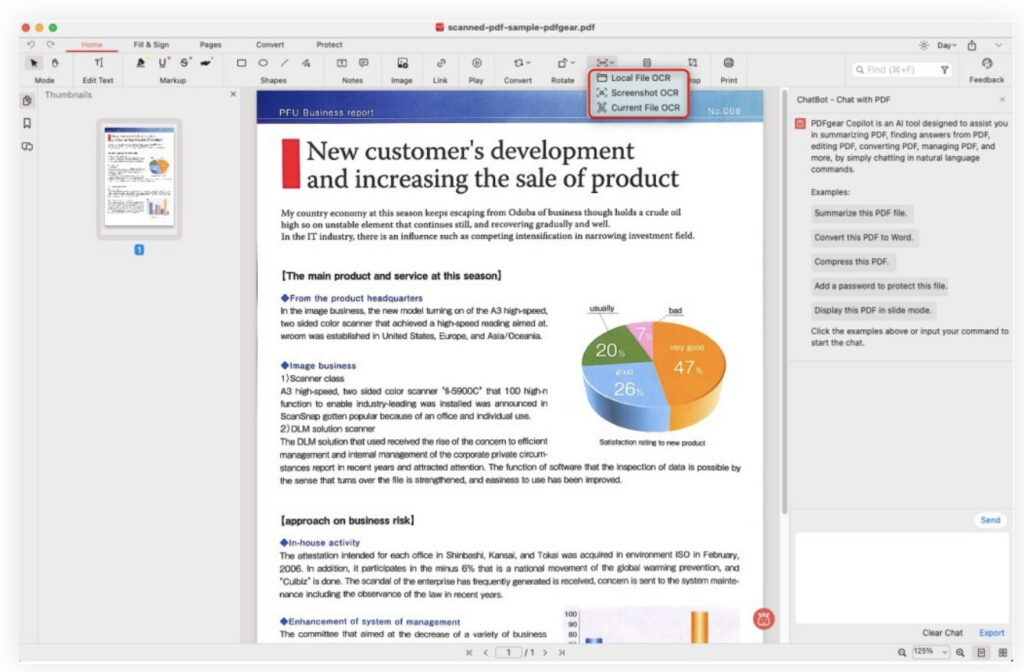
PDFgear is one of the best free OCR tools available for macOS in 2026.
It’s fully Apple Silicon native, uses AI-assisted OCR, and supports scanned PDFs without watermarks or page limits.
In day-to-day use, PDFgear performs particularly well with multi-page scanned PDFs, making it a strong option for users who need more than simple copy-and-paste OCR. Text recognition accuracy is high on clean documents, and the app handles modern PDFs quickly without the sluggish performance often seen in older OCR utilities. The interface is also clean and approachable, which makes it far more accessible than legacy Tesseract-based tools.
That said, PDFgear is still best suited to text extraction rather than faithful document reconstruction. While it can make PDFs searchable and editable, complex layouts, tables, and precise formatting are not always preserved perfectly. For users who need reliable OCR without paying for premium software, PDFgear strikes an excellent balance between accuracy, usability, and cost – but it doesn’t replace professional OCR tools for layout-critical work.
Pros
- Completely free
- AI-powered OCR
- Native macOS app
- Handles multi-page PDFs
- Clean, modern interface
Cons
- Formatting preservation is basic
- Limited export controls compared to paid tools
3. Adobe Acrobat Reader (Free)
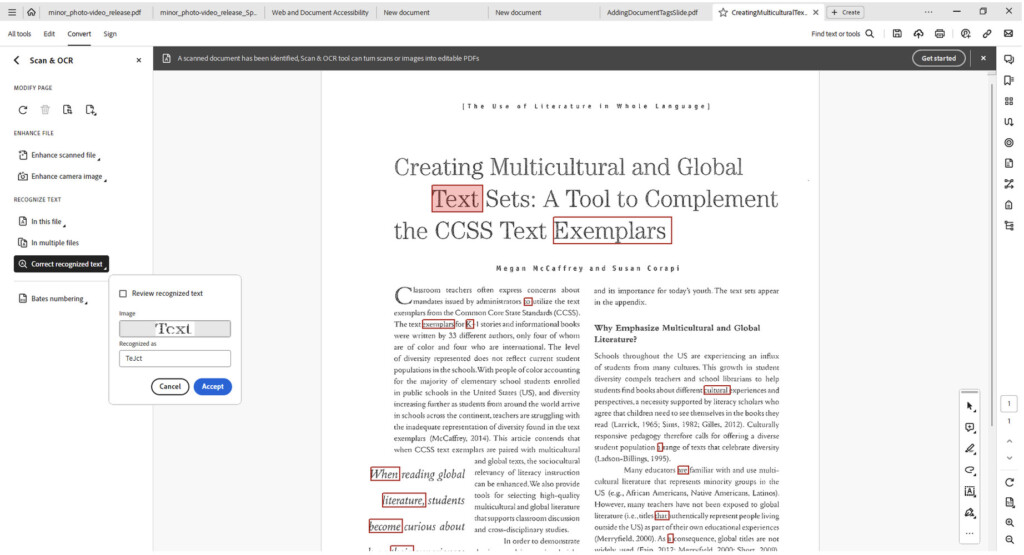
Adobe Acrobat Reader’s free version now includes basic OCR for scanned PDFs.
While advanced features require Acrobat Pro, the free tier is good enough for occasional OCR tasks.
Because Acrobat Reader uses Adobe’s long-established PDF engine, OCR results are generally reliable, particularly with standard business documents and clearly scanned PDFs. It also handles complex PDF structures better than many free alternatives, which can be useful when working with forms, multi-column layouts, or documents that include mixed text and images.
The main limitation is control and flexibility. OCR features in the free version are intentionally restricted, with limited batch processing and export options, and performance can feel heavier compared to lighter Mac-native tools. However, for users who already rely on Acrobat Reader to view and annotate PDFs, its built-in OCR capability is a convenient way to extract searchable text without installing additional software.
Pros
- Trusted PDF standard
- Good OCR accuracy
- Handles complex PDFs better than most free tools
- Cross-platform compatibility
Cons
- OCR features are limited in the free version
- Heavy app compared to alternatives
4. Evernote (Free Tier)
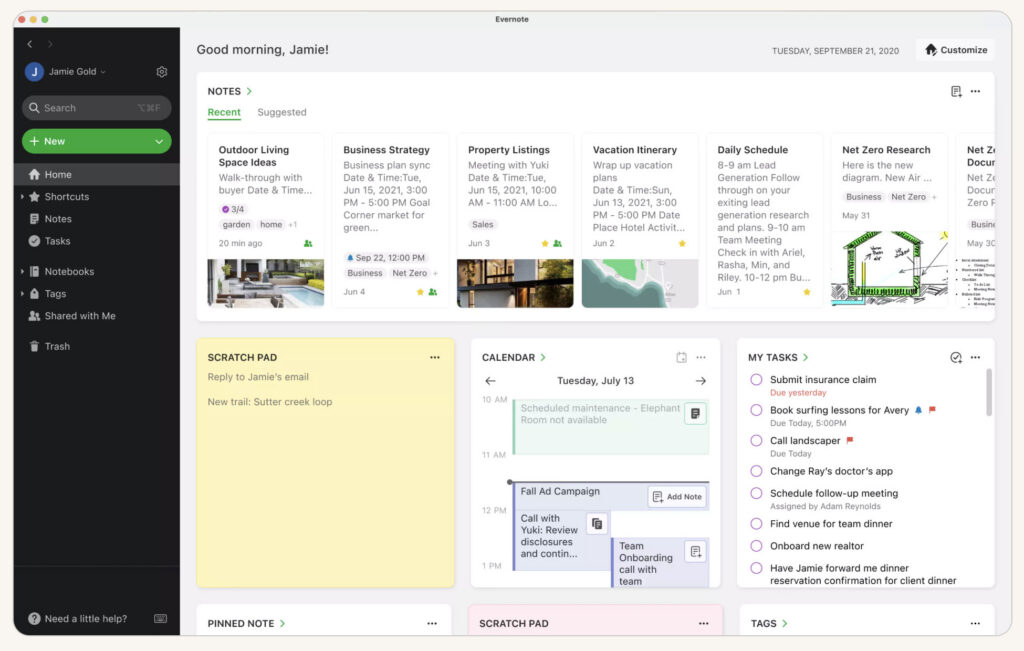
Evernote automatically OCRs images and PDFs you upload, making notes searchable – including some handwriting.
However, OCR happens in the background, with no user control over when or how it runs.
Whenever you upload and sync clippings, documents or images to Evernote, it automatically does an OCR scan to make your notes searchable.
The only way you’ll know it’s done is to search your Evernote image or PDF for text and if Evernote highlights the desired words, then you’ll know that it has worked.
If the OCR process has worked, you can save also save the file as a text searchable PDF by selecting “Save Searchable PDF As…“
The great thing is this includes not just printed PDFs but even handwriting although results with the latter can be very poor.
Evernote doesn’t give you many controls or guarantees over OCR scanning but if you already use Evernote, you should explore its free OCR capabilities.
Pros
- Automatic OCR
- Works with images and PDFs
- Useful if you already use Evernote
Cons
- Cloud-only OCR
- No manual OCR controls
- Slower than dedicated OCR tools
- Handwriting results vary
5. Microsoft OneNote (Free)
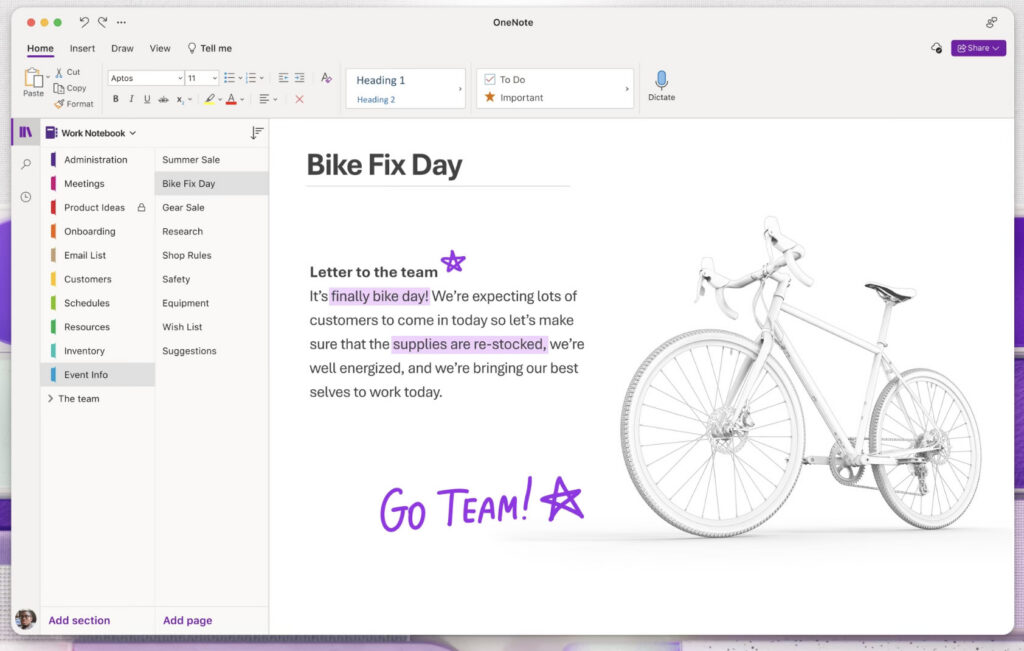
Microsoft OneNote for Mac includes a built-in OCR feature that allows you to copy text from images and PDFs.
You’ll only see the OCR option if OneNote successfully recognizes text, and handwriting recognition remains limited.
OneNote For Mac is free and automatically scans any images or PDFs you add to it for text.
You’ll only know if this has been possible if you Ctrl-click on the image or PDF document and are able to see the option “Copy Text from Picture“.
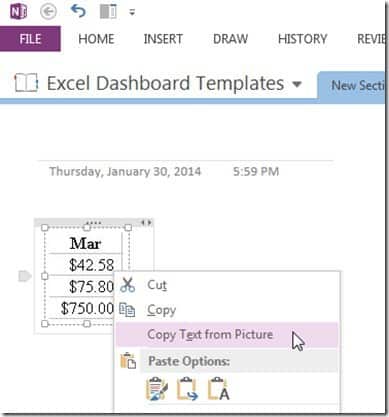
If the text is unclear or the image is poor quality, the option may not appear at all as OneNote is unable to read it properly.
If it has worked, you can then copy and paste the text anywhere you want in OneNote or any other application.
In our experience, OneNote requires fairly clear image and text quality in order to scan successfully. PDFs however generally scan very well but handwriting doesn’t work very well at all.
If you’re already a OneNote user, you should explore the free OCR scanning utility in it. You may also find our look at OneNote for Mac alternatives useful.
Pros
- Free
- Works well with clear PDFs
- Integrated into Microsoft products
Cons
- No batch OCR
- Minimal formatting retention
- OCR quality varies
6. Google Drive (Free)
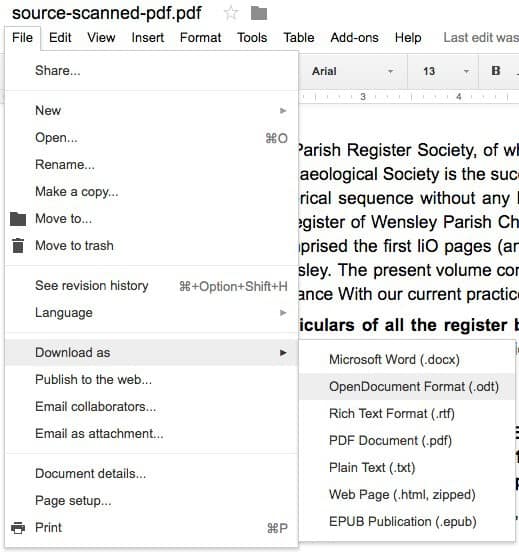
Google Drive can convert images and PDFs to editable text using Google’s OCR engine.
Accuracy is decent for clear documents, but uploads are required and file size and page limits apply depending on account type.
If you upload a document or image to Google Drive, go to Google Drive Settings > Upload Settings and there you will see the option “Convert text from uploaded PDFs and image files“.
Note that Google applies file size and page limits which vary by document type and account.
The accuracy of Google Drive’s OCR feature is passable but is highly dependent on the original quality of the document you are scanning.
Pros
- Good language support
- Reasonable accuracy
- Easy to use
Cons
- Requires uploading documents
- Formatting is often lost
- Not suitable for sensitive files.
7. Tesseract OCR (Advanced Users)
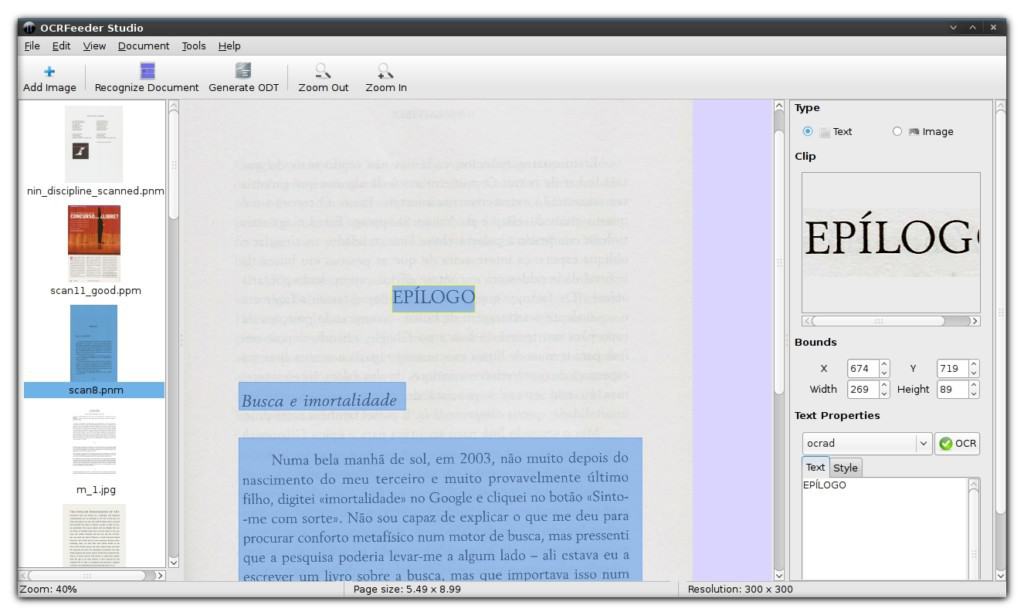
Tesseract is a powerful open-source OCR engine sponsored by Google, now using modern neural (LSTM) models.
However, it has no native GUI and must be used via the Terminal or third-party wrappers.
Tesseract is not exactly user-friendly because its designed for software developers to integrate into their own software.
Tesseract has to be used from a command line interface on Mac. There’s also a Tesseract wrapper for macOS although most average users will have trouble installing it. However, there is the VietOCR project which gives Tesseract a GUI and works on Mac.
Generally, you’ll find that because Tesseract is an open source OCR software, the majority of software developed for it is on Linux such as OCRFeeder (pictured above).
Pros
- Free and open source
- Very accurate with proper setup
- Excellent language support
Cons
- Command-line only
- Steep learning curve
- Not beginner-friendly
8. Leadtools OCR
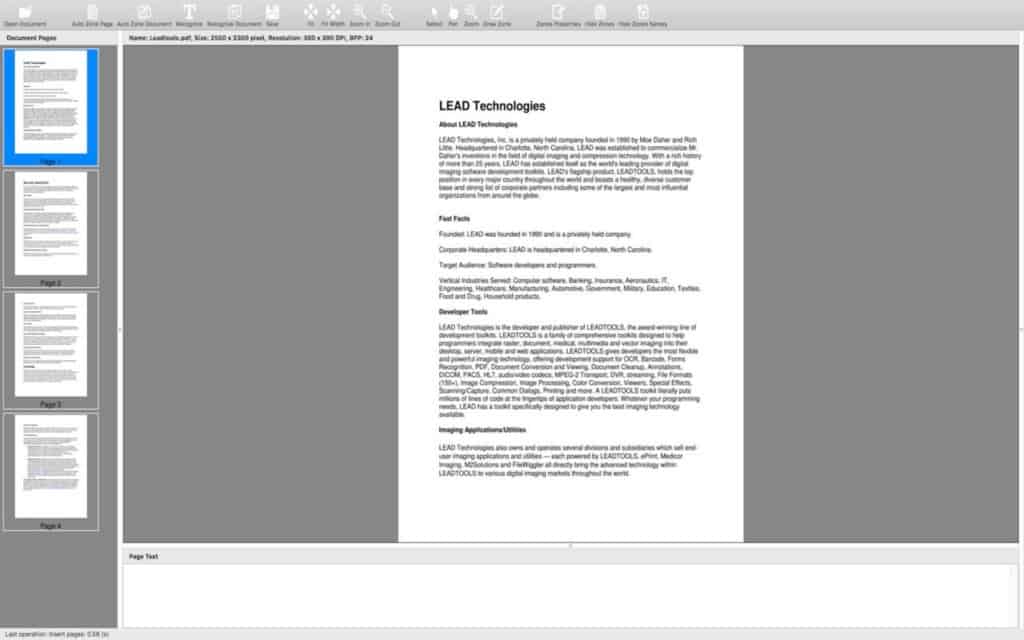
For a free application, Leadtools OCR (fully known as “OCR Scanner with Leadtools OCR”) does a surprisingly good job of OCR scanning on a Mac.
Leadtools OCR feels more like a technology demo than a polished end-user OCR tool but it can still be used effectively with some time and effort.
The accuracy of the text scanned can be as good as 90% on clear documents and it doesn’t do badly even on older or low resolution documents.
Leadtools OCR can convert PDFs to searchable PDFs and export to Microsoft Word (DOCX), Text, SVG and more but there’s no format preservation.
You only get a text dump of the extracted text with Leadtools OCR – it doesn’t preserve text blocks or image placements.
If you just want to scan one block of text, we like the fact that Leadtools OCR also enables you to select just one part of a document with a highlighting tool.
There’s also a free Leadtools iOS app available which allows you to take photos of documents and scan them immediately.
Note that Leadtools only works for a maximum of two pages – there’s no batch processing so you have to tediously scan two pages at a time.
Check out our Leadtools OCR review for more.
Pros
- Free and simple to start using
- Lets you select specific regions for OCR
- Works reasonably well on very clear text
Cons
- Only processes two pages at a time
- No batch scanning or automation
- No layout or formatting preservation
- UI feels dated and limited
- Not optimized for Apple Silicon
9. PDF OCR X Community Edition (Free)
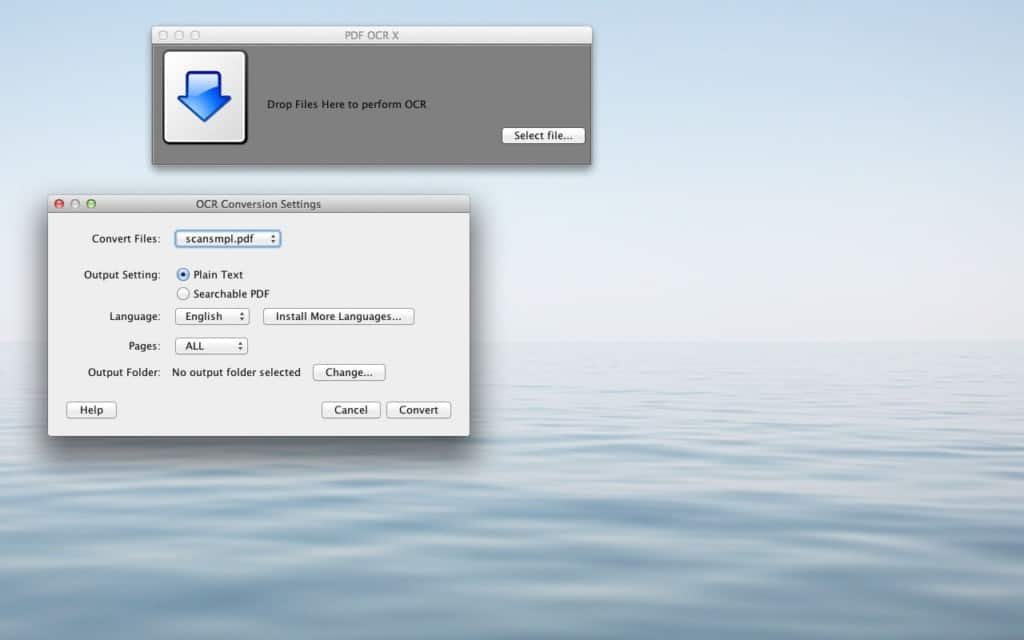
PDF OCR X Community Edition is a free desktop OCR app for macOS based on the open source Tesseract engine. Although it only scans single page PDFs, it does a pretty decent job.
Like a lot of free OCR apps, the accuracy of scans very much depends on the resolution of the document you scan. If the text quality of the PDF you’re scanning is clear, you can achieve some surprisingly good results with PDF OCR X Community Edition.
It’s very much a quick and dirty OCR scanning tool though – it simply dumps scanned text into a file with no formatting which will require a certain amount of manual correction.
The interface is also very dated and has not been optimized for the latest retina Macs.
You’re limited to scanning just one page at a time in this free version. If you want to scan more you must upgrade in-app to PDF OCR X Enterprise Edition for $29.99.
Pros
- Free and based on the trusted Tesseract engine
- Quick way to extract text from single page PDFs
- Simple and lightweight
Cons
- Only scans one page at a time
- No formatting retention
- Interface is outdated and not fully macOS-native
- Limited compatibility with modern Macs
- Enterprise upgrade required for multipage projects
10. Elucidate
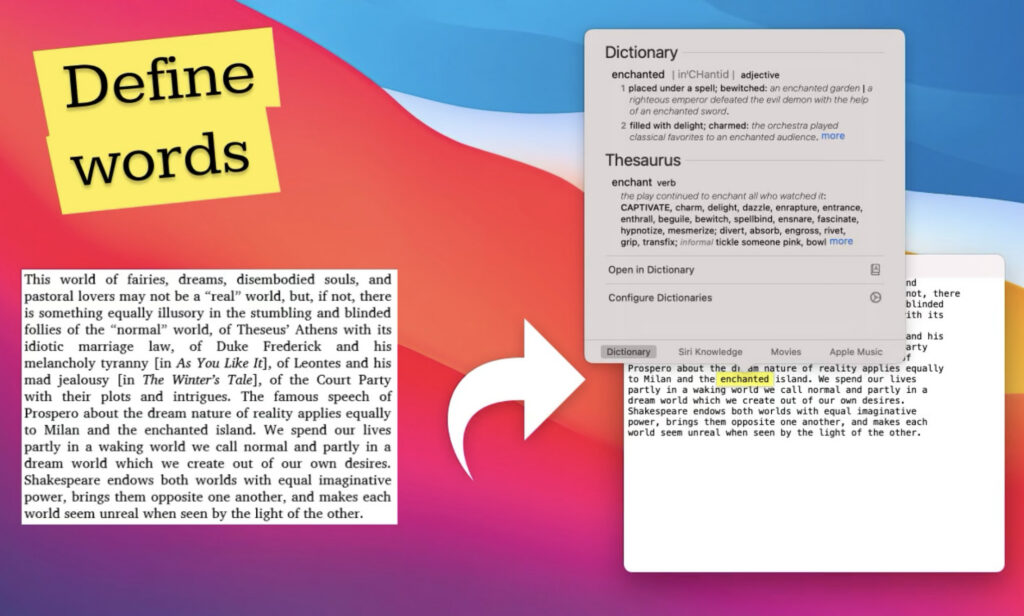
Elucidate is a very simple OCR tool designed to create searchable PDFs. Although it’s not free, we’ve included it because the accuracy of Elucidate is impressive for an app that costs less than $4.
Elucidate is very easy to use. Simply drag a PDF file into Elucidate’s main interface and within a few seconds, it creates a fully searchable version of the PDF.
Once scanned in Elucidate, you can highlight text, spellcheck and add comments to text. Alternatively, you can export scanned PDFs to a simple TXT file that you can copy and paste into another document or edit.
There’s even an integrated dictionary to look up the meaning of words which makes it a popular choice with students and academics.
We found that the accuracy of scanned text goes down significantly below resolutions of 300 dpi but Elucidate is a great app for quick and easy OCR jobs and costs next to nothing.
Pros
- Very simple drag-and-drop interface
- Creates searchable PDFs quickly
- Includes basic editing like highlight and spellcheck
- Low cost (budget-friendly)
Cons
- Not truly free (low-cost instead)
- Formatting preservation is minimal
- OCR accuracy drops significantly on low-quality scans
- Lacks advanced OCR controls
11. OCR.Space
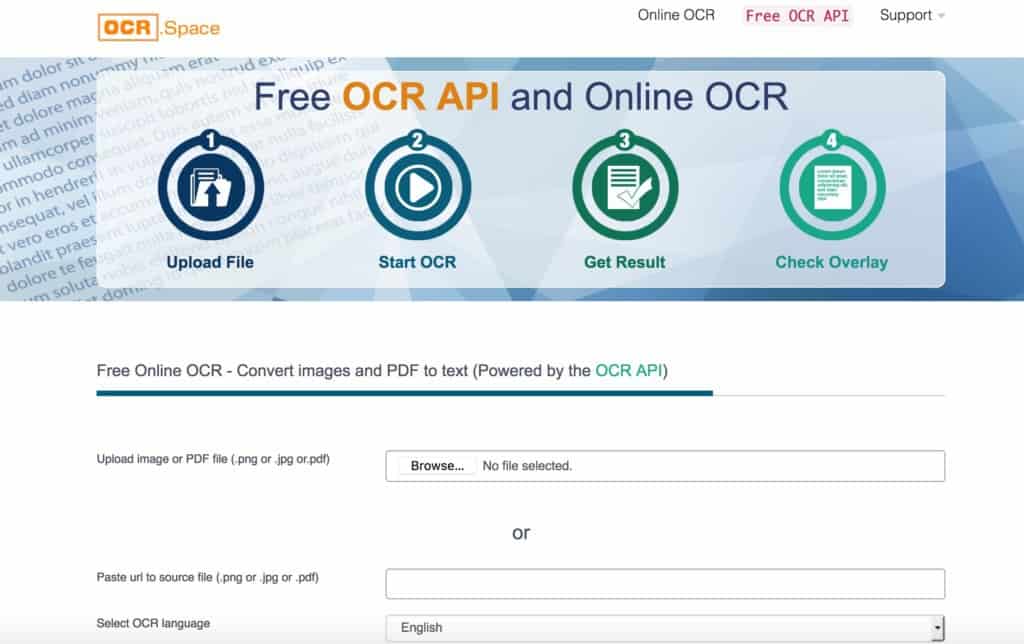
OCR.Space is a fast and easy to use online OCR conversion tool which supports a huge number of languages.
OCR.Space claims that it does not store your documents online and accepts PDFs of up to 5MB.
OCR.Space gives you three different ways of scanning:
- Just extract text and show overlay (the fastest option)
- Create searchable PDF with visible text layer
- Create searchable PDF with invisible text layer
We like the fact that apart from uploading documents manually, you can drag and drop images or simply paste in the URL of a page that you want to scan.
You don’t need to register and there’s no email required so there’s no risk of being spammed.
There’s also a handy browser extension for Chrome and Firefox which uses the same OCR engine.
OCR.Space has a better interface than most online OCR scanners with above average results.
Pros
- No installation required — web-based
- Supports a broad range of languages
- Offers options for searchable PDF output
- Browser extensions available
Cons
- Must upload documents to a server
- File size limits on uploads
- Formatting isn’t well preserved
- Not ideal for sensitive or confidential files
- Dependent on internet connection
12. OnlineOCR
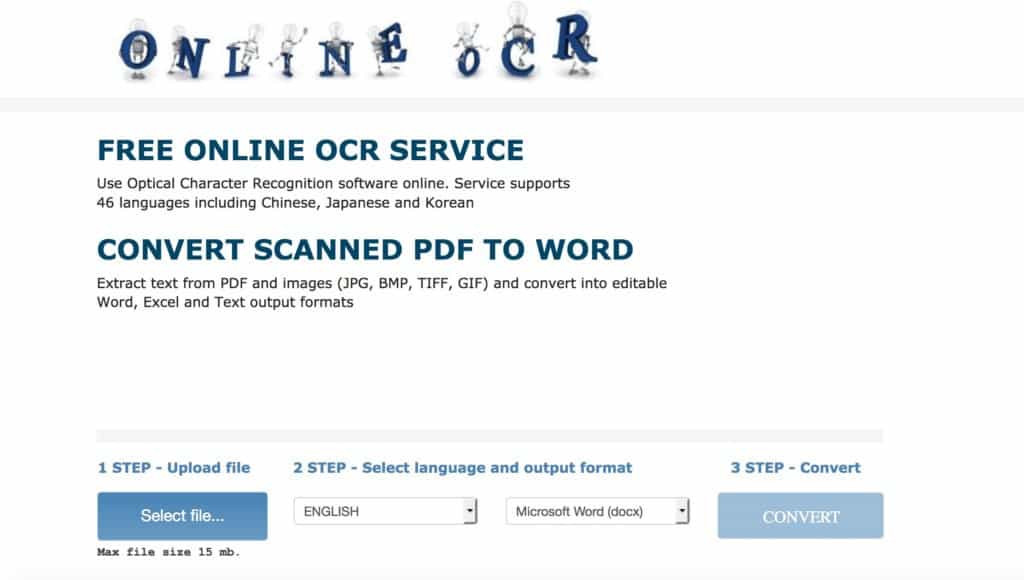
OnlineOCR is a free online OCR service that supports 46 languages including Chinese, Japanese and Korean. OnlineOCR.net will take any PDF (including JPG, BMP, TIFF, PCX or GIF) document and convert it to Word (DOCX), Excel (XLSX) or Text (TXT) format.
The formatting isn’t preserved well especially with lots of tables and images but it does a basic job.
OnlineOCR.net is surprisingly flexible allowing you to specify which pages you want scanned in a multipage document and for registered users, scan multiple documents in a ZIP upload.
Note however that file uploads are limited to 5MB and the free version is limited to 15 images per hour. If you want to scan more than this, you have to register and pay according to how many pages you want to scan. If you refer other customers to OnlineOCR.net, there’s a bonus program where you can get extra credits for free.
You need documents with a resolution of at least 200dpi to get any reasonable results out of OnlineOCR.net.
Unregistered users documents are deleted immediately after scanning and registered users can store their documents for one month.
Pros
- Free and simple to use online
- Supports many input formats (PDF, JPG, PNG, etc.)
- Allows page selection in multipage documents
- Basic export to Word, Excel, or TXT
Cons
- Upload size and usage limits
- Formatting is rarely preserved
- Requires registration for higher limits
- Uploading files may raise privacy concerns
- Accuracy varies with input quality
Free OCR in Document Scanners
One final tip is that if you have an all in one printer in your home or office, it may already have its own OCR capabilities.
For example, HP all in one printer owners can use HP Easy Scan software to OCR documents.
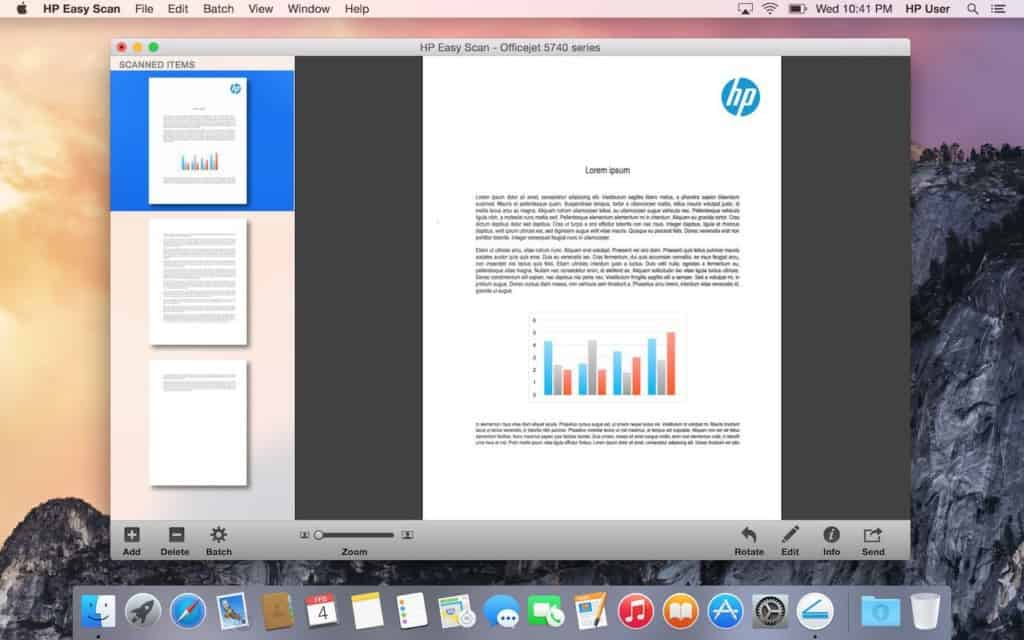
The problem you may find however is that the default OCR software that comes with flatbed scanners is usually very limited, incompatible with new releases of macOS and inaccurate at OCR scanning.
Another option is to buy a dedicated Mac compatible document scanner which usually come with much better OCR capabilities as they are specifically designed for the task of document scanning.
However, these can also be very hit and miss in performance. One solution is to use Vuescan which enhances the OCR capabilities of document scanners but it’s not free.
Summary
Free OCR software on Mac has never been better and easier to access – especially thanks to macOS Live Text and AI-powered PDF tools.
For light OCR tasks, many users no longer need third-party software at all. However, if you need:
- High accuracy
- Formatting preservation
- Large batch scanning
paid OCR software like ABBYY FineReader PDF for Mac are still worth the investment.
If you need help choosing the right OCR tool for you, feel free to ask in the comments.
FAQ
Is there any completely free OCR software for Mac?
Yes. macOS Live Text is completely free and built into macOS, allowing you to copy and search text from images and PDFs without installing anything. Other tools like PDFgear and Adobe Acrobat Reader also offer free OCR features, although with some limitations.
What is the best free OCR software for Mac?
For most users, macOS Live Text is the best free OCR option thanks to its accuracy, speed, and on-device privacy. If you need a dedicated OCR app for scanned PDFs, PDFgear is an excellent fully free option.
Does macOS have built-in OCR?
Yes. macOS includes built-in OCR through Live Text, which works in Preview, Finder, Photos, Safari, Quick Look, screenshots, and more. It allows you to select and copy text directly from images and PDFs.
Can free OCR software preserve document formatting?
In most cases, no. Free OCR tools usually extract plain text only. Complex layouts, tables, and images are rarely preserved accurately. For proper formatting retention, paid OCR software such as ABBYY FineReader PDF for Mac is still the best option.
Is free OCR accurate enough for business documents?
Free OCR can be accurate for clean, high-resolution scans, especially typed documents. However, accuracy drops with low-quality scans, unusual fonts, or complex layouts. For professional or legal documents, paid OCR software is generally more reliable.
Can free OCR software recognize handwriting?
Some tools attempt handwriting OCR, but results are inconsistent. Apple’s Live Text and Evernote can recognize neat handwriting, but accuracy varies significantly. For reliable handwriting recognition, dedicated handwriting OCR software is recommended.
Is online OCR safe for sensitive documents?
Online OCR tools require uploading files to external servers, which may pose privacy risks. They are not recommended for sensitive or confidential documents. For privacy-focused OCR, on-device tools like macOS Live Text or offline OCR apps are a safer choice.
Is CuneiForm available for Mac?
No. CuneiForm is Windows-only and has no macOS version. However, the OCR tools featured in this article are suitable alternatives for Mac users.
Is paid OCR software worth it?
Yes – if you need high accuracy, batch processing, formatting preservation, or large document scanning, paid OCR software is still worth the investment. ABBYY FineReader PDF for Mac remains the best choice for serious OCR work.
Check out our guide to the best OCR software for Mac for more.