
If you want to move away from Adobe Photoshop’s subscription, you now have far better choices on a Mac than you did a few years ago. The right replacement depends on what you actually use Photoshop for: editing layered images, retouching RAW photos, illustrating with a tablet, or making fast social-media graphics.
Photoshop is still the safest option if a client or employer requires exact Photoshop plug-ins, actions or flawless round-tripping of complex PSD files. But it is overkill for many Mac users. For most people, Affinity is now the best overall alternative; it is a fully featured, free app for photo editing, vector design and layout. If you have an Apple-silicon Mac running macOS 26 or later, Pixelmator Pro is the best Mac-first option.
We have fully refreshed this guide for 2026. Rather than padding it with generic filters and collage apps, we have included active software that is genuinely useful for Macs. Pricing and plans change often, so check each developer’s site before buying.
Quick picks
- Best overall free Photoshop alternative: Affinity
- Best native Mac app: Pixelmator Pro
- Best for opening and editing PSDs in a browser: Photopea
- Best free desktop photo editor: GIMP
- Best for digital art and illustration: Krita
- Best for social media and marketing graphics: Canva
- Best for serious RAW photography: DxO PhotoLab
Photoshop alternatives compared
| App | Best for | Price model | Mac support | PSD support |
|---|---|---|---|---|
| Affinity | The closest all-round Photoshop replacement | Free with a free Canva account | macOS; optimised for Apple silicon | Strong import/export; test complex client files |
| Pixelmator Pro | Mac-first photo editing and design | £49.99 one-off on the UK Mac App Store, or Apple Creator Studio | Apple silicon and macOS 26+ | Strong for ordinary PSD work |
| Photopea | Editing PSDs without installing software | Free with ads; paid Premium option | Any current Mac browser | Excellent opening and saving support |
| GIMP | A powerful free desktop editor | Free and open source | macOS | Import/export, but test fidelity |
| Krita | Painting, comics and tablet work | Free and open source | macOS | Useful for artwork, not a full Photoshop alternative |
| Canva | Quick branded posts, thumbnails and marketing graphics | Free plan; paid features and plans | Mac app and browser | Imports PSDs, but not for complex hand-offs |
| Adobe Express | Fast templates and easy Adobe-based content | Free plan; Premium plan | Browser or desktop PWA | Not a replacement for complex PSD work |
| Acorn | A lightweight local Mac image editor | One-time purchase | macOS 14+ | Fine for simpler files; test anything complex |
| Photoshop Elements | Guided edits for beginners | Upfront three-year term licence | Apple silicon; macOS 15.5 or 26.5+ | Adobe-friendly, but less capable than Photoshop |
| Luminar Neo | AI-led photo enhancements | Perpetual and subscription options | macOS | Not a primary PSD/compositing tool |
| DxO PhotoLab | High-quality RAW development | Perpetual licence | macOS | Not a primary PSD/compositing tool |
| RawTherapee | Free, technical RAW processing | Free and open source | Apple silicon or Intel, with version-dependent macOS requirements | No layer-based PSD tools |
| Apple Photos | Basic edits inside your photo library | Included with macOS | Built in | No layered PSD editing |
How to choose the right alternative
There is no single non-Adobe app that does every job Photoshop does. Start with the job you need to complete.
- Choose Affinity if you need layers, masks, selections, retouching, RAW tools, CMYK output and the flexibility to switch between photo, vector and page-layout work.
- Choose Pixelmator Pro if you want a polished, fast editor designed around macOS, Photos and Apple silicon — and your Mac meets its current requirements.
- Choose Photopea if someone has sent you a PSD and you want to open, edit and save it without installing a large app.
- Choose GIMP if you want a capable free desktop editor and are happy to learn a less Mac-like interface.
- Choose Krita if Photoshop is mainly your drawing or painting canvas.
- Choose Canva or Adobe Express if you are making social posts, website graphics, thumbnails, flyers or simple branded content quickly.
- Choose DxO PhotoLab, Luminar Neo or RawTherapee if your real need is better camera RAW processing rather than layered design.
The most important warning is PSD compatibility. Affinity, Pixelmator Pro and Photopea can all handle many Photoshop documents, but no alternative guarantees perfect rendering of every font, Smart Object, adjustment, plug-in effect or proprietary Photoshop feature. Before moving a client or work archive, open representative files, compare them side by side and test the final export.
1. Affinity — Best overall Photoshop alternative for Mac
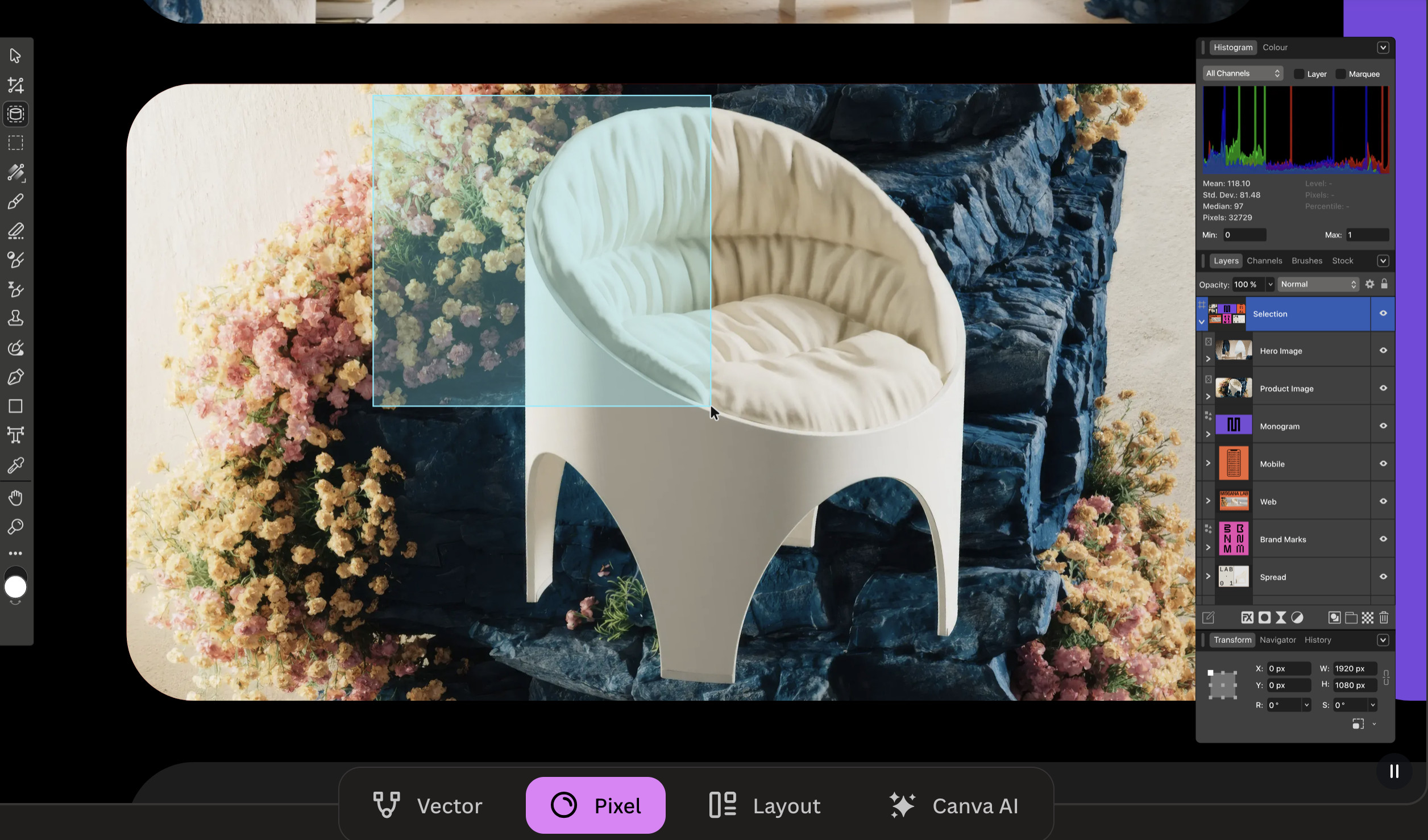
Affinity is the strongest overall replacement for Photoshop on a Mac in 2026. Canva has replaced the separate Affinity Photo, Designer and Publisher apps with one new Affinity app, bringing professional photo editing, vector design and page layout together.
That is a substantial upgrade to the old Affinity proposition. You can work with layers, masks, non-destructive filters and adjustments, RAW images, retouching tools, HDR merges, panoramas, CMYK and spot colours, then move into vector or multi-page layout work without changing apps. It also imports PSD, AI, PDF, SVG and IDML files.
Best for: Anyone who wants a serious, local Photoshop-style app without a recurring Photoshop subscription.
Why it stands out: The complete Pixel, Vector and Layout toolsets are free with a free Canva account. The app is optimised for Apple silicon, can work offline after activation, and supports non-destructive editing across layers, filters and adjustments.
Watch out for: Canva AI features inside Affinity require a premium Canva plan. Complex PSDs should still be tested before you rely on an exact hand-off. The new app can open older Affinity V1 and V2 files, but older Affinity apps cannot open documents saved in the new format, so keep a copy of important project files.
Price: Free with a free Canva account. Download Affinity.
2. Pixelmator Pro — Best Mac-first Photoshop alternative
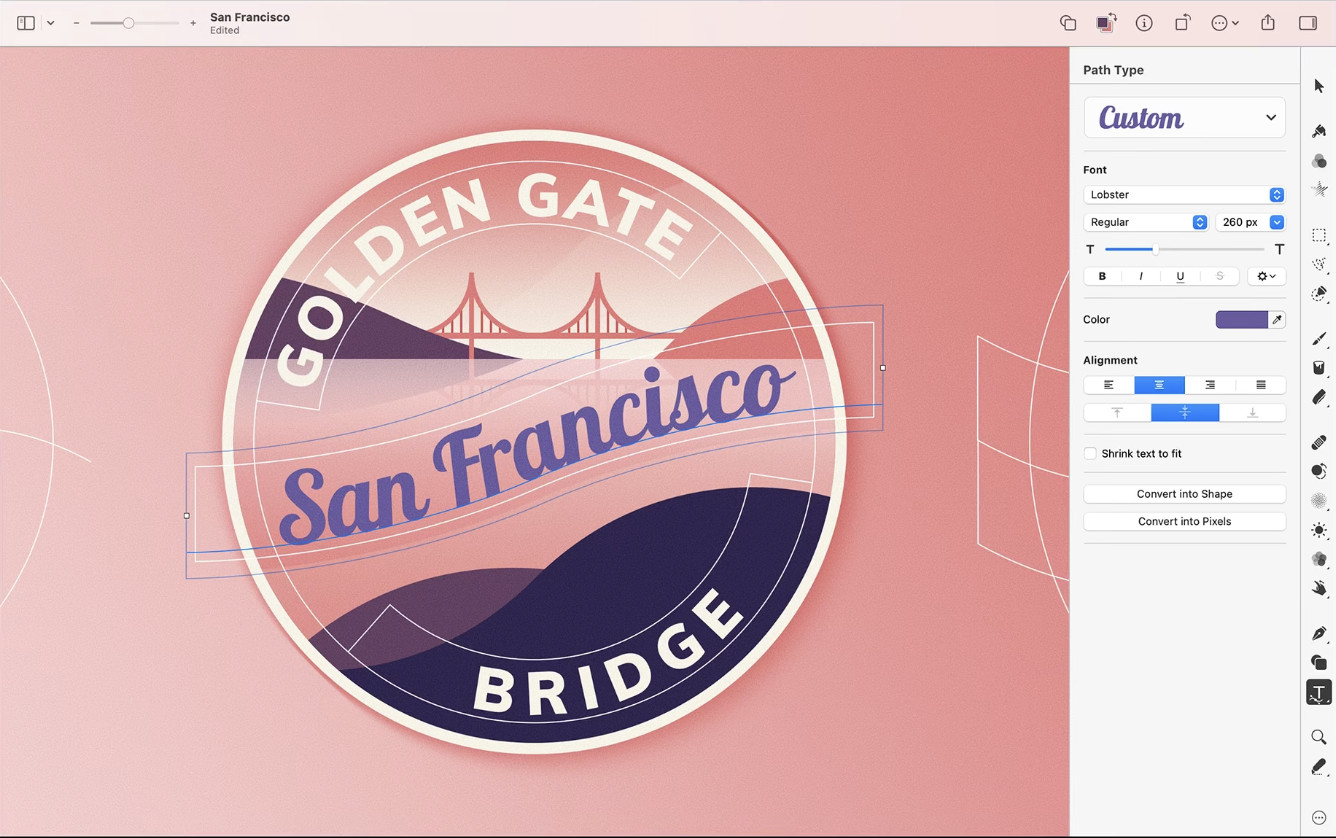
Pixelmator Pro is the best choice if you want a photo editor that feels completely at home on macOS. It combines non-destructive photo editing, layers, vector tools, RAW support, colour management, image repair and Apple-style automation in a much calmer interface than Photoshop.
It is particularly good for photographers, bloggers and small businesses that need to prepare web images, remove distractions, work with layers, make simple graphics or edit directly from the Photos library. Its Photos extension lets you use Pixelmator Pro’s tools without leaving Apple Photos, while retaining non-destructive edits in the library.
Best for: Apple-silicon Mac users who want a powerful but approachable native editor.
Why it stands out: It is built for Mac technologies such as Metal, Core ML, Shortcuts, AppleScript, iCloud and the Photos extension. It supports a broad range of raster, vector, video and RAW file formats and remains available as a one-off purchase in the UK.
Watch out for: This is no longer an option for every Mac. Apple lists the current version as requiring Apple silicon and macOS 26 or later, so Intel Macs and older macOS versions should look at Affinity, GIMP, Acorn or RawTherapee instead. Apple Creator Studio includes an additional Warp Tool that is not part of the one-off version.
Price: £49.99 as a one-off Mac App Store purchase in the UK, or included with an Apple Creator Studio subscription. Check your local App Store price.
3. Photopea — Best free browser-based Photoshop alternative
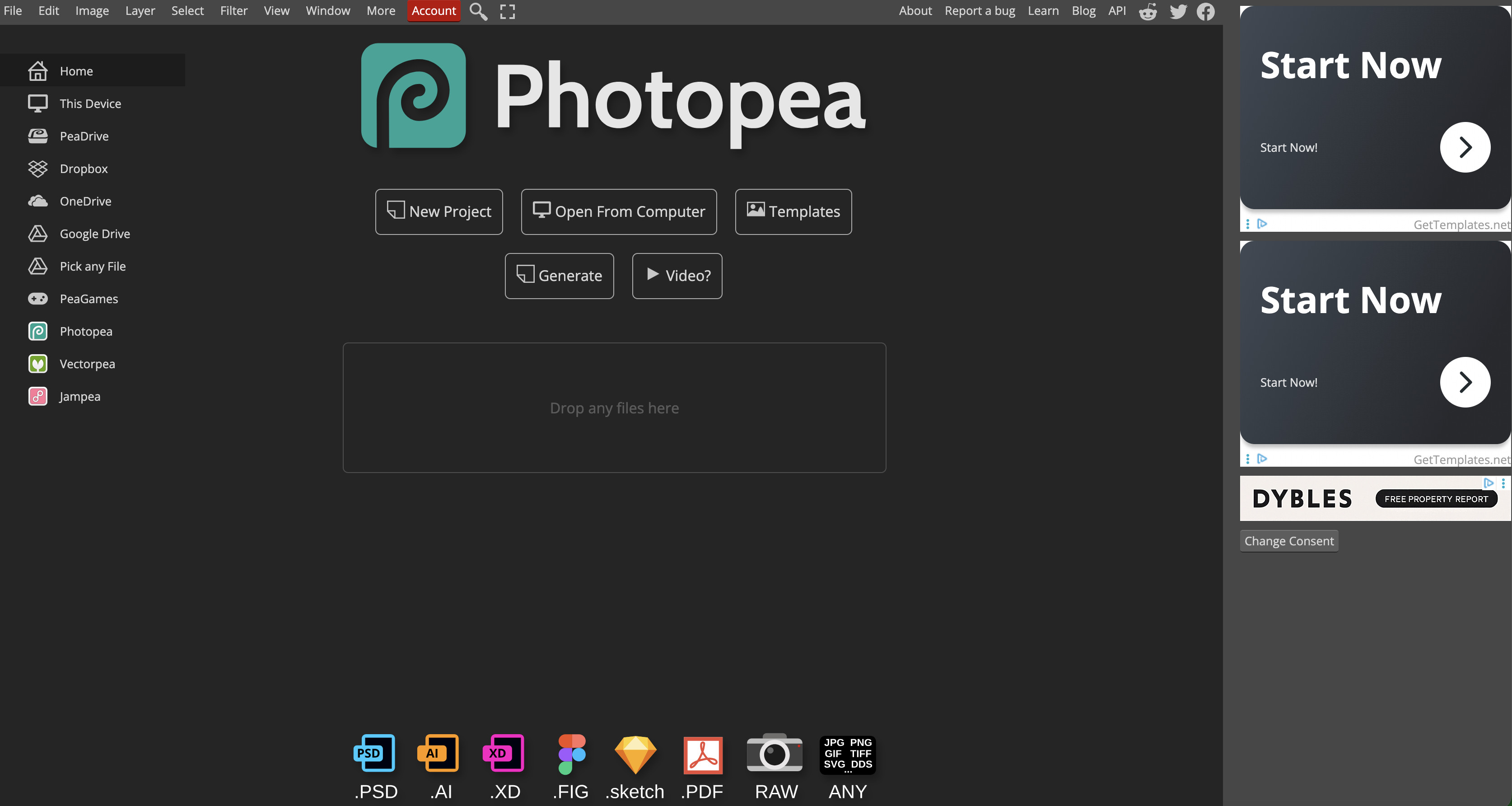
Photopea is remarkably close to Photoshop in layout and format, but it runs in your web browser. It is the best answer when you need to open a PSD quickly, make a few changes and send it back without installing Adobe software.
Photopea supports layers, masks, layer styles, Smart Objects, adjustment layers, channels, paths, vector graphics and many common image formats. Crucially, it can both open and save PSD files. It also runs locally in your browser, so Photopea says that files do not need to be uploaded to its servers to be edited.
Best for: Occasional PSD edits, working on a borrowed Mac, students and anyone who needs a fast Photoshop-like interface for free.
Why it stands out: It has a familiar Photoshop-style toolset and works on practically any modern Mac browser. The free version is genuinely useful.
Watch out for: It is still a browser app rather than a native Mac application. The free version contains advertising, and demanding files will feel better on a powerful Mac with plenty of memory. As with every non-Adobe PSD editor, test complex documents before using it for client work.
Price: Free with ads; a paid Premium account removes ads. Open Photopea.
4. GIMP — Best fully featured free desktop editor
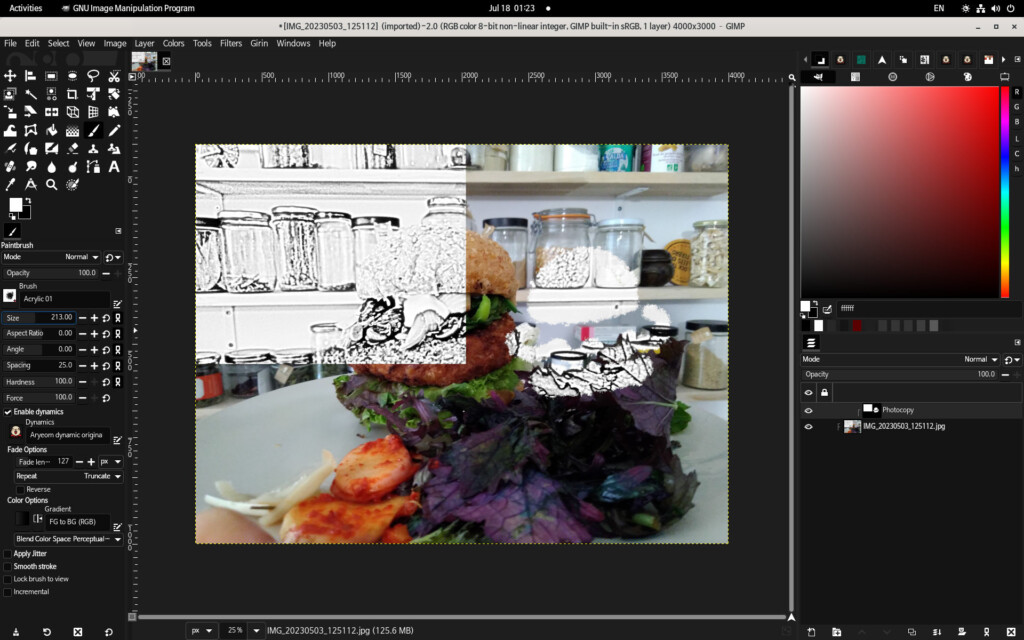
GIMP remains the best free, open-source desktop alternative for users who need more than simple cropping and filters. The GIMP 3 generation has improved the macOS experience and continues to add features, file-format improvements and plug-in support.
It can handle layers, masks, selections, retouching, compositing, colour adjustment and a very wide range of formats. Its modular interface can be customised heavily, which makes it powerful once you know where everything is.
Best for: People who want a capable no-cost desktop editor and are prepared to put some time into learning it.
Why it stands out: There is no subscription, no artificially limited free tier and no cost for commercial use. It is a sensible option for an Intel Mac that cannot run the latest Pixelmator Pro.
Watch out for: GIMP is not as intuitive as Photoshop, Affinity or Pixelmator Pro. Its interface and some terminology take getting used to, and complex PSD files can lose details or change on export. It is excellent as its own editor, not a guaranteed Photoshop clone.
Price: Free. Download GIMP.
5. Krita — Best free Photoshop alternative for drawing and painting
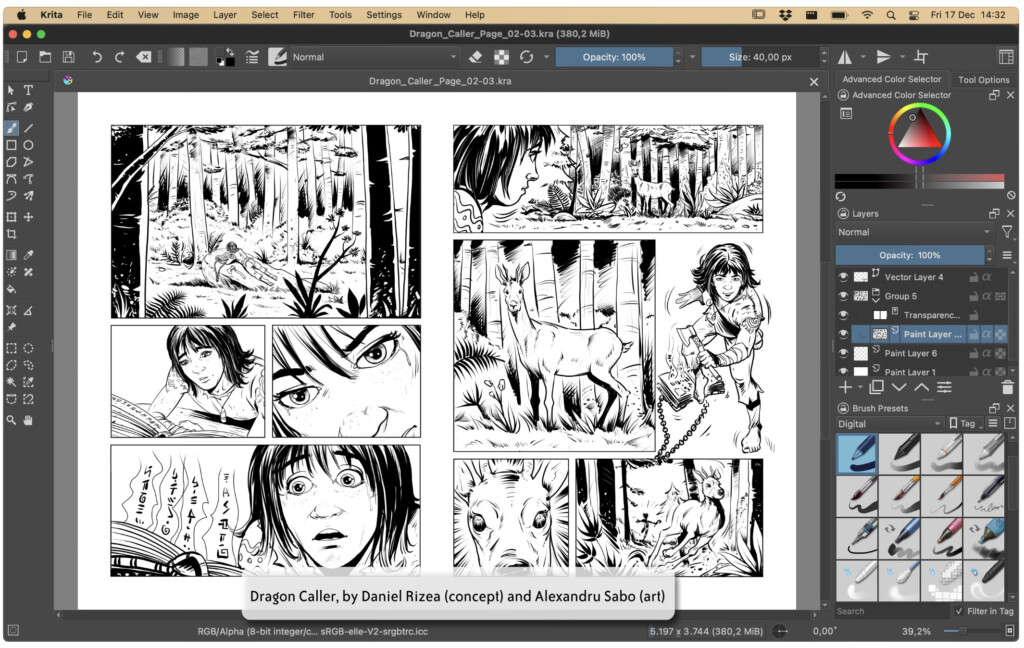
Krita is a professional free painting application rather than a conventional photo-management tool. It is outstanding for digital illustration, concept art, comics, manga, storyboards and tablet-based drawing.
Krita includes sophisticated brush engines, stabilisers, colour-management tools, layers, masks, vector and filter layers, animation tools and strong graphics-tablet support. It can open PSD files and import Photoshop brushes, which makes moving a drawing much easier.
Best for: Artists who use Photoshop primarily for painting, illustration or comic work.
Why it stands out: It is free and open source, yet has the kind of brush control and canvas tools that many paid illustration apps charge for. It is available for macOS and receives signed Mac installers.
Watch out for: Krita is not the best substitute for an end-to-end photography solution, catalogue management or commercial image retouching. If you need to build layered product composites or process lots of RAW camera files, choose Affinity, Pixelmator Pro, PhotoLab or RawTherapee instead.
For more Mac drawing options, see our guide to drawing on a Mac.
Price: Free. Download Krita.

Canva is not a pixel-for-pixel Photoshop replacement, but it is often the better tool for the job. If you create web banners, YouTube thumbnails, social posts, simple product images, posters, presentations or branded marketing assets, Canva lets you finish the work much faster than a blank Photoshop canvas.
Canva has a dedicated Mac desktop app for both Intel and Apple-silicon Macs, plus a browser version. Its photo editor can accept PSD uploads and lets you continue editing them, although it is designed around easy visual creation rather than an agency-grade layer software.
Best for: Non-designers, marketers and small businesses producing regular branded content.
Why it stands out: The free editor is easy to use, has templates and collaboration features, and covers everyday edits such as crop, colour adjustments, text, filters and simple image placement.
Watch out for: Many headline tools, including Background Remover and Magic Eraser, are tied to Canva’s paid plans. Canva is not the right place for intricate retouching, detailed masks, colour-critical print preparation or complex PSD hand-offs.
Price: Free plan available; paid plans unlock additional features and assets. Try Canva for Mac.
7. Adobe Express — Best simple Adobe option
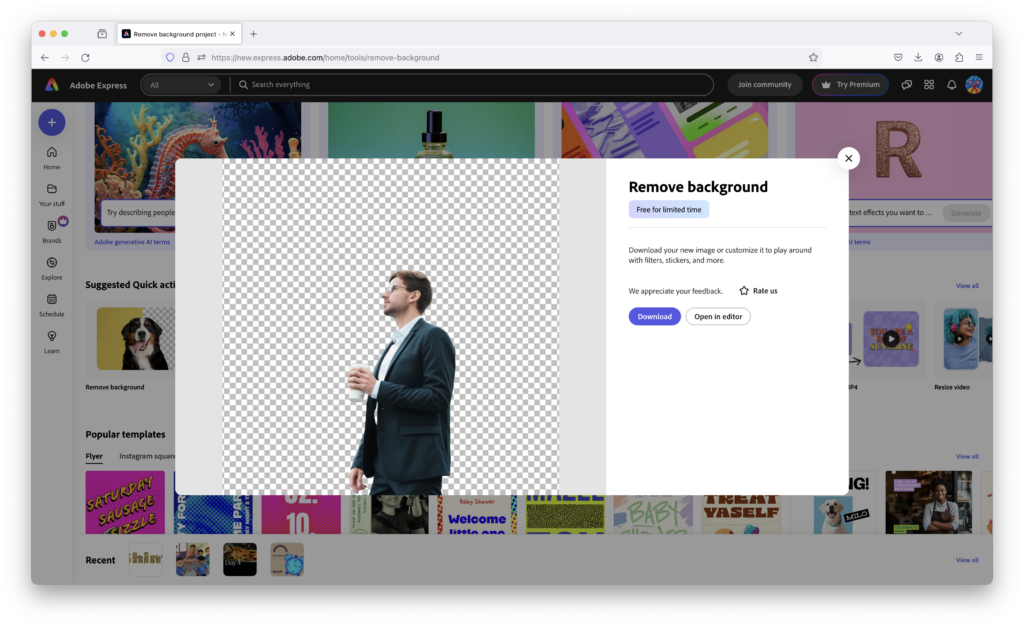
Adobe Express is Adobe’s quick, template-led design tool. It is for people who need social graphics, flyers, simple photo edits, short videos and branded content, but do not want to learn Photoshop.
The free plan includes standard photo, video and document tools, templates, fonts and a limited collection of Adobe Stock assets. Premium adds more advanced design, brand and Firefly-powered AI features. On a Mac, Adobe Express is primarily used in a browser or installed as a desktop progressive web app rather than as a traditional native Mac app.
Best for: Fast, polished promotional graphics where Photoshop would slow you down.
Why it stands out: It is simpler than Photoshop, integrates naturally with Adobe’s ecosystem and has a useful free tier.
Watch out for: It is not a layer-heavy, high-resolution editor for complex retouching or production PSDs. Generative features and premium assets have plan and credit limits, so check what is included before building your work around them.
Price: Free plan available; Premium plan for additional tools and assets. Try Adobe Express.
8. Acorn — Best lightweight local Mac editor
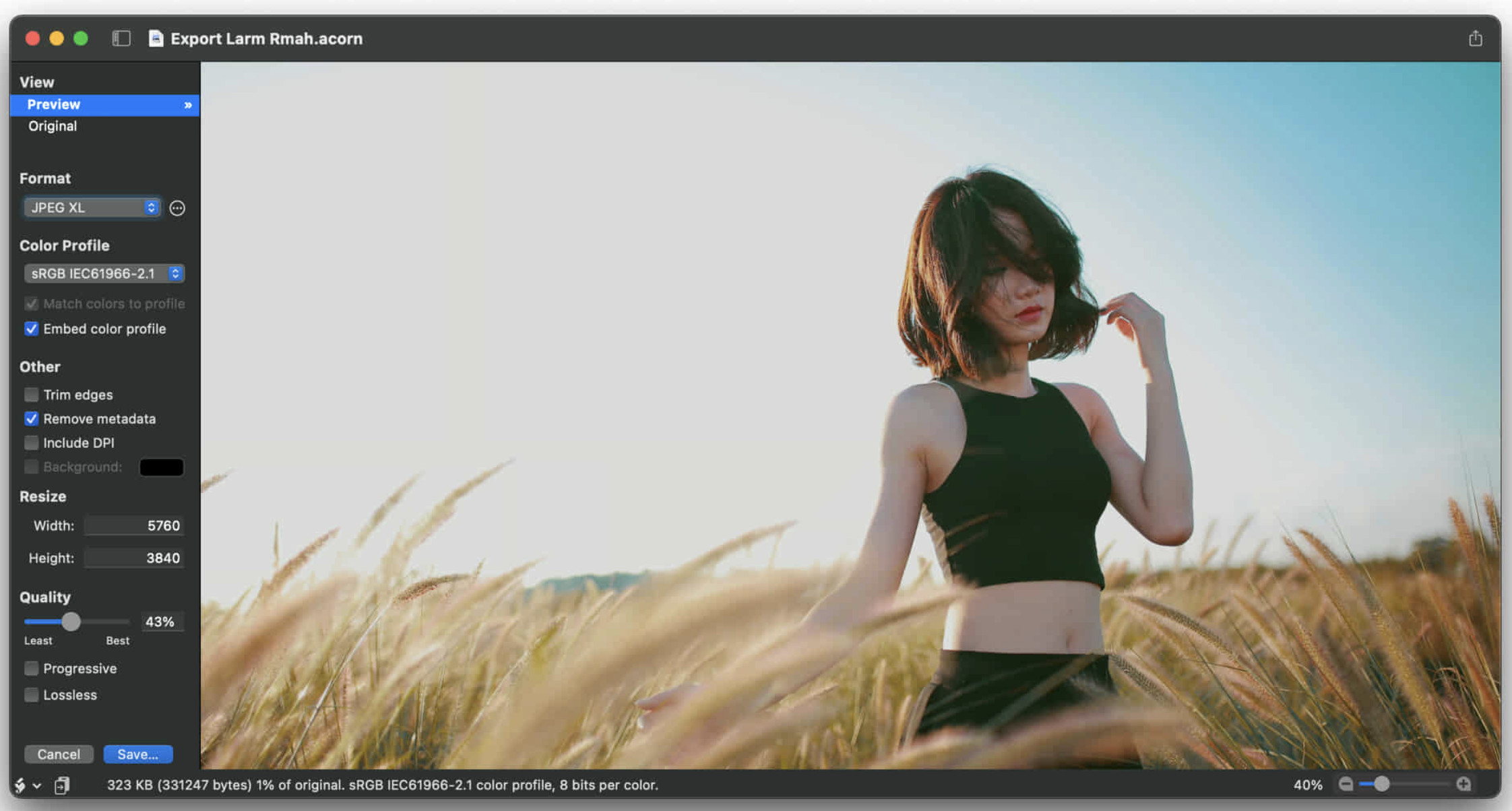
Acorn is a long-running Mac image editor with a far less intimidating interface than Photoshop. It is a good choice for editing screenshots, web graphics, simple layered images, image annotations, quick retouching and straightforward photo work.
Acorn 8 includes layers, selections, masks, subject selection, background removal, filters, perspective correction and useful export options. It is also actively maintained for current macOS releases, including macOS 27 Golden Gate.
Best for: Mac users who want an uncomplicated local app for everyday image work.
Why it stands out: There is no subscription, it has a 14-day trial and it avoids the complexity of a full professional suite.
Watch out for: Acorn is deliberately lighter than Affinity or Pixelmator Pro. It is not the pick for demanding RAW needs, advanced print production or elaborate Photoshop documents.
Price: One-time purchase. Download the Acorn trial.
9. Adobe Photoshop Elements — Best for guided beginner edits
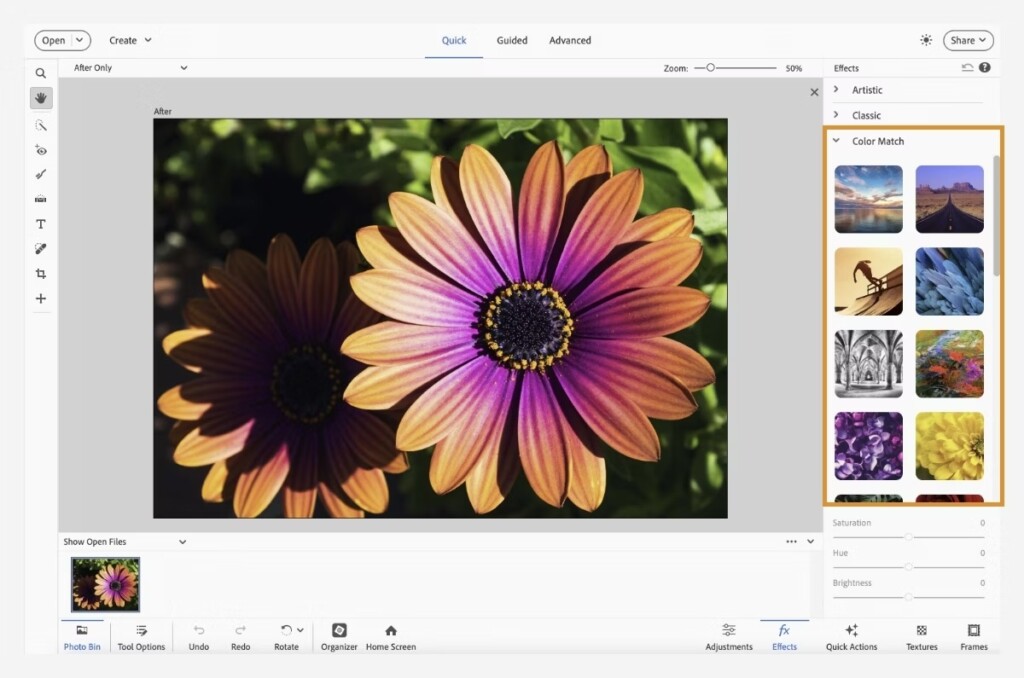
Adobe Photoshop Elements is Photoshop’s simpler consumer-focused sibling. It offers guided edits, automatic organisation, quick fixes, effects and AI-assisted tools for people who want help improving personal photos rather than a professional editing workspace.
It is useful for beginners who like Adobe’s approach but do not want Photoshop’s full learning curve. It is also better at hand-holding than most of the alternatives above.
Best for: Casual photographers who want guided, step-by-step edits and a photo organiser.
Why it stands out: It is easy to learn, has a seven-day trial and does not renew each month.
Watch out for: Do not mistake it for a permanent one-off licence. The current licence runs for three years and then the app stops being accessible, although your Elements catalogue remains available. Adobe lists the current Mac version as requiring Apple silicon and macOS 15.5 or macOS 26.5 or later, so check compatibility carefully if you already use macOS 27 Golden Gate.
Price: The current UK edition is an upfront three-year term licence; Adobe’s listed price and promotions vary. Check Photoshop Elements pricing.
10. Luminar Neo — Best for fast AI-led photo enhancement
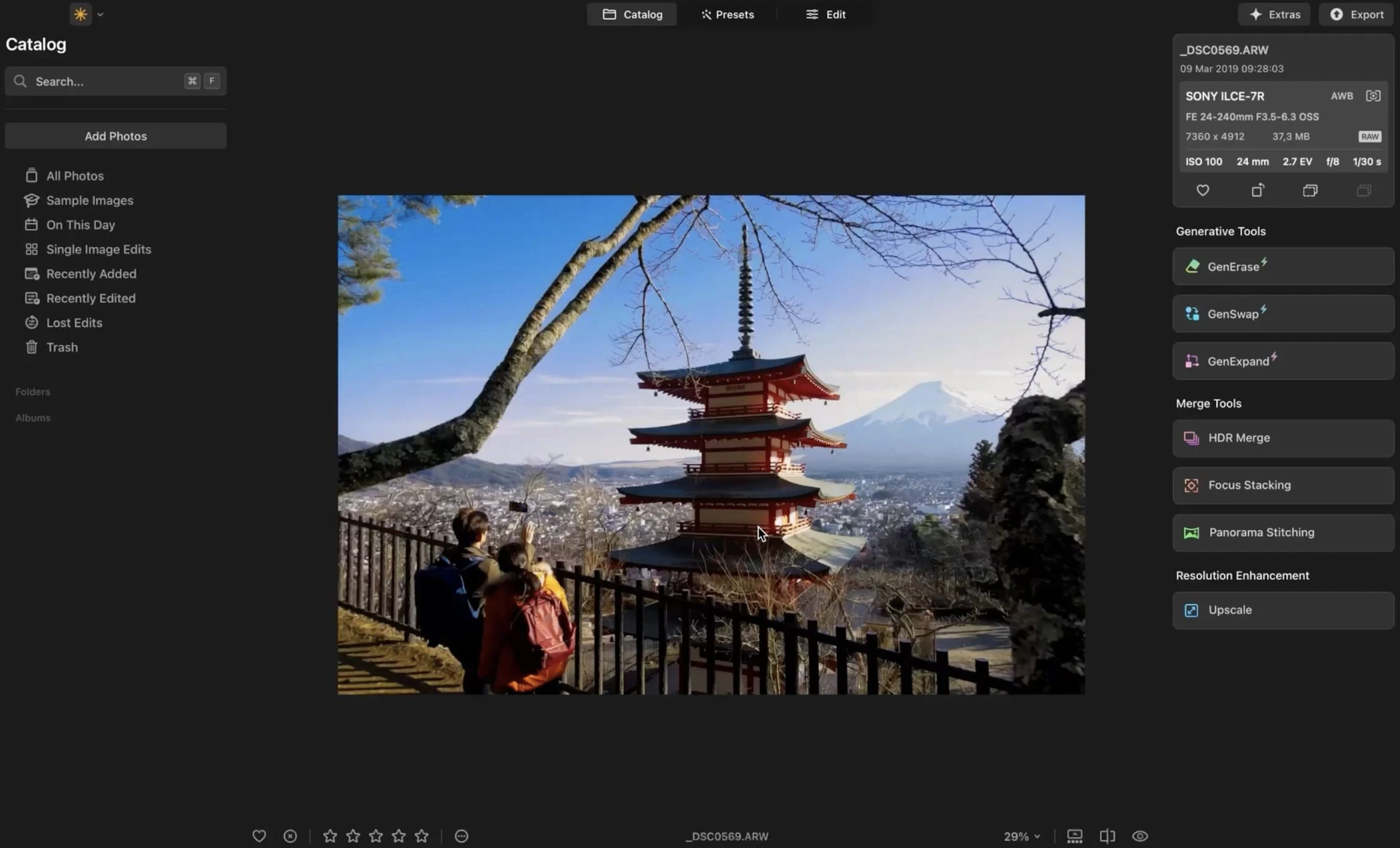
Luminar Neo is aimed at photographers who want striking edits without spending hours on manual masks and adjustments. It excels at tasks such as portrait retouching, sky replacement, landscape enhancement and creatively stylised photos.
It is a useful complement to a general editor, especially if you prefer a visual, slider-based approach to photo enhancement. It can be much faster than Photoshop for a single image where the automated result is close to what you want.
Best for: Hobbyist photographers who value quick AI-powered results over maximum manual control.
Why it stands out: Skylum offers both perpetual and subscription choices, so you can avoid a recurring payment for the core desktop app if that suits you.
Watch out for: A perpetual licence is not necessarily the same as permanent access to every future AI or cloud entitlement. Check the exact plan: some AI capabilities may require a separate subscription. Luminar Neo is not a substitute for Photoshop if you build elaborate layered composites or need reliable PSD collaboration.
Price: Perpetual and subscription options. Check current Luminar pricing.
11. DxO PhotoLab — Best Photoshop alternative for RAW photos
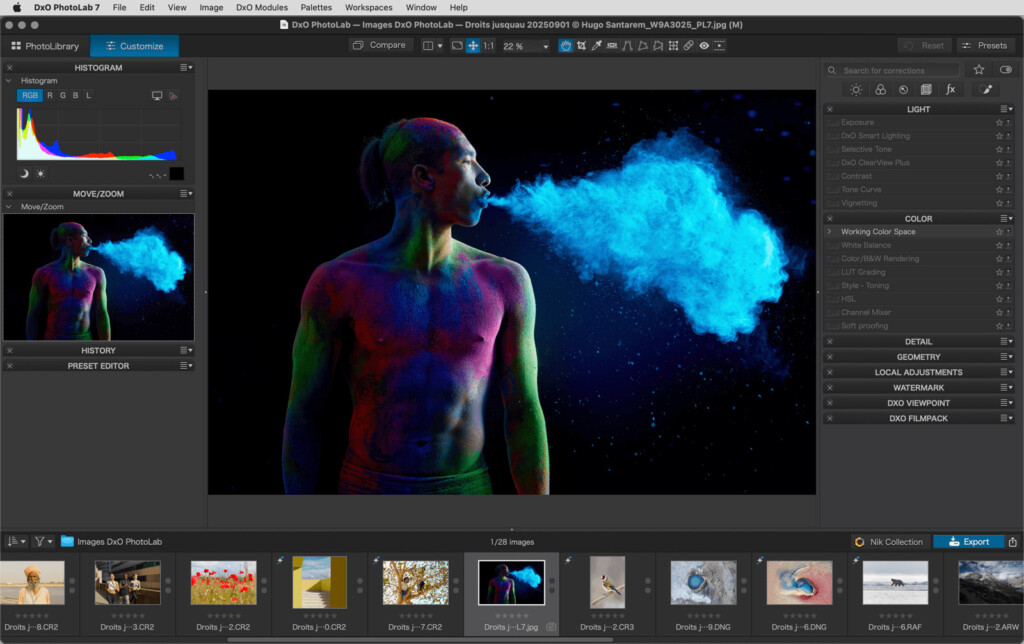
DxO PhotoLab is for photographers who care most about image quality from RAW files. It specialises in lens corrections, noise reduction, demosaicing, local adjustments and precise colour work rather than graphic design.
The current PhotoLab 10 includes AI Masks and DxO’s DeepPRIME noise-reduction technologies. For high-ISO or difficult camera files, it can produce results that are difficult to match with a general-purpose editor.
Best for: Enthusiast and professional photographers who process RAW images and want exceptional technical image quality.
Why it stands out: It is sold with a perpetual licence and excellent for importing to exporting
Watch out for: PhotoLab is not a true Photoshop substitute for multi-layer compositing, web design or illustration. Many photographers will use it to develop a RAW file, then send the finished image to Affinity or Pixelmator Pro for final design work.
Price: Perpetual licence; Essential and Elite options have different tools. Check PhotoLab pricing.
12. RawTherapee — Best free RAW processor
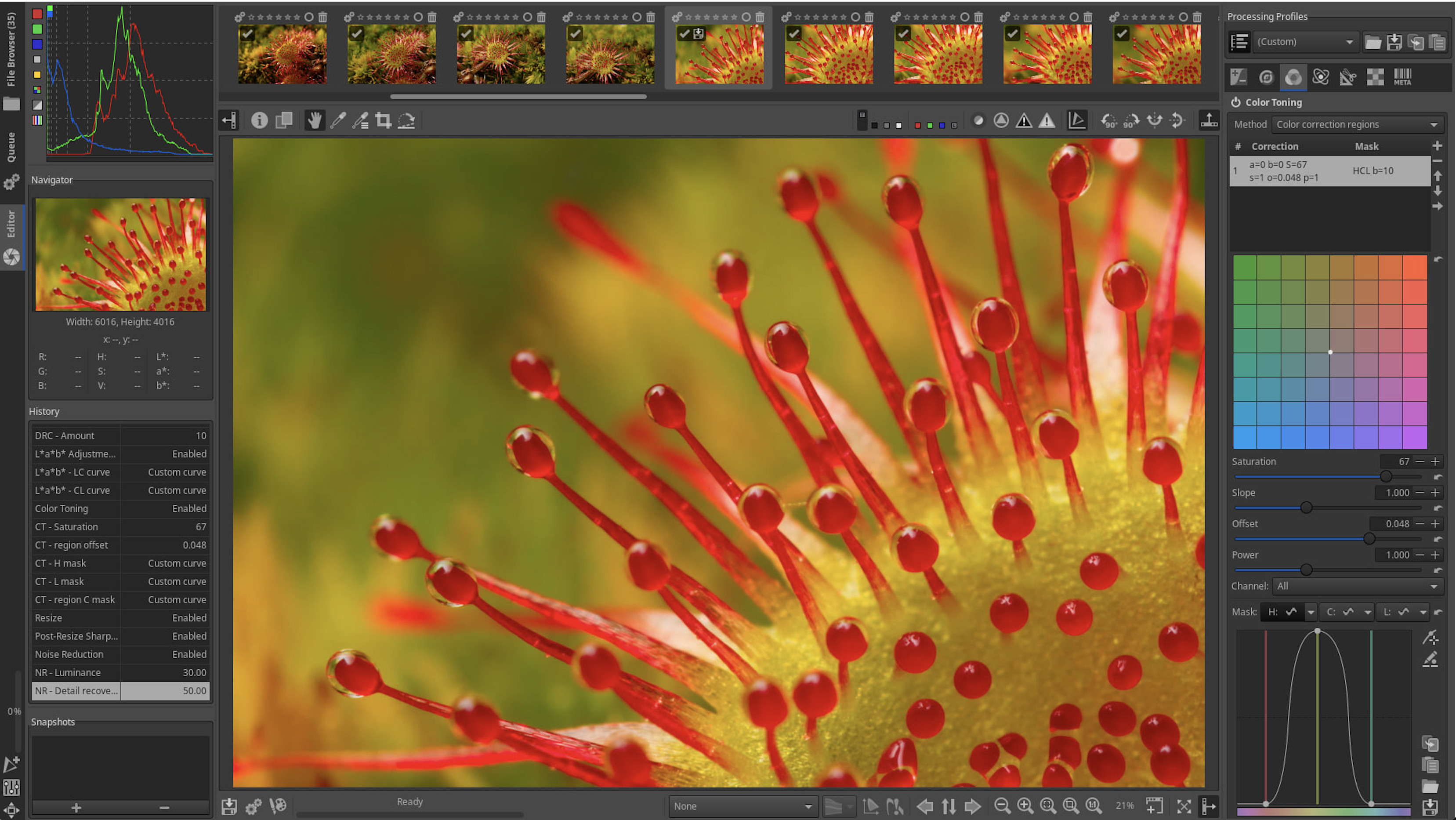
RawTherapee is a powerful, free open-source RAW developer for photographers who want a very technical Photoshop alternative. It offers deep control over exposure, colour, detail, noise, sharpening and batch processing without a subscription or a paywall.
It is not as friendly as PhotoLab or Luminar Neo, but it rewards patience. The current 5.13 release has an official Mac build and supports both Apple silicon and Intel Macs, subject to different macOS requirements.
Best for: Experienced photographers who want a no-cost RAW processor and granular control.
Why it stands out: It is completely free and still supports Intel Macs. The current build requires macOS 26 or later on Apple silicon, or macOS Monterey 12 or later on Intel Macs.
Watch out for: This is a RAW-processing tool, not a layer-based Photoshop replacement. Expect a steeper learning curve and use another app for detailed compositing, text and graphics.
Price: Free. Download RawTherapee.
13. Apple Photos — Best built-in option for basic edits
Do not overlook the Photos app that is already on your Mac. It can crop, straighten, adjust light and colour, apply filters, remove red-eye, make basic retouches and work with RAW files inside an iCloud Photos library.
It is a sensible choice if you only need to improve family photos, trim a quick image for a website or make a few non-destructive adjustments before sharing. You can also hand an image off to compatible third-party editing extensions when you need more control.
Best for: Basic everyday photo edits with no additional cost or learning curve.
Why it stands out: It is already integrated with your Mac, iPhone and iCloud Photos library, and its edits are easy to revert.
Watch out for: Apple Photos has no serious layer system, no PSD support and no advanced compositing tools. It replaces Photoshop only for the simplest jobs.
Price: Included with macOS.
Why Inkscape, Sketch and basic filter apps are no longer main picks
Older Photoshop-alternative lists often lump every creative app together. That is not very helpful. Inkscape is an excellent free SVG and vector editor, but it is a better alternative to Illustrator than to Photoshop. Sketch and Figma are primarily UI and product-design tools, not raster photo editors.
We have also not padded the list with basic collage and filter apps. Apple Photos, Canva, Adobe Express and Acorn now cover most quick-editing needs more cleanly. If you need a broader creative suite rather than a Photoshop replacement, see our guide to the best graphic design software for Mac.
FAQ
What is the best free Photoshop alternative for Mac?
For most people, Affinity is now the best free all-round choice because it combines professional photo, vector and layout tools in one app. Choose Photopea if your priority is opening and saving PSD files in a browser, GIMP if you want a traditional free desktop editor, and Krita if you draw or paint.
Can Photoshop alternatives open PSD files on a Mac?
Yes, but compatibility varies. Affinity, Pixelmator Pro and Photopea are the strongest choices for ordinary PSD work. GIMP and Krita can also open PSDs, but their handling of advanced Photoshop-only features is less predictable. Always test a real project before moving an important project away from Adobe.
Is Affinity Photo still available?
If you own Affinity Photo V2, that licence remains valid, but the current product is the new unified Affinity app from Canva. It combines the former Affinity Photo, Designer and Publisher toolsets. The new app can open older Affinity files, but older apps cannot open new .af files saved by the unified app.
What is the best Photoshop alternative for an Intel Mac?
Affinity, GIMP, Krita, Acorn and RawTherapee are better starting points. Pixelmator Pro’s current version requires Apple silicon and macOS 26 or later, so it is not suitable for Intel Macs.
Can I avoid subscriptions entirely?
Yes. Affinity, GIMP, Krita, Photopea’s free tier, RawTherapee and Apple Photos do not require a subscription. Pixelmator Pro, Acorn, DxO PhotoLab and Luminar Neo also offer forms of one-time or perpetual purchase, although you should check what updates and AI features are included. Photoshop Elements is an upfront purchase, but it expires after three years, so it is not perpetual software.
Which Photoshop alternative is best for RAW photography?
Choose DxO PhotoLab for a polished professional RAW supporting solution and exceptional noise reduction, RawTherapee for a free technical alternative, or Luminar Neo for fast AI-led enhancements. Affinity and Pixelmator Pro are better when RAW editing is only one part of a broader design project.
Do I still need Photoshop?
You probably do if your work depends on Photoshop-only plug-ins, advanced collaborative cloud support, exact client PSD round-tripping, established actions or industry-specific training. Otherwise, start with Affinity or Pixelmator Pro and keep Photoshop only if a real project exposes a feature you cannot replace.
The bottom line
For a serious Photoshop replacement on a Mac, start with Affinity. It is the best combination of professional tools, broad file support and value in 2026. If you have an Apple-silicon Mac on macOS 26 or later, Pixelmator Pro is the most elegant Mac-native choice. For one-off PSD edits, Photopea is hard to beat; for painting, use Krita; and for camera RAW work, use DxO PhotoLab or RawTherapee.
The key is to choose an app for your exact needs, rather than replacing Photoshop with another huge app simply because it looks similar.