

Apple silicon made it possible for Macs to run many iPhone and iPad apps, but it did not turn every Mac into an iPhone or give users a way to install any app they like.
The simple answer is this: an Apple silicon Mac can download iPhone and iPad apps that their developer has made available in the Mac App Store. If an app is not available there, the best official alternative is usually iPhone Mirroring, which lets you use the app installed on your nearby iPhone in a Mac window.
For a small number of games and apps, advanced users can also try PlayCover. However, it is not an official Apple solution and it does not make every iPhone app work. We would not recommend downloading random “decrypted IPA” files from the web just to force an app onto a Mac.
This guide explains what is possible on macOS 27 Golden Gate, macOS Tahoe, Sequoia and earlier compatible versions of macOS, and which method makes sense in each situation.
Quick Answer: Can You Run iOS Apps on a Mac?
Yes, but the right method depends on your Mac and the app you need.
| Method | Works on | Best for | Main limitation |
|---|---|---|---|
| Mac App Store | Apple silicon Macs only | iPhone/iPad apps officially available for macOS | The developer can opt out |
| iPhone Mirroring | Apple silicon Macs and Intel Macs with a T2 chip running macOS 15+ | Using an app already installed on your iPhone | Your iPhone must be nearby; unavailable in the EU |
| Safari web app | Most current Macs | Streaming, social and productivity services with a good website | It is not the mobile app |
| PlayCover | Apple silicon Macs running macOS 12+ | Advanced users running compatible, authorised app files or games | Unofficial; many apps are blocked or unreliable |
| Xcode Simulator | Macs that can run current Xcode | Developers testing their own apps | It cannot turn App Store downloads into Mac apps |
What Changed With Apple Silicon Macs?
Apple silicon Macs use the same broad ARM-based technology family as iPhone and iPad hardware. That allows developers to make many iPhone and iPad apps available on the Mac without building a wholly separate Mac version.
It is not quite right to say that an M-series Mac has exactly the same chip as an iPhone or iPad. Macs use their own Apple-designed chips and hardware, but they share enough underlying architecture and Apple frameworks for compatible mobile apps to run natively.
That is why this feature is limited to Apple silicon Macs — any model with an M-series chip. An Intel Mac cannot install an iPhone or iPad app directly from the Mac App Store, even if it runs the latest version of macOS supported by that model.
Apple gives each developer the final say. By default, compatible iPhone and iPad apps can be offered to Apple silicon Mac users, but a developer can remove that availability, set a higher macOS requirement or replace it with a proper Mac app. This is often sensible: a mobile app may depend on a touch screen, motion sensors, a camera feature, licensing rules or a phone-sized interface.
1. Download Compatible iPhone & iPad Apps From the Mac App Store
This is the easiest and safest way to run an iOS app on a Mac. The app runs locally on your Mac, installs and updates through the App Store, and uses the developer’s official distribution channel.
What you need
- An Apple silicon Mac — choose Apple menu > About This Mac and look for “Chip: Apple M…”
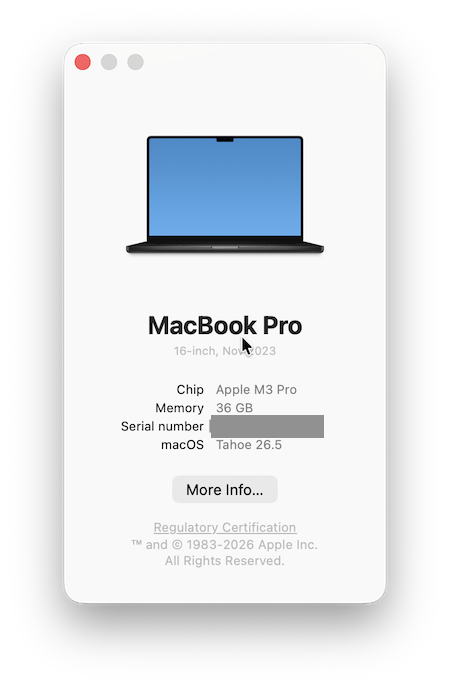
- macOS 11 Big Sur or later, although individual apps can require a newer version of macOS
- The same Apple Account you use for App Store purchases
How to find an iPhone or iPad app on your Mac
- Open the App Store on your Mac.
- Search for the app by name.
- Open the app’s listing and look for the label “Designed for iPhone” or “Designed for iPad.”
- Click Get, or the price button, to install it as you would any other Mac app.
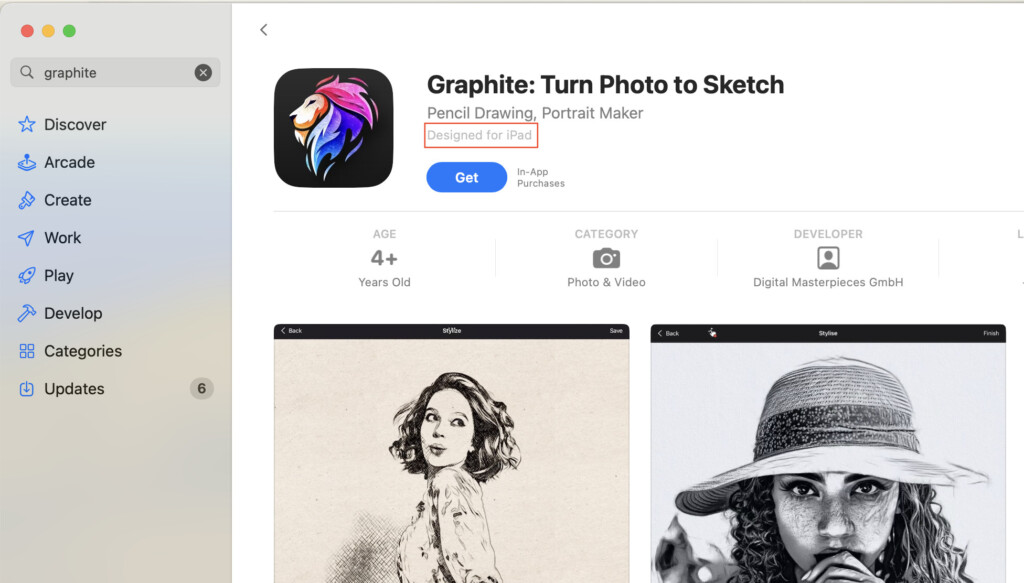
If you have bought the app before, click your name at the bottom-left of the App Store and choose iPhone & iPad Apps to see compatible purchases.
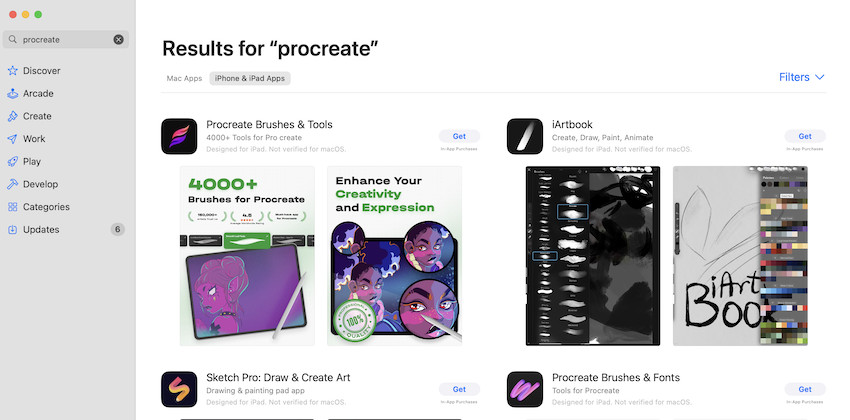
What does “Not verified for macOS” mean?
You may also see wording such as “Designed for iPad. Not verified for macOS.” That does not necessarily mean the app will fail to launch. It means the developer has made it available but has not confirmed that it offers a good Mac experience.
In practice, these apps can be perfectly usable for simple reading, messaging or utility tasks. They can also feel awkward when they rely heavily on multi-touch gestures, portrait orientation, a gyroscope, an iPhone camera or a feature that is not available on a Mac.
Use Touch Alternatives when an app expects a touchscreen
Apple includes Touch Alternatives for compatible iPhone and iPad apps. With the app open, choose [App name] > Settings from the menu bar and look through the available Touch Alternatives. For example, holding the Option key can turn your trackpad into a virtual touch screen for some apps.
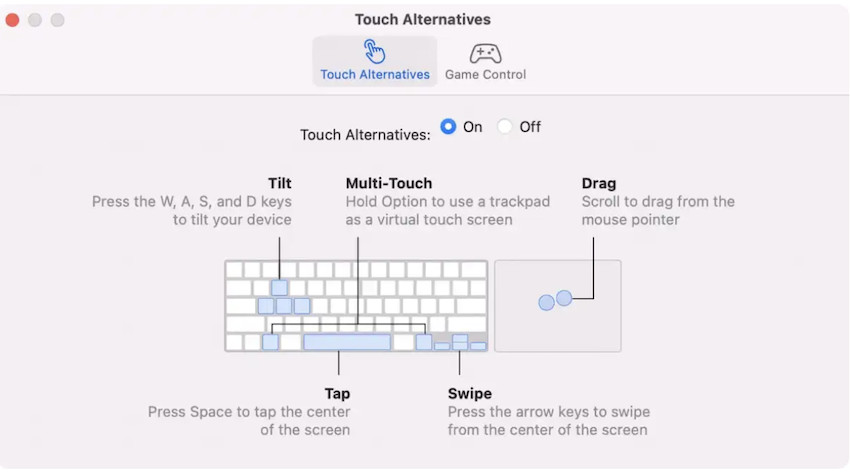
This can make a touch-first app more workable, but it cannot fix an app that simply was not designed sensibly for a keyboard, mouse or large display.
Why Some iPhone Apps Do Not Appear in the Mac App Store

If an iPhone app does not appear in the Mac App Store (such as Netflix), it is usually not because you have missed a hidden setting.
Common reasons include:
- The developer has opted out of Mac availability.
- The developer has released a separate Mac app instead.
- The app depends on mobile-only hardware or touch controls.
- The service has distribution, DRM, payments or licensing restrictions.
- The app is not offered in your App Store region.
There is no supported checkbox that makes an opted-out iPhone app appear in the Mac App Store. This is an important distinction: Apple silicon compatibility does not mean universal availability.
For a technical explanation, Apple’s App Store Connect documentation confirms that developers control whether their iPhone and iPad apps are offered on Apple silicon Macs.
2. Use iPhone Mirroring for Apps That Are Not Available on Mac
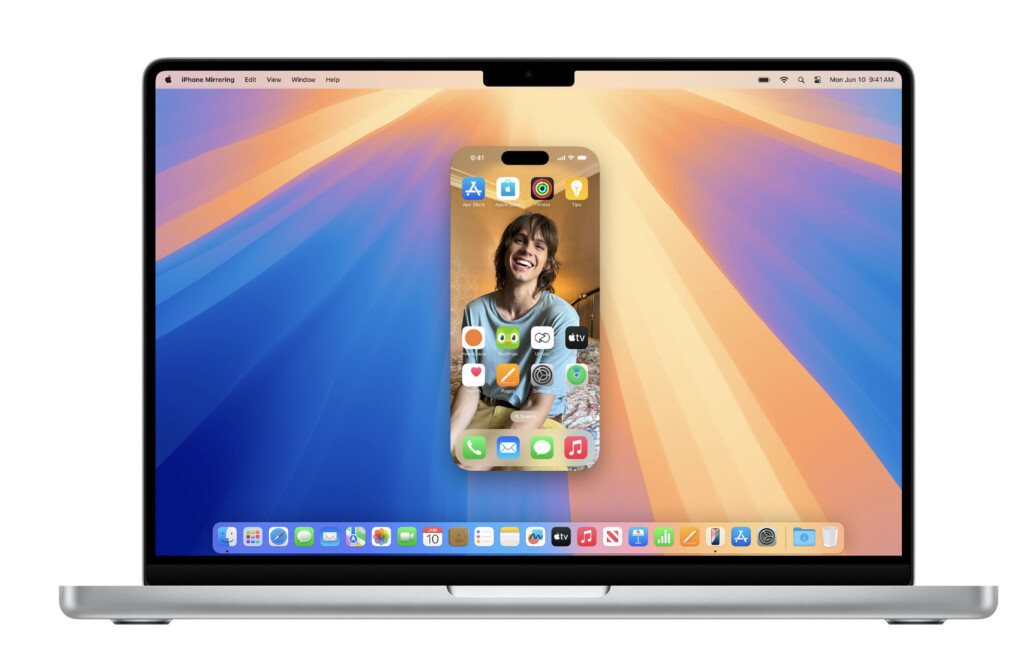
For most people, iPhone Mirroring is now the best answer when an app is unavailable natively. It does not install the app on your Mac. Instead, it securely displays and controls the app that is already installed on your iPhone, while your iPhone stays locked.
That means you can use an app with your Mac keyboard, mouse or trackpad without trying to bypass the developer’s App Store choice. It is particularly useful for social apps, banking apps, mobile-only utilities and services that offer no suitable Mac app.
iPhone Mirroring requirements
You need:
- A Mac with Apple silicon or an Apple T2 Security Chip, running macOS Sequoia 15 or later
- An iPhone running iOS 18 or later with a passcode enabled
- The same Apple Account on both devices, with two-factor authentication enabled
- Wi-Fi, Bluetooth and Handoff switched on
- Your iPhone locked, powered on and nearby
Your Mac cannot be using Internet Sharing, AirPlay or Sidecar at the same time. Apple says iPhone Mirroring is currently unavailable in the European Union, so readers there will need to use the App Store, a browser or another appropriate method instead.
How to use iPhone Mirroring
- Keep your iPhone nearby and lock its screen.
- Open iPhone Mirroring from the Dock, Applications folder or Spotlight on your Mac.
- Click Connect and follow the first-time prompts on both devices.
- Choose whether you want iPhone notifications to appear on your Mac.
- Open the iPhone app you need and use it with your Mac’s trackpad, mouse and keyboard.
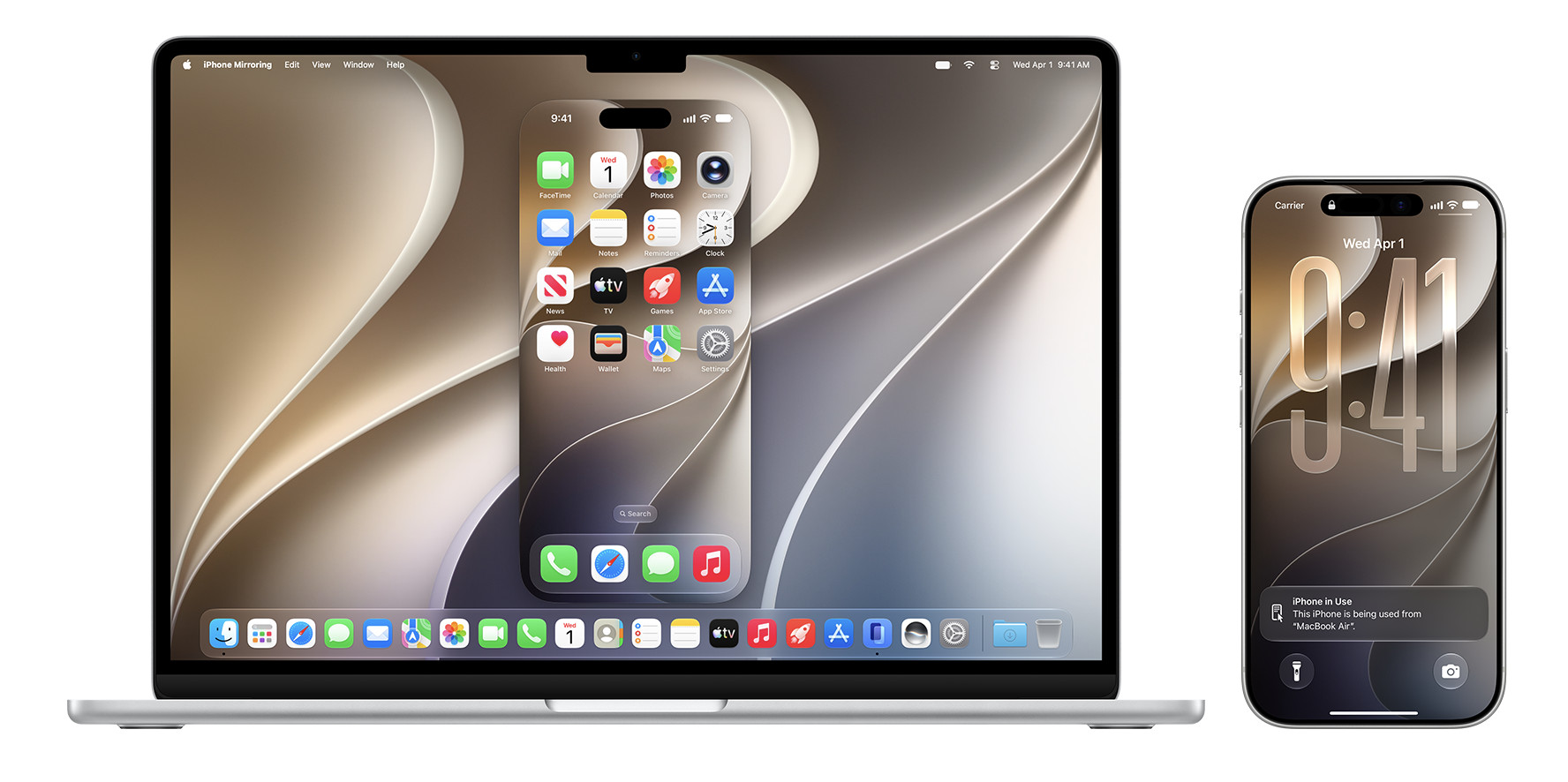
You can click to tap, scroll or swipe, type with your Mac keyboard and use keyboard shortcuts. Current versions also support drag-and-drop between Mac and iPhone in supported apps, plus iPhone notifications and Live Activities on your Mac. Golden Gate adds major upgrades to iPhone Mirroring, including resizable windows, Control Center access, and DRM video support.
There are still sensible limitations. iPhone Mirroring does not provide access to the iPhone camera or microphone, and some streaming services can restrict premium video playback while mirroring. It is also less appealing for fast-action games, because the iPhone has to remain nearby and the game still expects an iPhone-style control scheme.
For the full current requirements and limitations, see Apple’s iPhone Mirroring support guide.
3. Use the Service in Safari and Add It to Your Dock
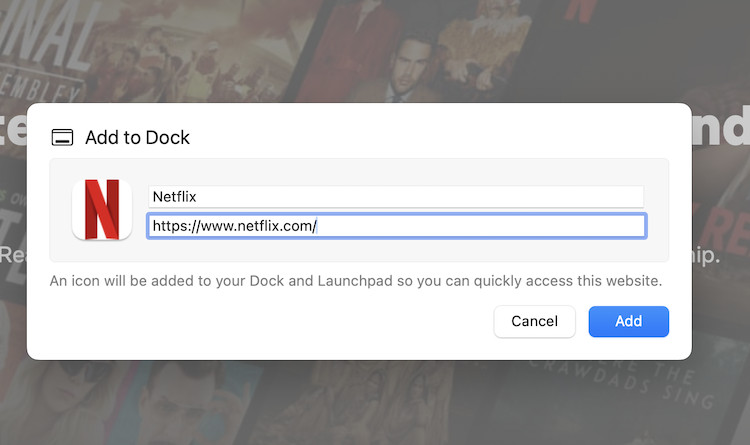
Before looking for a workaround, check whether the service has a good web version. For many streaming, social, email, collaboration and productivity services, the website is the better Mac experience because it is designed for a larger screen and a physical keyboard.
Safari can make many sites feel more app-like. Open the site in Safari, choose File > Add to Dock, then give it a name. You can launch it from the Dock in its own app-style window rather than hunting for a browser tab.
This is often the cleanest solution for an iPhone app that has no approved Mac version. It avoids questionable IPA downloads, works on Intel Macs too, and gives you the desktop-friendly layout the service actually supports.
For more, check out how to turn any website into an app on a Mac.
4. Use PlayCover Only for Compatible Games and Advanced Use Cases
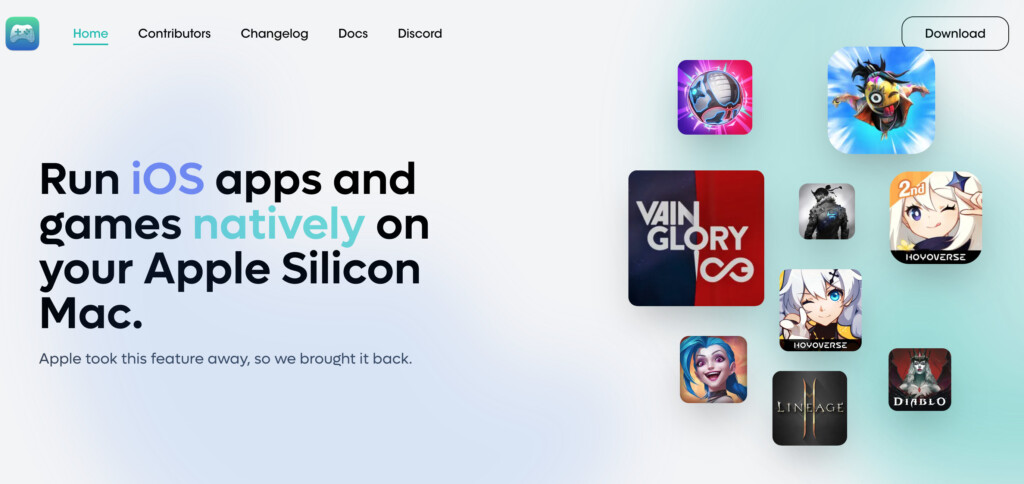
PlayCover is an open-source project that can run some iPhone and iPad apps on an Apple silicon Mac. It works by wrapping a compatible app so that it behaves more like it is running on an iPad. It is not a conventional emulator: compatible apps run natively on Apple silicon.
It is most useful for technically confident users who want to experiment with a compatible mobile game and need keyboard, mouse or controller mapping. PlayCover’s control mapping is its main advantage over iPhone Mirroring for games.
PlayCover requirements and limitations
- It requires an Apple silicon Mac and macOS 12 Monterey or later.
- It is not an Apple-supported way to obtain or run iPhone apps.
- Not every app works. Anti-cheat, device-attestation, DRM, login and mobile-hardware checks can prevent an app from opening or working properly.
- An app update can break compatibility without warning.
- You should only use app files you are authorised to use and obtain PlayCover from its official documentation or official project links.
We have deliberately removed the old instructions that pointed readers to third-party “decrypted IPA” libraries. They are not an official app source, their files cannot be independently trusted, and using them can breach an app’s terms or put an account at risk. Do not enter an Apple Account password or other sensitive credentials into an unfamiliar app build.
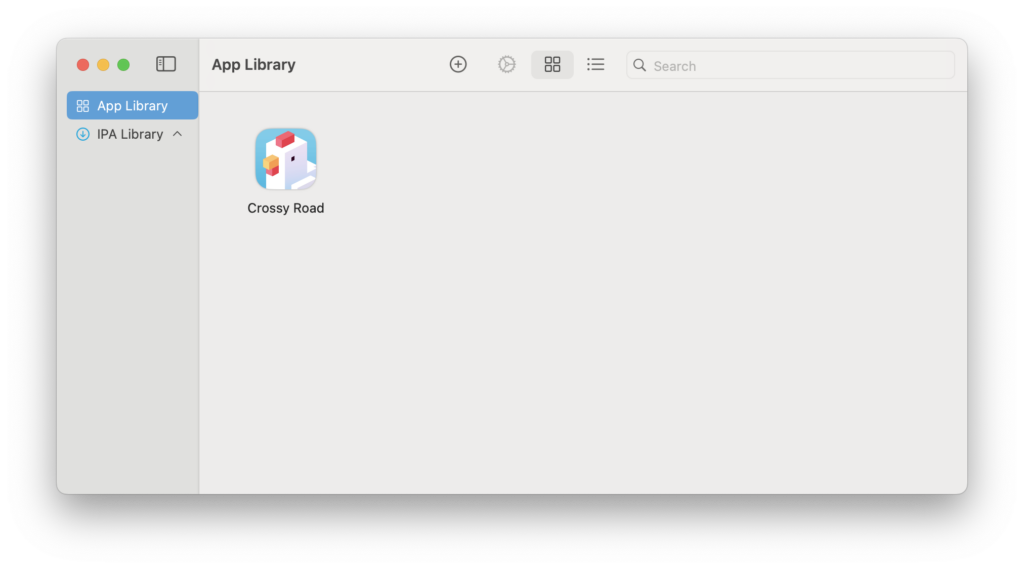
If you already have a legitimate, developer-authorised IPA and understand the limitations, the basic installation process is straightforward:
- Download the current stable release of PlayCover from the project’s official links.
- Move PlayCover to your Applications folder and open it.
- Import only an authorised, compatible IPA file.
- Check the game’s controls and configure key mapping if it supports it.
If an app fails to open, asks for device features your Mac does not have or blocks login, do not try to defeat its security checks. Use the official Mac app, browser version or iPhone Mirroring instead.
5. Developers: Use Xcode Simulator to Test Your Own App
Xcode includes the iOS Simulator, which lets developers test an app they are building on simulated iPhone and iPad models. It is useful for checking layouts, debugging and testing a development build before using a real device.
It is not a consumer solution for installing public iPhone apps from the App Store. You cannot use Xcode Simulator as a way to download a restricted app, bypass a developer’s Mac availability choice or turn a purchased iPhone app into a Mac app.
If you are developing an app, install Xcode from the Mac App Store, open your project, choose an iPhone or iPad simulator in the run destination menu, and press Run. Everyone else should use one of the methods above.
Can You Use iMazing to Sideload iPhone Apps on a Mac?
No. iMazing can manage, back up and install apps on compatible iPhones and iPads, but it does not convert an iPhone IPA into a supported Mac app or make it run natively in macOS.
It is therefore not an alternative to the Mac App Store or iPhone Mirroring. If you see an old guide suggesting iMazing as a simple way to run any iOS app on a Mac, treat that advice as out of date.
Troubleshooting: iPhone and iPad Apps on Mac
The app is not showing in the Mac App Store
First, confirm that your Mac has an Apple silicon chip. If it does, check whether there is a separate Mac version, whether the app is available in your region and whether the developer has opted out of Apple silicon Mac availability. There is no supported workaround if the developer has chosen not to offer it.
iPhone Mirroring cannot connect
Check that both devices use the same Apple Account with two-factor authentication, Wi-Fi, Bluetooth and Handoff are turned on, and the iPhone is locked and nearby. Also stop AirPlay, Sidecar and Internet Sharing before trying again. The feature will not connect in the European Union while Apple lists it as unavailable there.
The app is awkward to control
For a native iPhone/iPad app, look for Touch Alternatives in the app’s Settings menu. If it is still awkward, use the web version instead. A browser-based service can be much more pleasant than trying to force a portrait phone interface into a desktop workflow.
A PlayCover game does not launch or sign in
Assume the title is unsupported or has changed its protection requirements. Do not download unfamiliar modified builds or attempt to bypass anti-cheat, DRM or account checks. Look for the game’s official Mac version, cloud-gaming option or use the iPhone directly.
FAQ
Can Intel Macs run iPhone and iPad apps?
Not natively from the Mac App Store. Apple’s direct iPhone/iPad app support is for Apple silicon Macs. However, an Intel Mac with an Apple T2 Security Chip and macOS Sequoia 15 or later can use iPhone Mirroring, provided the iPhone also meets Apple’s requirements.
Can you install any iOS IPA file on a Mac?
No. A downloaded IPA is not a normal Mac installer, and Apple does not provide a general way to install every iPhone app on macOS. Only use the Mac App Store for native mobile apps, iPhone Mirroring for an app on your iPhone, or an advanced tool such as PlayCover with an authorised and compatible app file.
Can iPhone Mirroring run every iPhone app on a Mac?
It gives you access to the apps installed on your nearby iPhone rather than installing them on the Mac. Most ordinary app interaction works, but an app or content provider can still restrict particular features, including camera, microphone or protected video playback.
Is PlayCover safe?
PlayCover is not an Apple-supported solution, so treat it as an advanced option rather than the default recommendation. Download PlayCover only from its official project, use only app files you are authorised to use, and never give sensitive credentials to an unknown or modified app build.
What is the best way to use an unavailable app such as a social or streaming service?
Start with the service’s official website in Safari. If you specifically need the iPhone app, use iPhone Mirroring where it is available. That is safer and more reliable than trying to sideload a modified mobile app onto your Mac.
Final Thoughts
The best way to run iPhone and iPad apps on a Mac in 2026 is still the simplest one: use the Mac App Store whenever the developer offers the app for Apple silicon Macs.
If it is not listed, use iPhone Mirroring for the real iPhone app or use the service’s web app in Safari. Reserve PlayCover for genuinely compatible games and advanced experiments, not as a promise that every iPhone app can be forced to run on a Mac.
That approach is safer, clearer and much less likely to leave you with an outdated or broken workaround after the next app update.