

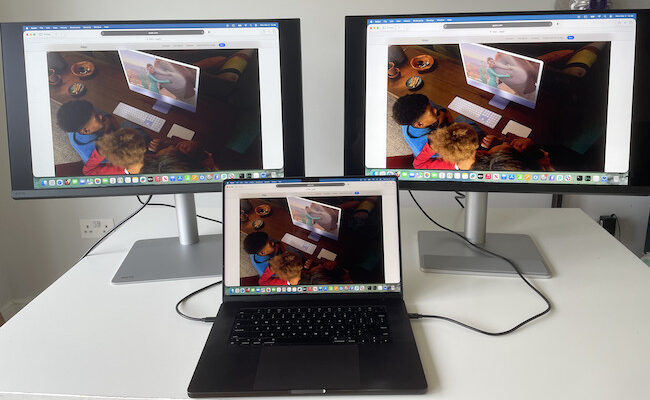
If you want the best 5K monitor for a Mac in 2026, our top recommendation is the BenQ MA270S. It delivers the Retina-style sharpness Mac users want, excellent color, Thunderbolt 4 connectivity and a fully adjustable stand for substantially less than Apple’s Studio Display.
The Apple Studio Display is still the best all-in-one choice if you want the most seamless Mac experience, while the ASUS ProArt PA27JCV is the best lower-cost option.
For professional HDR work or 120Hz, the Studio Display XDR is in a different league – and a very different price bracket.
Why 5K Is the Sweet Spot for a Mac
A 27-inch monitor with a true 5120 × 2880 resolution has a pixel density of approximately 218 pixels per inch (PPI). That lets macOS use clean 2× Retina scaling while presenting an effective workspace similar to 2560 × 1440.
The result is crisp text, smooth icons and comfortable interface sizing without the compromises that can come with scaling a 27-inch 4K monitor to a larger workspace.
This does not mean that 4K monitors are bad for Macs. A good 4K display can look excellent and costs much less. However, if you are sensitive to text sharpness, spend all day reading or coding, or are trying to reproduce the clarity of a 5K iMac or Studio Display, 27-inch 5K is the safer choice.
This guide covers only true 16:9 5K monitors with a resolution of 5120 × 2880. Ultrawide screens marketed as “5K,” including 5120 × 2160 and 5120 × 1440 models, do not have the same 218 PPI pixel density.
If you are also considering 4K, 6K or ultrawide displays, see our broader guide to the best alternatives to the Apple Studio Display.
Best 5K Monitors for Mac at a Glance
All the displays in the table below are 27-inch, 5120 × 2880 monitors with a pixel density of 218 PPI.
| Monitor | Best for | Refresh rate | Brightness | Laptop charging | Webcam | Typical price |
|---|---|---|---|---|---|---|
| BenQ MA270S | Best overall | 70Hz | Up to 500 nits | 96W | No | $999 |
| Apple Studio Display | Best Mac integration | 60Hz | 600 nits | 96W | 12MP | From $1,599 |
| ASUS ProArt PA27JCV | Best budget option | 60Hz | 400 nits typical | 96W | No | Around $799 |
| BenQ PD2730S | Color-critical creative work | 60Hz | 400 nits | 90W | No | $1,099 |
| ViewSonic VP2788-5K | Ports and 75Hz | 75Hz | 500 nits | 100W | No | Around $930 |
| Philips Brilliance 27E3U7903 | Webcam and docking | 70Hz | DisplayHDR 600 | 96W | 5MP | Around £849 |
| Apple Studio Display XDR | HDR and 120Hz | 120Hz | 1,000 nits SDR; 2,000 peak HDR | 140W | 12MP | From $3,299 |
Prices and availability change frequently. The figures above are approximate prices at the time of writing rather than live quotes.
How We Chose These Displays
We prioritized the things that make the biggest difference when a monitor is connected to a Mac:
- True 5120 × 2880 resolution and 218 PPI
- Reliable full-resolution output from macOS
- P3 color coverage and factory color accuracy
- Thunderbolt or full-featured USB-C connectivity
- Enough Power Delivery to charge a MacBook through the display cable
- Sensible ergonomics, ports and Mac-compatible controls
- Current price and availability
Our rankings combine MacHow2’s hands-on testing with current manufacturer specifications and availability. Where we have tested a display, we say so rather than presenting every manufacturer claim as a test result.
1. BenQ MA270S (Best Overall 5K Monitor for Mac)
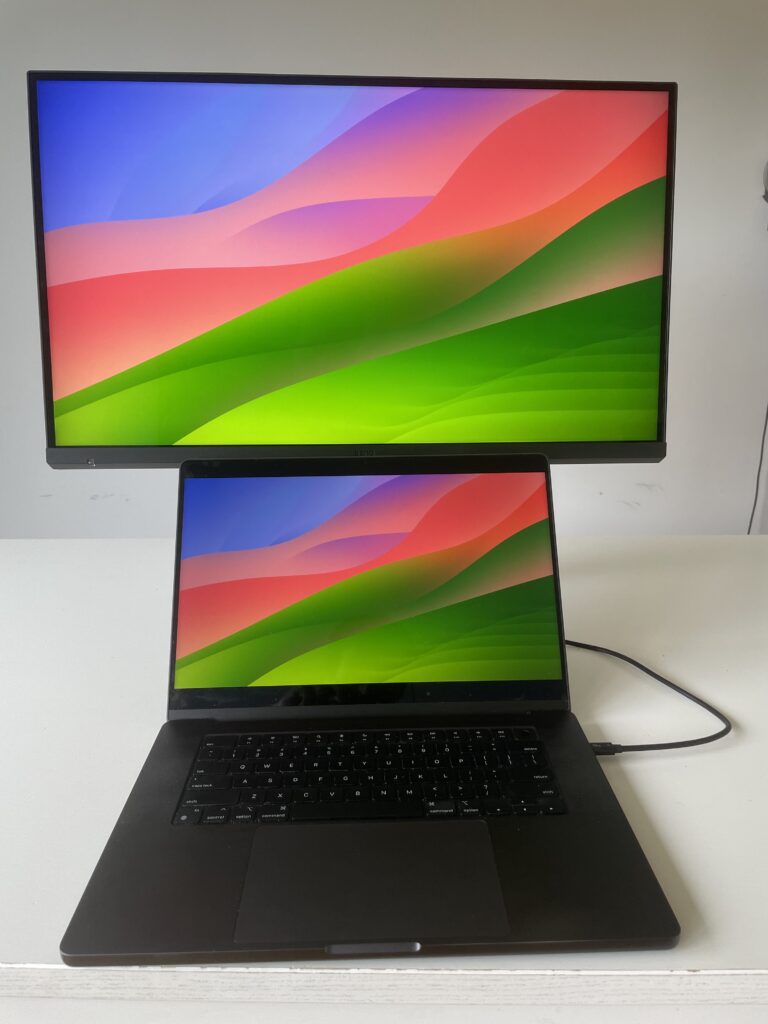
Why we recommend it: The MA270S offers the best balance of 5K sharpness, Mac integration, ports and price for most people.
The BenQ MA270S is a 27-inch 5K display designed specifically for Mac users. It combines a glossy-style Nano Gloss panel with 99% P3 coverage, a 70Hz refresh rate and Thunderbolt 4 connectivity.
In our testing, the improvement over a 27-inch 4K monitor was immediately noticeable. Text looked much sharper and closer to the experience of using a 5K iMac or Studio Display. Color consistency and panel uniformity were also strong, while 70Hz made scrolling and general movement feel slightly smoother than on a conventional 60Hz screen.
One Thunderbolt 4 connection carries the video signal, data and up to 96W of charging to a MacBook. There is also a downstream Thunderbolt 4 port for accessories or a compatible second display, plus HDMI, USB-C and USB-A connectivity. BenQ’s Smart KVM is useful if you switch between two computers.
Display Pilot 2 adds some of the integration normally missing from third-party monitors, including brightness and volume control from a Mac keyboard, automatic brightness matching and Mac-oriented color modes.
The compromises are easy to understand. There is no webcam, the built-in 3W speakers are adequate rather than impressive, and the panel is less bright than Apple’s displays. If you already own a webcam or use external speakers, those omissions are much easier to accept than the Studio Display’s higher price.
Read our full BenQ MA270S review for our test results and setup experience.
Price: The MA270S has a list price of $999. Check the current Amazon price or buy it directly from BenQ.
Pros
- Excellent 5K clarity and native-looking macOS scaling
- Strong color consistency and 99% P3 coverage
- Slightly smoother 70Hz refresh rate
- Thunderbolt 4 with 96W MacBook charging
- Useful Mac keyboard controls through Display Pilot 2
- Smart KVM and a wide selection of ports
- Fully adjustable stand included
Cons
- No webcam
- Speakers are basic
- Not as bright as Apple’s Studio Displays
- Display Pilot 2 is required for some Mac-specific controls
2. Apple Studio Display (Best Premium 5K Monitor for Mac)
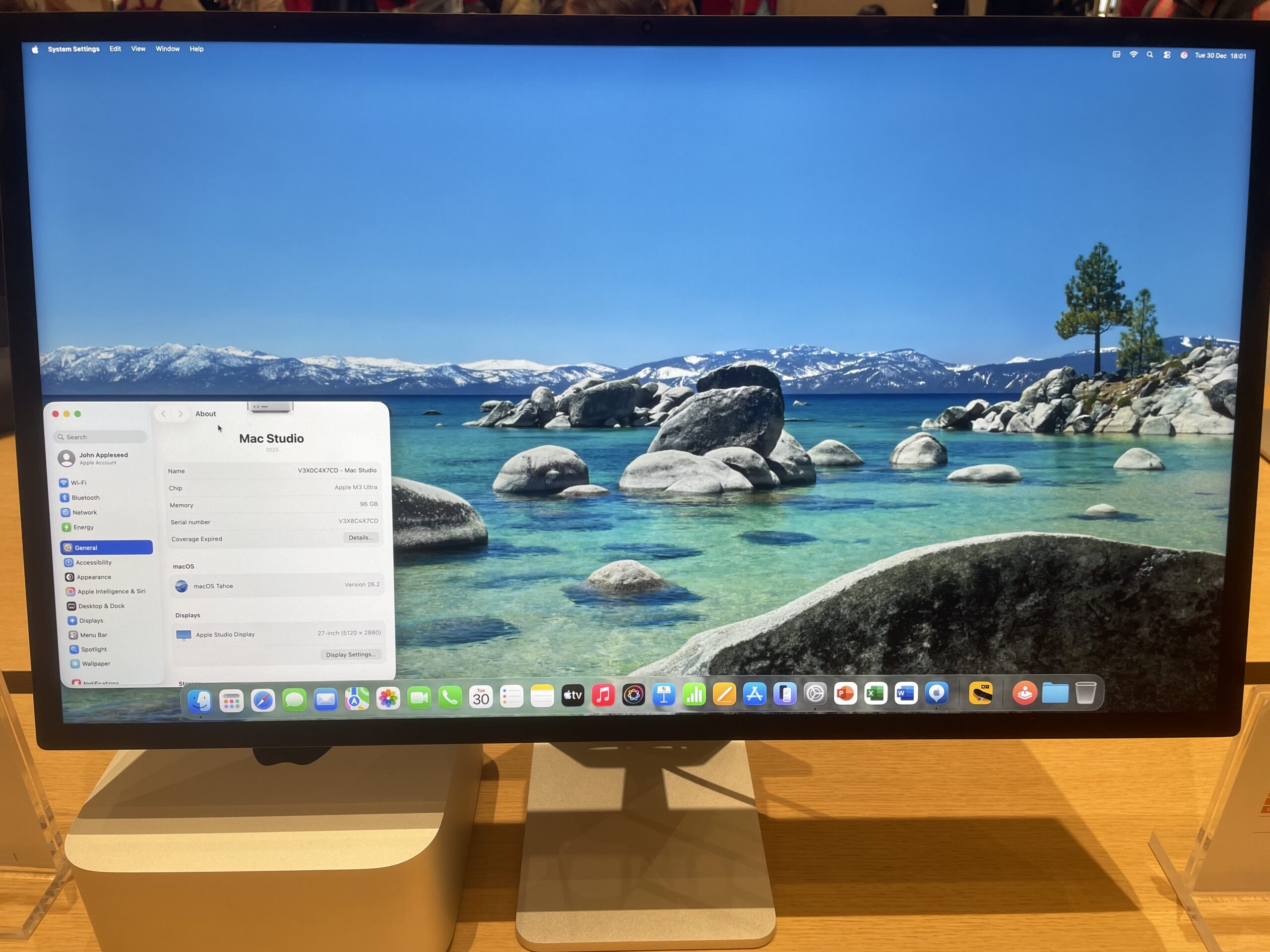
Why we recommend it: It remains the most polished 5K monitor for a Mac and the only standard-priced model here with genuinely excellent built-in camera, microphone and speaker hardware.
Apple refreshed the Studio Display in 2026 without changing its core formula. It is still a 27-inch 5120 × 2880 IPS display with 218 PPI, P3 color, True Tone, a 60Hz refresh rate and 600 nits of brightness.
The refresh brought Thunderbolt 5 connectivity, an improved 12MP Center Stage camera and an upgraded six-speaker audio system. One upstream Thunderbolt 5 port provides 96W charging, while a downstream Thunderbolt 5 port can connect high-speed accessories or daisy-chain another compatible display. Two additional USB-C ports are provided for peripherals.
The Studio Display’s main advantage is not resolution – several monitors in this guide use similarly sharp panels. It is the complete experience. Brightness and volume controls work naturally in macOS, True Tone requires no third-party utility, firmware updates come through Apple and the camera, microphones and speakers replace several separate desk accessories.
You still pay heavily for that integration. The standard panel remains 60Hz and does not offer true HDR or local dimming. The base stand only adjusts for tilt, with height adjustment costing extra, and there are no HDMI or DisplayPort inputs for consoles or other computers.
For more detail, read our Apple Studio Display review and our comparison of the original and 2026 Studio Displays.
Price: The 2026 Studio Display starts at $1,599 from Apple but you can also often find it discounted on Amazon. Nano-texture glass and the height-adjustable stand increase the price.
Pros
- Excellent 5K sharpness, color and 600-nit brightness
- The most seamless integration with macOS
- High-quality 12MP Center Stage camera
- Class-leading built-in speakers and microphones
- True Tone and useful reference modes
- Thunderbolt 5 with 96W charging
- Premium aluminum construction
Cons
- Expensive compared with third-party 5K monitors
- Still limited to 60Hz
- No true HDR or local dimming
- Height-adjustable stand costs extra
- No HDMI, DisplayPort or KVM
3. ASUS ProArt PA27JCV (Best Budget 5K Monitor for Mac)

Why we recommend it: It is usually the least expensive current 27-inch 5K monitor from a major manufacturer, yet its color specifications are good enough for serious creative work.
The ASUS ProArt PA27JCV proves that dropping below $1,000 does not require sacrificing 5K resolution or color accuracy.
Its anti-glare, low-reflection IPS panel covers 99% of DCI-P3, 100% of sRGB and 95% of Adobe RGB. Every unit is factory calibrated and Calman Verified to Delta E < 2. It is also VESA DisplayHDR 500 certified, although its 400-nit typical brightness and lack of local dimming mean it should not be confused with a true HDR reference display.
A full-featured USB-C port sends video and data while providing up to 96W of charging. ASUS also includes HDMI 2.1, DisplayPort 1.4, a USB hub, Auto KVM and a stand with height, tilt, swivel and pivot adjustment.
Unlike the BenQ and Apple models, it does not have Thunderbolt. That matters if you want to daisy-chain 5K monitors or use the display as a high-speed Thunderbolt dock, but it makes little difference to someone connecting a single MacBook over USB-C.
ASUS DisplayWidget Center enables Mac keyboard brightness control, although the cursor must be on the ProArt display for the keyboard shortcut to affect it.
See our ASUS ProArt PA27JCV vs Apple Studio Display comparison for a closer look at the tradeoffs.
Price: The PA27JCV launched at $799, although retail prices vary. Check the current price on Amazon and make sure the listing is for a new PA27JCV rather than a used unit or the similarly named 4K PA279CV.
Pros
- One of the most affordable current 27-inch 5K displays
- 99% DCI-P3 and 95% Adobe RGB coverage
- Factory calibrated to Delta E < 2
- USB-C with 96W charging
- HDMI, DisplayPort, USB hub and Auto KVM
- Fully adjustable stand
Cons
- No Thunderbolt or 5K daisy-chaining
- 60Hz refresh rate
- No webcam
- 400-nit typical brightness
- Mac keyboard control is less seamless than on Apple or BenQ displays
4. BenQ PD2730S (Best 5K Monitor for Creatives)
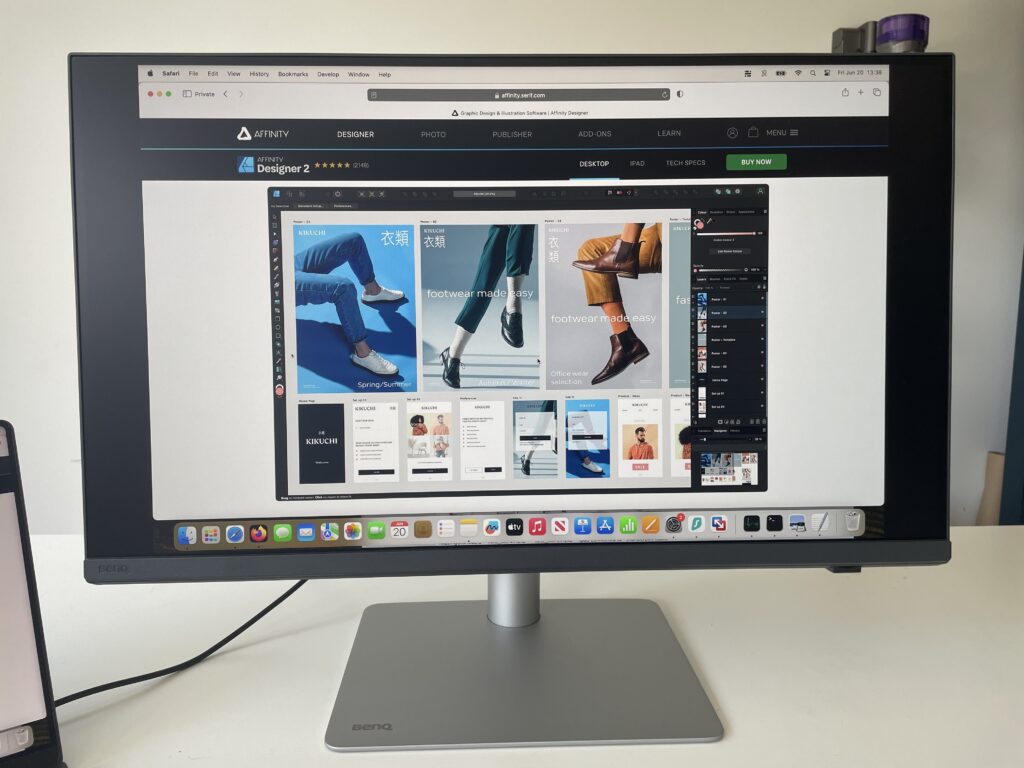
Why we recommend it: The PD2730S is designed around consistent, repeatable color workflows rather than being a general-purpose monitor with a wide gamut added to the specification sheet.
The BenQ PD2730S is a strong choice for photographers, designers and video editors who need 5K detail and dependable color accuracy.
Its 27-inch IPS panel covers 98% of P3, has a 2000:1 contrast ratio and is factory calibrated to an average Delta E of 2 or below. It supports BenQ’s professional color modes and Display Pilot 2, making it easier to switch between creative workflows and coordinate the display with a Mac.
Thunderbolt 4 provides data, video and up to 90W of MacBook charging through one cable. The downstream Thunderbolt port supports compatible daisy-chained displays, while HDMI, DisplayPort, USB-C, USB-A and a built-in KVM make the PD2730S more flexible than Apple’s Studio Display.
The main drawback is value. Its 400-nit, 60Hz panel is not as bright or smooth as the MA270S, while the cheaper ASUS offers similarly strong factory color calibration. The reason to pay more is the BenQ creative workflow, Thunderbolt 4 hub and the controls provided by Display Pilot 2.
Read our full BenQ PD2730S review or see how it compares in our BenQ PD2730S vs Apple Studio Display guide.
Price: The PD2730S has a list price of $1,099.99. Check the current Amazon price or view it on BenQ’s website.
Pros
- Excellent 5K sharpness and 2000:1 contrast
- Factory-calibrated color accuracy
- 98% P3 coverage and professional color modes
- Thunderbolt 4 hub with 90W charging
- Built-in KVM and broad connectivity
- Fully adjustable stand
Cons
- More expensive than the ASUS and close in price to the MA270S
- 400-nit brightness
- Limited to 60Hz
- No webcam
5. ViewSonic ColorPro VP2788-5K (Best 5K Monitor for Connectivity)
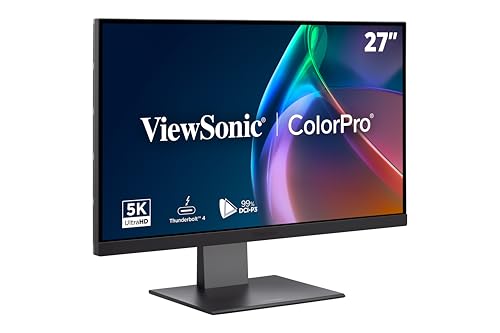
Why we recommend it: The ViewSonic combines a 75Hz 5K panel with strong color credentials and one of the most useful collections of ports in this guide.
The ViewSonic ColorPro VP2788-5K is easy to overlook, but it is one of the strongest Studio Display alternatives for anyone who values connectivity.
Its 27-inch IPS panel runs at up to 75Hz, giving it a modest smoothness advantage over 60Hz displays. It reaches 500 nits, covers 99% of DCI-P3 and is factory calibrated to Delta E < 2. It is also Pantone Validated and supports hardware calibration through ViewSonic’s Colorbration+ software.
The upstream Thunderbolt 4 port supplies up to 100W to a MacBook, while a second Thunderbolt 4 port can power an accessory or connect another compatible 5K monitor. HDMI 2.1, DisplayPort 1.4, USB-C and USB-A ports make it practical for a mixed Mac and PC desk.
The included stand offers height, tilt, swivel and pivot adjustment, and the two 5W speakers are more useful than the token speakers built into some third-party displays. There is no webcam, however, and its external power adapter adds more clutter than the BenQ or Apple designs.
Price: ViewSonic lists the VP2788-5K at around $929.99. It is also available from Amazon, depending on stock.
Pros
- True 5K at up to 75Hz
- 500-nit brightness and 99% DCI-P3
- Factory calibration and hardware-calibration support
- Thunderbolt 4 with 100W charging
- HDMI, DisplayPort, USB-C and USB-A
- Fully adjustable stand
Cons
- No webcam
- External power adapter
- HDR400 is not suitable for serious HDR mastering
- Mac integration is not as seamless as Apple or BenQ
6. Philips Brilliance 27E3U7903 (Best Non-Apple 5K Monitor With a Webcam)
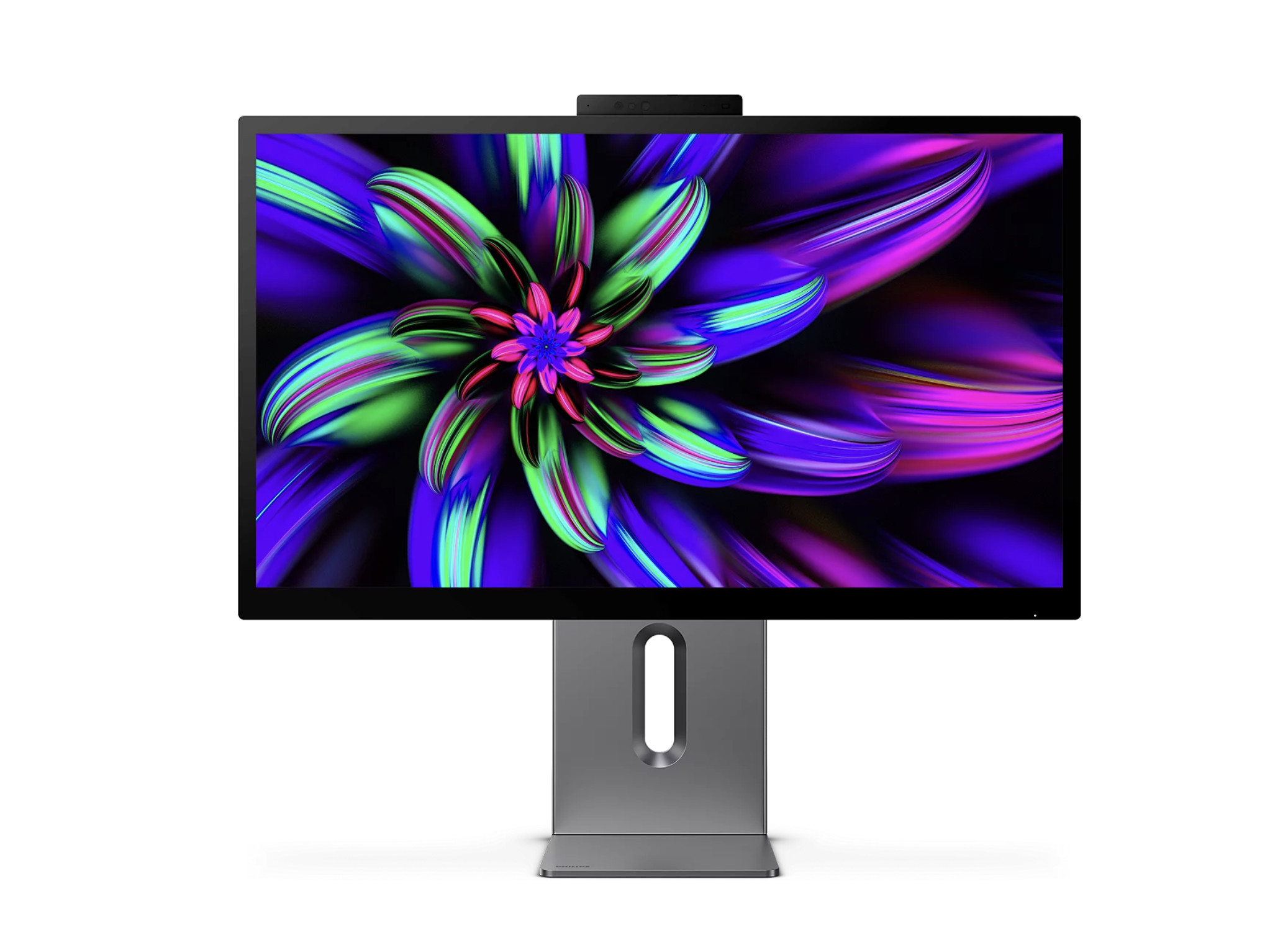
Why we recommend it: It is one of the few third-party 5K monitors that combines strong creative specifications with a built-in webcam and a genuine single-cable docking setup.
The Philips Brilliance 27E3U7903 is especially attractive for home offices and creative studios in the UK and Europe. Its 27-inch 5K panel runs at up to 70Hz, is DisplayHDR 600 certified and covers 99% of DCI-P3 and 99.5% of Adobe RGB.
It is Calman Ready for automated hardware calibration and uses anti-reflective display glass rather than a conventional heavy matte coating. Thunderbolt 4 carries video, data and up to 96W of charging, with a downstream Thunderbolt 4 port available for accessories or another compatible display.
The built-in 5MP webcam supports automatic framing and is paired with a noise-canceling microphone. The camera’s Windows Hello support is not useful for logging into a Mac, but the camera itself still removes the need for a separate webcam. HDMI 2.1, Gigabit Ethernet, USB ports, Smart KVM and an adjustable stand make this the closest third-party option to a complete desktop dock.
Its biggest limitation is availability. It is widely sold in parts of Europe but is harder to find in the US, so North American buyers will usually find the BenQ, ASUS or ViewSonic easier to buy and return.
Price: The 27E3U7903 launched at around £849 in the UK, but regional prices vary. Check current availability from Philips.
Pros
- 5K panel with a slightly smoother 70Hz refresh rate
- DisplayHDR 600 and wide P3/Adobe RGB coverage
- Built-in 5MP webcam and microphone
- Thunderbolt 4 with 96W charging
- Ethernet, USB hub and Smart KVM
- Calman Ready hardware calibration
Cons
- Limited availability in the US
- Windows Hello does not provide Mac login
- No dedicated DisplayPort input
- Less proven Mac integration than Apple or BenQ
7. Apple Studio Display XDR (Best 5K Monitor for HDR and 120Hz)
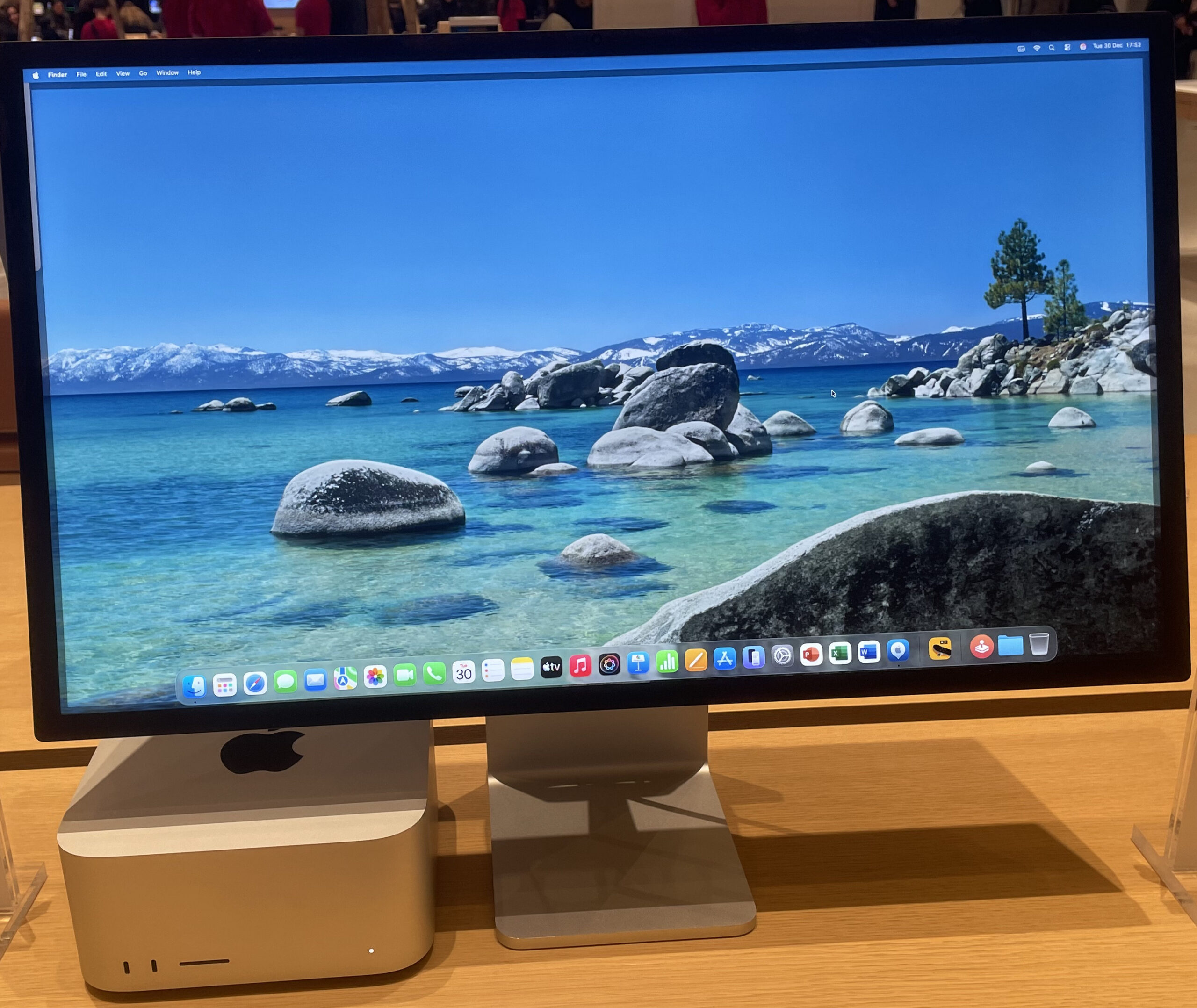
Why we recommend it: It is the only current 27-inch 5K monitor that combines Retina sharpness, a 120Hz refresh rate, high-quality local dimming and reference-grade HDR performance.
The Studio Display XDR is not simply a brighter Studio Display. Its mini-LED backlight uses 2,304 local-dimming zones, reaches up to 1,000 nits for SDR work and peaks at 2,000 nits with HDR content. Apple specifies a 1,000,000:1 contrast ratio.
It also supports P3 and Adobe RGB color gamuts, a wide selection of reference modes, a 120Hz refresh rate and Adaptive Sync. This makes it the best 5K choice for HDR video, high-end photography, motion work and anyone who wants much smoother scrolling and animation.
The rest of the package is similarly complete: a 12MP Center Stage camera, three-microphone array, six-speaker system, True Tone and Thunderbolt 5. The upstream Thunderbolt port supplies up to 140W, enough to fast-charge supported 16-inch MacBook Pro models, while a second Thunderbolt 5 port and two USB-C ports handle displays, storage and peripherals.
There are two important qualifications. First, it starts at more than twice the price of the standard Studio Display. Second, Apple states that Macs with M1, M2 and M3-family chips are limited to 60Hz with the XDR. You need a compatible M4-or-later Mac and a current version of macOS to use the full 120Hz mode.
Read our Studio Display vs Studio Display XDR comparison to decide whether the huge price difference is justified for your work.
Price: The Studio Display XDR starts at $3,299 from Apple, with nano-texture glass available as an upgrade. You may also sometimes find it discounted on Amazon.
Pros
- Superb mini-LED HDR performance
- Up to 1,000 nits SDR and 2,000 nits peak HDR
- 120Hz refresh rate with Adaptive Sync
- P3 and Adobe RGB color support
- Excellent camera, microphones and speakers
- Thunderbolt 5 with up to 140W charging
- Height-adjustable stand included
Cons
- Extremely expensive for a 27-inch monitor
- M1, M2 and M3 Macs are limited to 60Hz
- No HDMI or DisplayPort inputs
- No larger size option
Another 5K Monitor to Consider
Kuycon G27P
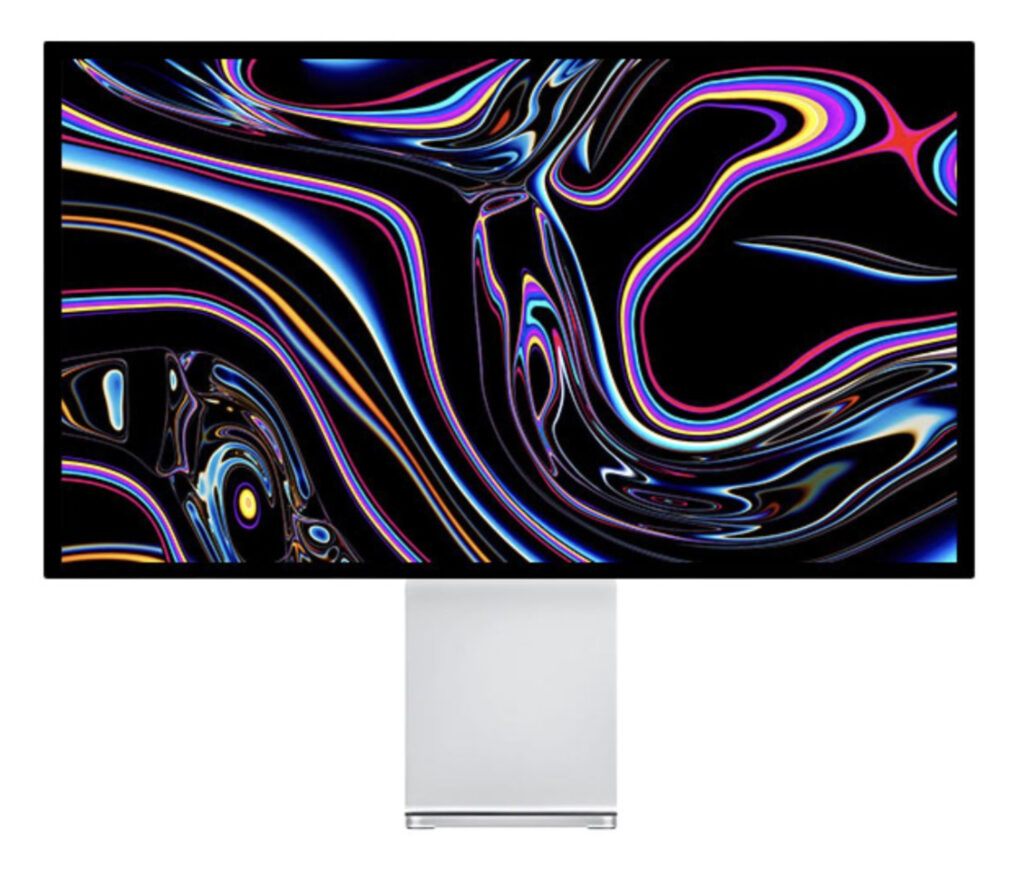
The Kuycon G27P is one of the most Apple-like third-party displays. Its current specification includes a glossy 27-inch 5K panel, up to 600 nits of brightness, a 75Hz refresh rate, 2000:1 contrast, P3 wide color and up to 100W charging over USB-C.
It is also far more flexible than Apple’s display, with two HDMI 2.1 inputs, DisplayPort 2.1, USB-C and support for 5K at 75Hz from compatible devices.
The G27P did not make our main list because Kuycon is a much smaller brand than Apple, ASUS, BenQ, Philips or ViewSonic, and it is sold mainly through regional Kuycon stores rather than a broad retailer network. The adjustable stand can also be an extra-cost option.
It is nevertheless worth considering if you specifically want a glossy, aluminum-style 5K monitor. Brightness control on a Mac works through DDC/CI software such as MonitorControl rather than the deeper system integration provided by Apple or BenQ.
The G27P starts at $999 from Kuycon.
5K Monitors We No Longer Recommend as Main Picks
Samsung ViewFinity S9
The Samsung ViewFinity S9 is still a capable 27-inch 5K monitor. It offers 600-nit brightness, Thunderbolt 4, a removable 4K webcam, AirPlay and Samsung’s Tizen smart-TV platform.
However, it is a 2023 model and availability has become unreliable. The Amazon listing that previously generated substantial interest from MacHow2 readers has recently been out of stock, and pricing elsewhere varies too much for us to continue recommending it as one of the best buys in 2026.
It may still be worth considering as discounted clearance stock, but check the seller, warranty and return policy carefully. We would not pay close to its original $1,599 list price when newer 5K monitors now cost less.
LG UltraFine 5K 27MD5KL-B
The LG UltraFine 5K was once the default non-Apple 5K display for a Mac. Its 500-nit panel, P3 color, Thunderbolt 3 connection, 94W charging and built-in camera still work well with compatible Macs.
It is now a legacy purchase rather than a current recommendation. New stock is scarce and often priced far above newer, better-equipped displays. Its webcam and speakers are dated, the stand is less robust than current alternatives and connectivity is limited.
A refurbished or used UltraFine 5K can still be good value at the right price, but buying an expensive new example makes little sense in 2026. See our LG UltraFine 5K review for more.
What to Look for in a 5K Monitor for a Mac
Thunderbolt vs USB-C
You do not need Thunderbolt simply to run one 5K monitor. A properly implemented USB-C connection with DisplayPort Alt Mode can carry a 5120 × 2880 signal and charge a laptop.
Thunderbolt becomes more valuable if you want faster external storage, a more capable built-in dock or the option to daisy-chain compatible displays. Always use the cable supplied with the monitor or a certified cable with enough bandwidth; not every USB-C charging cable carries a high-resolution video signal.
For more, check out our guide to Thunderbolt vs USB-C.
MacBook Charging
Around 90W to 100W is sufficient for most MacBook Air and MacBook Pro setups. A high-end 16-inch MacBook Pro can draw more under sustained load, although a 90W or 96W monitor connection will still charge it during lighter work.
The Studio Display XDR is the standout here with up to 140W. If maximum charging speed matters, check the requirements of your exact MacBook rather than assuming all USB-C ports supply the same power.
Glossy vs Matte
Glossy and low-reflection glass generally produce clearer-looking contrast and richer blacks, but reflections can be distracting in a bright room. Matte and anti-glare coatings are easier to use near windows, although heavy coatings can make fine text look slightly less crisp.
The MA270S and Kuycon G27P are good choices for a glossy-style image. The ASUS, BenQ PD2730S and ViewSonic use anti-glare treatments, while Apple offers standard or nano-texture glass.
Refresh Rate
Most 5K monitors are still limited to 60Hz. Moving to 70Hz or 75Hz is noticeable but subtle; it makes scrolling and pointer movement a little smoother rather than transforming the monitor into a gaming display.
For a genuine high-refresh experience at 5K, the 120Hz Studio Display XDR is the clear choice, provided your Mac supports its full refresh rate.
Camera and Speakers
Do not assume a premium monitor includes good audiovisual hardware. Most third-party 5K displays have no webcam and only basic speakers.
The standard Studio Display and Studio Display XDR are the best all-in-one options. The Philips is the most interesting third-party alternative if a built-in webcam is important, while the ViewSonic has relatively useful speakers but no camera.
FAQ
What Is a True 5K Monitor?
A true 16:9 5K monitor has a resolution of 5120 × 2880 pixels. At 27 inches, that works out to approximately 218 PPI.
Some ultrawide monitors are also marketed as 5K, but 5120 × 2160 and 5120 × 1440 displays have a much lower pixel density at their typical sizes. They offer more horizontal space but not the same Retina-style text sharpness as a 27-inch 5120 × 2880 panel.
Why Does 5K Look Better Than 4K on a 27-Inch Mac Monitor?
At 27 inches, 5K allows macOS to render a comfortable 2560 × 1440-style workspace at an exact 2× scale. Each logical interface pixel is represented by four physical pixels, producing crisp text and icons.
A 27-inch 4K monitor can use exact 2× scaling at an effective 1920 × 1080, but many people find the interface too large. Choosing a roomier scaled mode looks good on modern Macs, but it is not as clean as the 5K 2× result and may appear a little softer to sensitive users.
Tools such as BetterDisplay can make 4K scaling more flexible, but they cannot add physical pixels to a 4K panel.
Will a 5K Monitor Make Text and Icons Too Small?
No. macOS normally uses display scaling, so a 27-inch 5K monitor presents an interface similar in size to a 2560 × 1440 display while rendering it with far more detail. You can select a larger or smaller effective workspace in System Settings > Displays.
Which Macs Support a 5K Monitor?
Most Apple Silicon Macs and many recent Intel Macs support at least one 5K display, but the number of external monitors and maximum refresh rate depend on the exact Mac and chip.
Check Apple’s technical specifications for your model before buying, particularly if you want two 5K displays or 5K above 60Hz. The entry-level MacBook Neo is an important exception: Apple limits it to one external display at up to 4K 60Hz, so it cannot drive these monitors at their native 5K resolution.
How Many 5K Monitors Can a Mac Run?
There is no single answer for every Mac. Some base Apple Silicon models support only one external display, while Pro, Max and Ultra chips generally support more. Newer Macs may also support additional displays when the built-in MacBook screen is closed.
The monitor’s ability to daisy-chain does not override the Mac’s own display limit. Check the technical specifications for your precise model and see our guide to using multiple monitors with Apple Silicon Macs.
Can HDMI Run a 5K Monitor From a Mac?
Sometimes, but support depends on both the Mac and the monitor. Models such as the ASUS and Kuycon accept 5K through compatible HDMI connections, while Apple’s displays have no HDMI input at all.
Thunderbolt or full-featured USB-C is usually the most predictable connection for a MacBook because it can carry video, data and charging through one cable.
Is 5K Worth Paying More Than 4K?
It is worth it if text sharpness is a priority, you work with high-resolution photos or video, or you want an external display that feels closer to a 5K iMac or Apple Studio Display.
For general home use, gaming or a tighter budget, a good 4K monitor remains better value. The difference is easiest to see in text, interface elements and fine detail rather than films or full-screen photographs.
Is There a 120Hz 5K Monitor for Mac?
Yes. The Studio Display XDR supports 5K at up to 120Hz with Adaptive Sync, but compatible M1, M2 and M3 Macs are limited to 60Hz. Most third-party 5K monitors run at 60Hz, 70Hz or 75Hz.
Are 5K2K Ultrawide Monitors the Same as 5K?
No. A 5120 × 2160 ultrawide has the same vertical resolution as a 4K monitor and spreads its pixels across a larger panel. It is useful for timelines, spreadsheets and replacing two displays, but it does not provide 218 PPI at typical 40-inch sizes.
Verdict
The BenQ MA270S is the best 5K monitor for most Mac users in 2026. It delivers the sharpness that makes 5K worthwhile, feels slightly smoother at 70Hz and includes the stand, ports and Mac controls that Apple charges considerably more for.
Choose the Apple Studio Display if you value its camera, speakers, microphones, premium construction and effortless macOS integration more than price. The ASUS ProArt PA27JCV is the value pick, while the BenQ PD2730S is better suited to established color-critical workflows.
The ViewSonic VP2788-5K is the strongest choice for connectivity and 75Hz, and the Philips Brilliance 27E3U7903 is particularly appealing to European buyers who want a webcam and docking features built in.
Finally, the Studio Display XDR is the best 5K monitor on image quality alone. Its mini-LED HDR performance and 120Hz refresh rate are exceptional, but at $3,299 it is a specialist professional purchase rather than the sensible default.