

If you’ve had trouble finding HP LaserJet or OfficeJet Printer drivers for your Mac then you’re not alone.
In fact, HP no longer provides full-feature printer drivers for macOS, instead relying primarily on Apple AirPrint to serve Mac users.
While this does avoid driver issues and is very easy to plug-in-and-play with a Mac, it does mean there are trade-offs in functionality including possible limitations on faxing, scanning, and management especially with all-in-one printers.
Here we look at how to get an HP printer working with the latest versions of macOS, what features you might end up missing, how to to get around this or restore full printer functionality and some alternative printers you might want to consider.
Contents
- HP Printers Commonly Affected
- Why HP No Longer Provides macOS Drivers
- The Most Reliable Solution in 2026: AirPrint (Recommended)
- Are There Disadvantages To AirPrint vs Driver Software?
- When AirPrint Is Not Enough or Doesn’t Work
- Outdated Methods to Avoid in 2026
- Fixing Scanner Issues When Printing Works
- Should You Replace Your HP Printer?
- AirPrint-Friendly Printer Alternatives
- FAQ
HP Printers Commonly Affected
The biggest issues are most common with older HP LaserJet and OfficeJet models, including but not limited to:
- HP OfficeJet 9025 / 90xx series
- HP LaserJet Pro M479fdn
- HP LaserJet P 1005, P1007, 1020, P1102w
- HP LaserJet M11, M12, M12w, M1132
- HP LaserJet M751dn
Typical problems include:
- Printer not detected at all
- Printer prints but scanner no longer works
- “Driver unavailable” or “Filter failed” errors
- HP installer refusing to run on newer macOS versions
Although such printer issues are typical after updates to macOS, they are increasingly a problem with HP printers due to the fact that the company no longer makes drivers for Macs.
Why HP No Longer Provides macOS Drivers
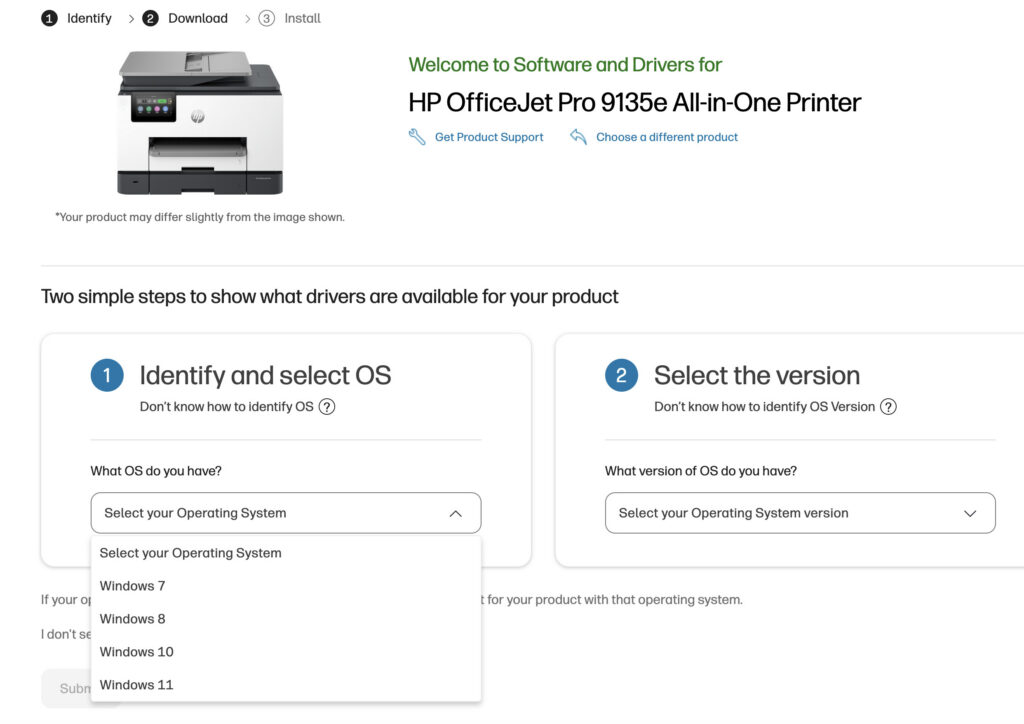
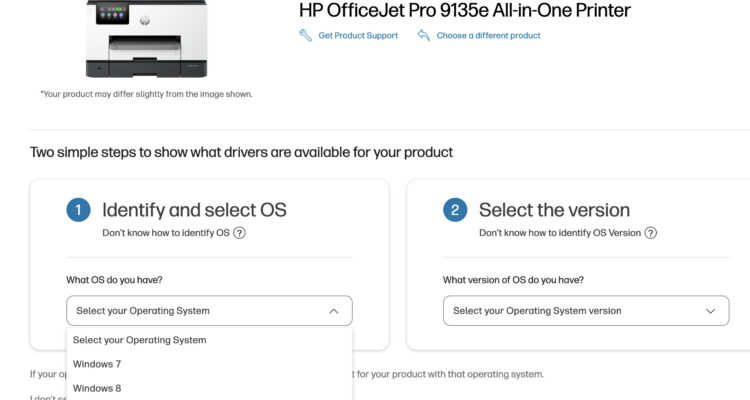
If you visit the HP printer driver website and search for even a brand-new HP printer and notice that macOS isn’t listed at all, this is not an error or a missing download.
It is a deliberate change in how HP now supports macOS.
HP Has Moved Away From Traditional Mac Drivers
In 2026, HP no longer develops or publishes full-feature macOS printer drivers (PPDs, filters, background services) for most LaserJet and OfficeJet models – including current ones.
Instead, HP relies on:
- AirPrint
- IPP Everywhere
- Apple’s built-in printing framework
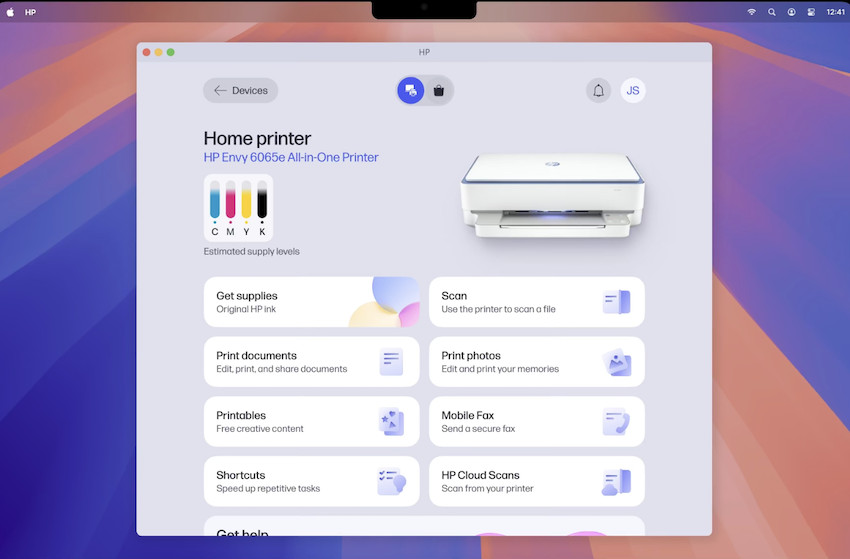
- Optional use of HP Smart from the Mac App Store. However, HP Smart can fill some gaps (such as maintenance and ink levels) but it doesn’t restore full functionality.
Because of this shift, HP’s driver download pages now often list Windows only, even for new printers – which often comes as a shock to Mac owners.
The Most Reliable Solution in 2026: AirPrint (Recommended)
For the majority of HP printers that still function mechanically, AirPrint is now the best and safest option to use it with the latest versions of macOS.
Why AirPrint Works Best
- Built directly into macOS – no downloads required
- No drivers required
- Fully Apple Silicon compatible
- Supported long-term by Apple
Limitations
- Advanced scanning features may not work
- No ink level reporting on some models
- No HP-specific utilities
How to Add an HP Printer Using AirPrint
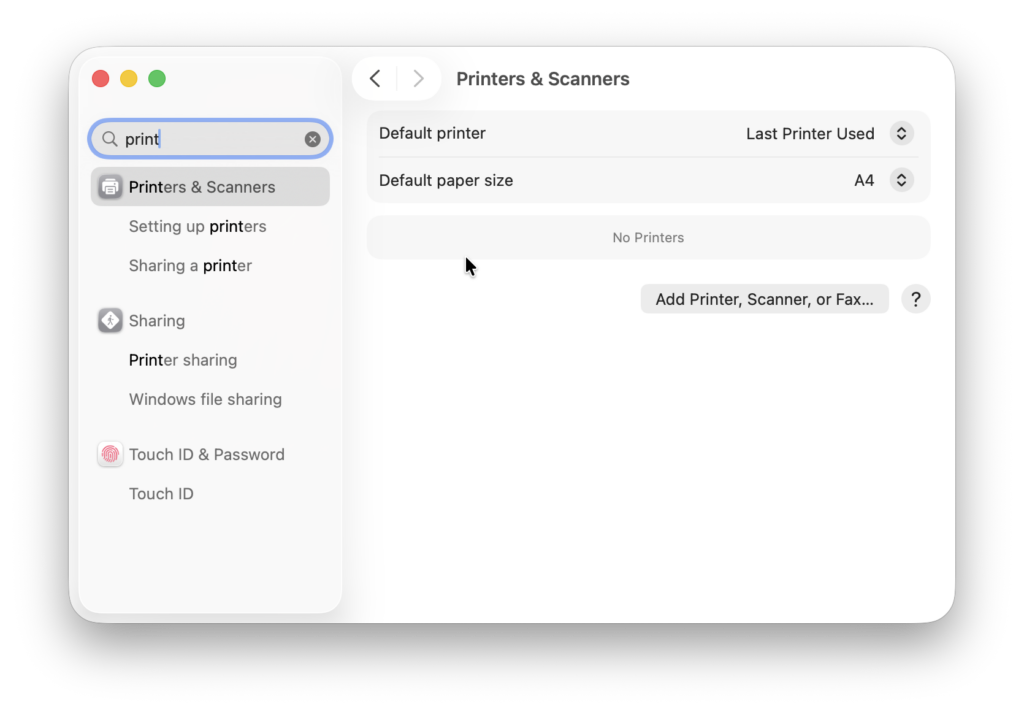
- Open System Settings > Printers & Scanners
- Click Add Printer
- Select your HP printer
- Ensure AirPrint is selected under “Use”
- Click Add
If your printer supports AirPrint, this should “just work” – even in macOS Tahoe.
Are There Disadvantages To AirPrint vs Driver Software?
The short answer is, yes. AirPrint prioritizes compatibility and reliability, not full feature access.
AirPrint is designed to be a universal, driverless printing standard, which means it intentionally exposes only a subset of printer features that Apple considers safe and consistent across manufacturers
In plain English, what this means is that Mac users may not be able to access advanced options available on Windows including:
- Printer Utility/Maintenance: Tabs for cleaning printheads, aligning cartridges, or viewing detailed supply levels.
- Advanced Print Settings: Edge control, compression, resolution enhancement, and EconoMode.
- Advanced Scanning: Inability to scan to computer from the printer’s own display.
- Specific Features: Tooltips, finishing preview, booklet explanation text, and custom Job Storage options.
- Stapling/Punching: These options may appear, but fail to work
These usually require HP’s full driver software, which HP no longer provides for modern macOS versions. Some of these may be restored with the HP Smart software but not all.
This is a trade-off prioritizing reliability, security and ease of connection over functionality.
The only way to regain all of these features, would be to install Windows on a Mac using a virtual machine and print via that (see below for more on this).
In short, AirPrint works well for basic printing, but it does not expose the advanced features HP still provides to Windows users.
When AirPrint Is Not Enough or Doesn’t Work
If your HP printer does not support AirPrint for some reason (almost all do nowadays), your options are now limited to the following solutions:
Option 1: Generic PostScript / PCL Driver
Some LaserJet models work with Apple’s generic drivers:
- Add printer manually
- Under “Use”, select:
- Generic PostScript Printer
- or Generic PCL Printer
This often restores basic printing only.
Option 2: Run HP Drivers in a Virtual Machine (Advanced)
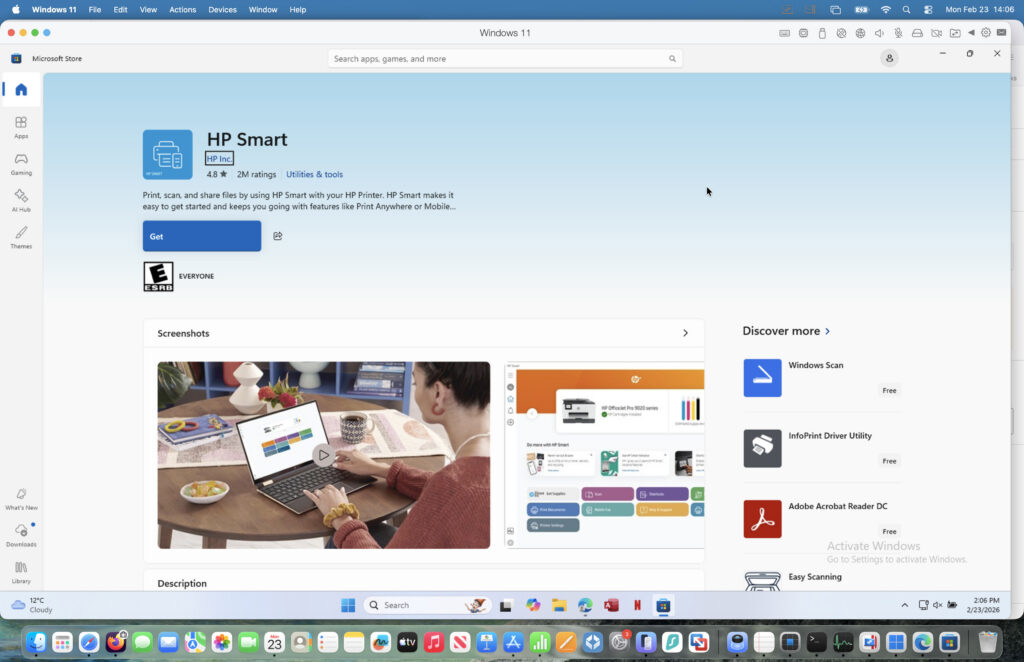
If you must use full HP features (scanning, duplex tools, utilities) then your options are:
- Install Windows in a virtual machine:
- Install official HP Windows drivers
- Print or scan from the VM
This is the only reliable way to use unsupported HP printers with full functionality in 2026.
Option 3: Modified HP Driver Installers
Some tech communities have created unofficial modified installers that remove the macOS version check from older HP driver packages so they can install on newer macOS releases. One example is the HewlettPackardPrinterDrivers‑MacOS project on GitHub, which provides a patched HP driver package installer with the version‑check removed.
Important to know before trying this:
- This is not an official HP solution, and HP does not support it.
- macOS security may refuse installation or flag the installer as risky because it’s not notarized by Apple.
- Success varies by printer model and macOS version – it might work for basic printing on some machines but is not a guaranteed fix, and advanced features like scanning may still fail.
- Use such modified packages at your own risk; they can leave unsupported software on the system that may conflict with macOS security features.
Generally, we wouldn’t recommend downloading modified driver packages. Even if they are safe, they may break with updates to macOS and AirPrint is a much better, future-proof solution.
Outdated Methods to Avoid in 2026
The following older fixes no longer work reliably and are not recommended in 2026.
Old HP Essentials and Legacy FTP Downloads
Some older guides recommend installing legacy HP drivers from HP’s FTP servers or using older “HP Essentials” packages to restore printing on macOS.
This method is no longer reliable.
HP has discontinued macOS driver development for many LaserJet and OfficeJet models, and modern versions of macOS block the background components these drivers depend on. As a result:
- Installers often refuse to run on newer macOS versions
- Printing may fail even if installation appears successful
- Apple Silicon Macs block required services entirely
For this reason, installing legacy HP drivers from FTP archives is not recommended on modern Macs.
Forcing HP Drivers with Pacifist
Older guides suggest using Pacifist to force-install HP printer drivers that are blocked on newer versions of macOS.
While this method once worked, it is no longer reliable in 2026.
Modern versions of macOS block the background services and printer filters that legacy HP drivers depend on – especially on Apple Silicon Macs. Even if Pacifist successfully installs the files, printing or scanning often fails.
For this reason, using Pacifist to install HP drivers is not recommended on macOS Sonoma, Sequoia and Tahoe or newer.
Using HP Easy Start
You may find advice on the HP forums to use HP Easy Start when macOS shows no available drivers for their printer.
However, this isn’t a solution for the latest versions of macOS for a few simple reasons:
- HP Easy Start is a setup helper, not a full driver package. It simply retrieves the drivers (if available) from HP’s website.
- On modern macOS (Sonoma, Sequoia, Tahoe), many HP LaserJet and OfficeJet models no longer have full-feature Mac drivers so Easy Start doesn’t help.
Fixing Scanner Issues When Printing Works
If your HP all-in-one printer prints but the scanning function does not work on macOS:
Recommended options:
- Image Capture (built into macOS)
- Open Image Capture > Select Printer > Scan
- Works with many HP scanners even when HP Scan or HP Smart fails
- Free and fully compatible with Apple Silicon
- VueScan (third-party scanning software)
- A paid alternative that supports a huge range of legacy and modern HP scanners
- Often restores scanning functionality for printers no longer supported by HP
- Works on Apple Silicon and Intel Macs, including macOS Sonoma, Sequoia, and Tahoe
Using Image Capture or VueScan bypasses HP’s abandoned scanning software and is usually the most reliable way to scan on modern Macs when official HP software no longer works.
Should You Replace Your HP Printer?
If your printer:
- Requires legacy HP drivers
- Has no AirPrint support
- Depends on HP Smart or HP Scan
…it is effectively end-of-life on macOS and we’d strongly recommend buying one from another manufacturer.
In 2026, printers from Brother, Canon, and Epson tend to offer:
- Better AirPrint support
- Fewer driver issues
- Longer macOS compatibility
AirPrint-Friendly Printer Alternatives
If you’re considering replacing an older HP printer, these brands consistently offer better long-term macOS support and fewer driver headaches.
For multi-function models, we recommend reading our guide to the best all-in-one printers for Mac.
Brother (Best Overall for Macs)
Brother Industries printers are widely regarded as the most macOS-friendly.
Why Brother works well on Macs:
- Excellent AirPrint support
- Lightweight drivers (often optional)
- No forced accounts or cloud lock-in
- Reliable scanning with Image Capture
Good choices:
Canon (Best for Home & Creative Use)
Canon printers integrate very cleanly with macOS.
Why Canon is a safe bet:
- Strong AirPrint implementation
- Regular macOS updates
- Works well with Apple’s built-in scanner tools
Good choices:
Epson (Best for EcoTank & Offices)
Epson offers solid macOS compatibility, especially with newer models.
Pros:
- AirPrint supported on most current models
- Good long-term driver availability
- Excellent scanner compatibility
Good Choices:
Watch out for:
- Older Epson drivers can lag behind macOS updates
FAQ
Do HP printers still work on macOS in 2026?
Yes – but only if they support AirPrint or IPP Everywhere.
Older HP printers that rely on legacy drivers are increasingly incompatible with macOS Sonoma, Sequoia, and Tahoe.
Is there an official HP driver for macOS Sequoia or Tahoe?
In most cases, no.
HP has stopped updating full-feature macOS drivers for many LaserJet and OfficeJet models. The newest official drivers often stop at macOS Ventura (13), and cannot be installed on newer versions.
Can I force older HP drivers to install using Pacifist?
This used to work, but in 2026 it is no longer reliable.
Apple Silicon Macs and modern macOS security (SIP, signed system volumes) prevent many HP background services from running — even if Pacifist succeeds in installing the files.
Why does printing work but scanning no longer works?
Because:
- AirPrint supports printing but not full scanning features
- HP Scan and HP Smart are poorly maintained on macOS
Solution: Use macOS Image Capture, which works with many HP scanners even when HP software fails. Alternatively, you can use the third-party VueScan software.
Does HP Smart work on Apple Silicon Macs?
Sometimes – but it is inconsistent.
HP Smart may install, but users often report:
- Scanner not detected
- Endless “Printer offline” errors
- Mandatory HP account sign-in
For reliability, Image Capture + AirPrint is usually better.
Can I use my HP printer with a Windows virtual machine?
Yes. Running Windows in VMware Fusion or Parallels Desktop allows you to:
- Install official HP Windows drivers
- Access full scanning and printer utilities
This is the only way to get full functionality from some unsupported HP printers in 2026.
Why Not Just Use Generic PostScript?
Generic PostScript drivers usually work well for basic printing, but they have limitations:
- Finishing options (stapling, hole-punching) may be unavailable
- Advanced paper handling options may be missing
- Printer-specific features are often inaccessible
Despite this, many administrators still prefer Generic PS or AirPrint because they are:
- Stable
- Apple Silicon compatible
- Not dependent on abandoned HP software
What About HP “Universal” or Enterprise Drivers?
HP does offer enterprise utilities that allow administrators to download model-specific drivers, but these packages often include:
- Management tools
- Background services
- User-facing apps (such as HP Smart)
For macOS users, these packages frequently require manual modification and are not officially supported on newer versions of macOS.
For most home and small-business users, they are not a practical or recommended solution.
What Happened to Apple’s HP LaserJet Driver Bundle?
For many years, macOS users relied on Apple’s HP LaserJet driver bundle to keep older and newer HP printers working reliably.
However, Apple effectively stopped maintaining this driver package around 2020, and it is no longer compatible with modern versions of macOS without unsupported modifications.
Since then:
- Apple has moved fully to AirPrint and IPP Everywhere
- HP has stopped providing full-feature macOS drivers
- “Universal” HP driver packages are no longer truly universal on macOS
As a result, even large organizations managing dozens (or hundreds) of HP LaserJet printers now typically use:
- Apple’s native AirPrint driver
- Generic PostScript (PS) drivers
- Or Windows-based print servers for advanced features