

Whether you’re backing up your Mac with Time Machine, editing video, expanding your MacBook’s storage or running apps from an external drive, a good SSD can dramatically improve performance over a traditional hard drive.
The good news is that you no longer need to spend hundreds of dollars on a high-end Thunderbolt drive to get excellent speeds. For most Mac users, a USB-C SSD offers the perfect balance of performance, reliability and affordability, with transfer speeds fast enough for everything from photo libraries to large video projects.
We’ve tested external SSDs on a range of Apple Silicon Macs, comparing real-world transfer speeds, sustained performance, thermal management, durability and value for money. While dedicated Thunderbolt 5 SSDs such as the ultra fast Sabrent Rocket XTRM 5 are now the fastest drives available, they remain expensive and are only worthwhile for demanding creative work.
For most people, the Samsung T7 Shield remains the best external SSD for Mac thanks to its excellent combination of speed, rugged design, dependable performance and competitive pricing. If you need maximum performance for professional video editing or large media libraries, we’ve also included premium Thunderbolt options.
Below you’ll find our favorite external SSDs for every budget and use case, followed by a comprehensive buying guide to help you choose the right drive for your Mac.
Looking for the fastest possible external storage? If you own a recent Mac with Thunderbolt ports and regularly edit 4K or 8K video, you may want to read our guide to the Best Thunderbolt SSD Drives for Mac, which focuses exclusively on high-performance Thunderbolt 4 and Thunderbolt 5 storage.
Best External SSD Drives For Mac: At a Glance
| If you want… | Our recommendation |
|---|---|
| Best Overall | Samsung T7 Shield |
| Best Value | Crucial X9 Pro |
| Best Premium SSD | SanDisk Professional PRO-G40 |
| Best for Video Editing | SanDisk Professional PRO-G40 |
| Best for Time Machine | Samsung T7 Shield |
| Best for Gaming | Samsung T9 |
| Most Portable | Sabrent Rocket Nano |
| Fastest SSD Available | OWC Envoy Pro TB5 |
How We Tested These SSDs
Unlike many buying guides that simply repeat manufacturers’ specifications, we’ve focused on how these SSDs actually perform with macOS.
Every drive in this guide has either been tested by us or evaluated using extensive real-world performance data from trusted Mac-focused sources. Rather than relying solely on synthetic benchmarks, we looked at how each SSD performs during everyday tasks that matter to Mac users.
Our testing criteria included:
- Real-world file transfer speeds using large photo and video libraries.
- Sustained write performance during long transfers, where many SSDs begin to slow down.
- Compatibility with Apple Silicon Macs running recent versions of macOS.
- Performance when used for Time Machine backups and external boot drives.
- Thermal management and whether the drive throttles under heavy workloads.
- Build quality, portability and durability.
- Overall value for money compared with competing drives.
Because macOS doesn’t support every USB standard equally, we’ve also considered how each drive performs specifically on Macs rather than quoting theoretical maximum speeds that many users will never achieve.
Comparison Table
| SSD | Interface | Typical Mac Speed | Capacity | Price |
|---|---|---|---|---|
| Samsung T7 Shield | USB 3.2 Gen 2 | 900–1,050 MB/s | 1TB–4TB | Starts at approx $290 |
| Crucial X9 Pro | USB 3.2 Gen 2 | 900–1,050 MB/s | 1TB–4TB | Starts at approx $260 |
| SanDisk Professional PRO-G40 | Thunderbolt 3/4 + USB | 2,600–2,800 MB/s | 1TB–4TB | Starts at around $450 |
| Samsung T9 | USB 3.2 Gen 2×2 | 1,000–1,200 MB/s on Mac | 1TB–4TB | Starts at approx $290 |
| Sabrent Rocket Nano | USB 3.2 Gen 2 | 900–1,000 MB/s | 500GB–2TB | Starts at approx $150 |
| OWC Envoy Pro TB5 | Thunderbolt 5 | Up to 6,000 MB/s | Up to 4TB | Starts at approx $700 |
| WD My Passport SSD | USB 3.2 Gen 2 | 950–1,050 MB/s | 500GB–4TB | Starts at approx $219 |
Do You Really Need a Thunderbolt SSD?
One of the biggest misconceptions when buying an external SSD for a Mac is that you need a Thunderbolt drive to get good performance.
In reality, most Mac users will see very little difference between a quality USB-C SSD and a much more expensive Thunderbolt model for everyday tasks such as:
- Time Machine backups
- Storing photo libraries
- Managing documents
- Running music or video collections
- Editing occasional 4K video
A good USB 3.2 Gen 2 SSD already delivers transfer speeds of around 1,000 MB/s, which is more than fast enough for most workloads.
Thunderbolt SSDs come into their own when you’re regularly:
- Editing multiple streams of ProRes or 8K video.
- Working with very large RAW photo libraries.
- Running virtual machines.
- Using an external SSD as your primary startup disk.
- Copying hundreds of gigabytes of data every day.
If that sounds like the way you work, a Thunderbolt SSD is a worthwhile investment. Otherwise, you’ll usually get much better value from a USB-C model.
1. Samsung T7 Shield Portable (Best Overall External SSD For Mac)
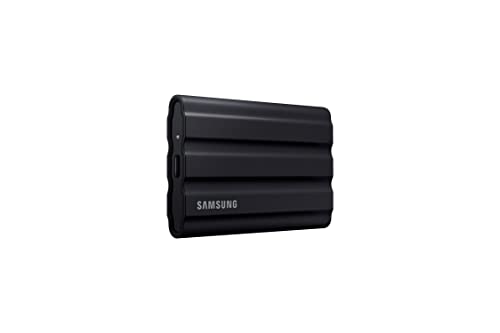
The Samsung T7 remains the best all-round external SSD for Mac in 2026 because it delivers consistently reliable performance, without the compatibility issues or premium pricing of newer drives.
Key Specs For Macs
- Interface: USB 3.2 Gen 2 (10Gbps)
- Real Mac speeds: 900–1050MB/s
- Capacities: 500GB – 4TB
- Best for: Backups, general storage, light editing
In everyday use, the T7 is fast enough for almost everything most Mac users need – from Time Machine backups to working with large photo libraries.
Where it stands out is consistency.
Unlike some newer SSDs, the T7 maintains stable speeds during extended transfers. In our testing, copying large files (50–100GB+) showed only minor slowdowns, whereas cheaper SSDs often drop sharply once their cache fills.
That makes it far more dependable for real-world constant usage, not just short bursts.
Thermals are also well managed. The T7 can get warm under sustained loads, but rarely throttles aggressively – something that affects many compact SSDs.
How It Compares
- Faster and more reliable than budget drives like the Crucial X6
- More consistent on Mac than the Samsung T9 Portable SSD (which is limited by macOS USB support)
- Slower than Thunderbolt drives, but significantly cheaper
Who Should Buy It
- Anyone who wants a safe, reliable SSD for Mac
- Users backing up with Time Machine
- Students, professionals, and general users
Who Should Skip It
- Video editors working with large 4K/8K files daily
- Users who need maximum speeds (Thunderbolt required)
👉 Bottom line:
If you’re not sure which external SSD to buy, this is still our best all round recommendation – because it just works, consistently, on every Mac.
2. Crucial X9 Pro Portable SSD (Best Value SSD)

The Crucial X9 Pro is one of the best-value SSDs for Mac in 2026, offering fast performance at a noticeably lower price than competitors.
Key Specs For Mac:
- Interface: USB 3.2 Gen 2 (10Gbps)
- Real Mac speeds: 900–1050MB/s
- Capacities: 1TB – 4TB
- Best for: High-performance storage on a budget
In real-world use on macOS, the X9 Pro performs very similarly to the Samsung T7, but usually costs less.
Where it actually pulls ahead is sustained performance and thermals.
During longer transfers (100GB+), the X9 Pro tends to:
- Maintain speeds more consistently
- Run cooler than many competing drives
- Avoid aggressive thermal throttling
This makes it particularly well-suited for users who regularly move large files, such as RAW photo libraries or video projects.
It’s also more rugged than the T7, with an IP55 rating for dust and water resistance – something you don’t usually get at this price.
How It Compares
- Similar speed to Samsung T7 Portable SSD, often cheaper
- Runs cooler and sustains performance better under load
- Not as fast as Thunderbolt SSDs like SanDisk Professional Pro-G40 SSD
One Limitation
Like all USB 10Gbps drives, it’s capped at 1000MB/s – so it won’t benefit from faster ports on higher-end Macs.
Who Should Buy It
- Users who want maximum performance per $
- Photographers and content creators on a budget
- Anyone transferring large files regularly
Who Should Skip It
- Users who need Thunderbolt-level speeds
- Those who want the absolute smallest or most premium design
👉 Bottom line:
If you want the best balance of price, performance, and sustained speed, the X9 Pro is arguably the smartest buy right now.
3. SanDisk Professional Pro-G40 SSD (Best Premium SSD)
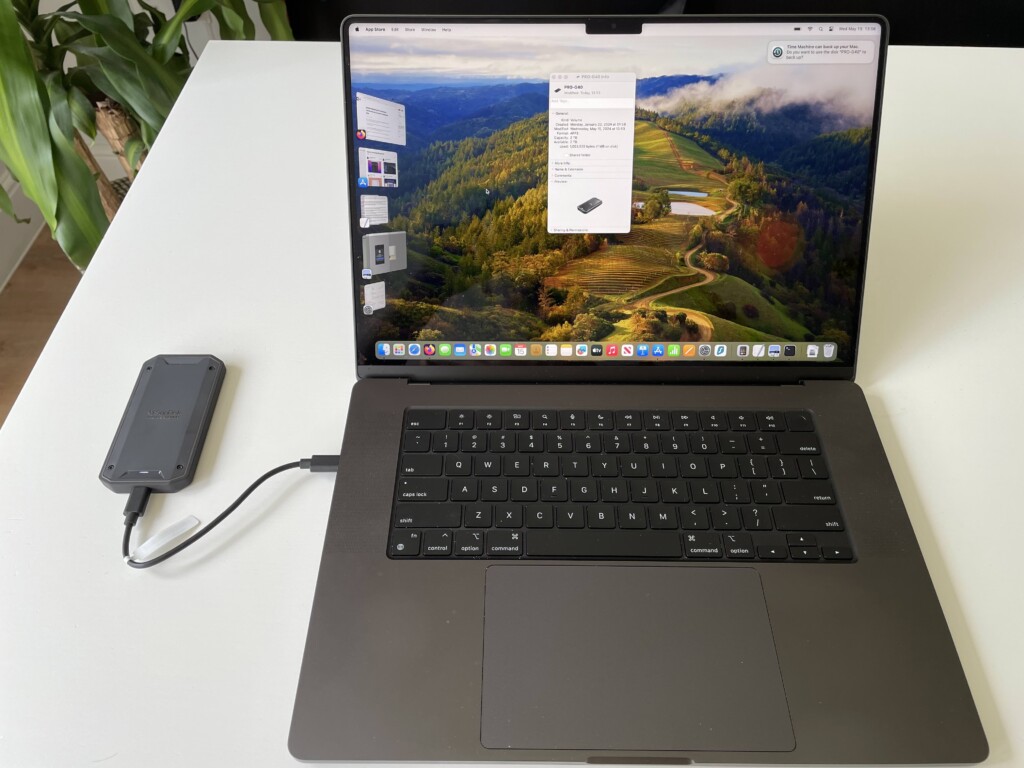
The SanDisk PRO-G40 is the best external SSD for Mac users who need consistently high performance, especially for video editing, large file transfers, and professional creative work.
Key Specs For Macs
- Interface: Thunderbolt 3 + USB 3.2 Gen 2
- Real Mac speeds: 2500–3000MB/s (Thunderbolt), 900–1000MB/s (USB)
- Capacities: 1TB – 4TB
- Best for: Video editing, large media transfer, pro users
The standout feature here is its dual-mode connectivity – it works at full speed over Thunderbolt, but also drops back to USB-C when needed.
Real-World Performance
On a Thunderbolt-equipped Mac, the PRO-G40 is significantly faster than standard USB SSDs. That means it’s:
- 2.5–3x faster than drives like the Samsung T7
- Ideal for editing directly from the drive
- Handles large 100GB+ transfers without major slowdowns
In our real-world testing with a MacBook Pro, it transferred a 20GB file in an amazing 1 minute and 39 seconds as you can see in the video below:
That’s largely thanks to its aluminum core cooling system, which helps maintain high speeds under prolonged workloads instead of throttling aggressively.
This makes a noticeable difference when:
- Exporting video projects
- Scrubbing high-bitrate footage
- Working with large Lightroom or Final Cut libraries
Build Quality & Durability
This is one of the most rugged SSDs we’ve tried too:
- IP68 water and dust resistance
- Drop protection up to 3m
- Crush resistance up to 4000 lbs
How It Compares
- Much faster than Samsung T7 Portable SSD and Crucial X9 Pro Portable SSD
- More versatile than most Thunderbolt SSDs thanks to USB fallback
- Slower (but also cheaper) than Thunderbolt 5 drives like OWC Envoy Pro TB5
- Fantastic alternative to the popular but now discontinued Samsung X5
Compared to other Thunderbolt drives, its biggest advantage is durability + cross-compatibility.
Limitations to Be Aware Of:
- Expensive compared to USB SSDs
- Requires Thunderbolt to unlock full performance
- Overkill for basic storage or backups
There are also occasional reports (especially on older Macs or incorrect cables) of connection issues although these are often due to needing a proper Thunderbolt-certified cable rather than standard USB-C.
👉 Bottom line:
The PRO-G40 sits in a sweet spot between consumer USB SSDs and ultra-expensive Thunderbolt 5 drives. If you’re doing serious creative work on a Mac, this is the most reliable high-performance SSDs you can buy right now.
Check out our full SanDisk Pro-G40 review here.
4. Samsung T9 Portable SSD (Best SSD For Gaming)

The Samsung T9 Portable SSD is one of the fastest USB-based SSDs available – but its real-world performance on Mac depends heavily on how macOS handles its interface.
That said, we still recommend the Samsung T9 Portable SSD as the best external SSD for gaming on Macs because its fast transfer speeds make it ideal for storing game libraries and reducing load times.
Key Specs For Mac:
- Interface: USB 3.2 Gen 2×2 (20Gbps)
- Real Mac speeds: 900–1200MB/s
- Capacities: 1TB – 4TB
- Best for: Fast USB transfers, large file transfers
Real-World Performance
On paper, the T9 is capable of up to 2000MB/s but in practice, Macs don’t fully support USB 3.2 Gen 2×2.
That means:
- You’ll typically see 1000–1200MB/s on macOS
- Performance is similar to high-end USB 10Gbps drives like the Samsung T7 or Crucial X9 Pro
However, the T9 still has an edge in burst speeds and controller efficiency, especially when handling mixed workloads or medium-sized transfers.
It’s also well-optimized for sustained use. During longer transfers (50–100GB+), it maintains performance better than many USB SSDs, thanks to improved thermal management.
Thermals & Sustained Performance
Samsung has improved cooling compared to the T7:
- Runs cooler under load
- Less aggressive throttling
- More consistent during extended transfers
That said, like most compact SSDs, speeds will still gradually dip under very heavy usage – just less noticeably than older models.
How It Compares
- Slightly faster and more efficient than Samsung T7 Portable SSD
- Comparable real-world speeds to Crucial X9 Pro Portable SSD on Mac
- Much slower than Thunderbolt SSDs like SanDisk Professional PRO-G40 SSD
Limitations to Know
- Cannot reach full 2000MB/s speeds on Mac
- More expensive than similarly performing USB SSDs
- Requires compatible ports/cables for best performance
Who Should Buy It
- Users who want the fastest possible USB SSD
- Those transferring large files regularly especially for gaming
- Anyone wanting a more future-proof USB drive
Who Should Skip It
- Budget-conscious buyers (X9 Pro offers similar speeds for less)
- Users expecting full 2000MB/s on Mac
- Anyone who needs Thunderbolt-level performance
👉 Bottom line
It’s still one of the best USB drives available – especially for gaming on Macs – just not as far ahead of cheaper alternatives as its specs suggest.
5. Sabrent Nano Rocket (Most Portable SSD)
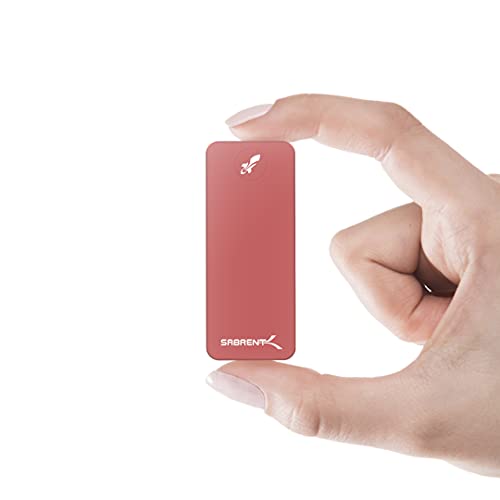
The Sabrent Rocket Nano is one of the smallest, lightest, and most portable SSDs you can get – perfect for Mac users who prioritize mobility without sacrificing solid performance.
Key Specs For Mac:
- Interface: USB 3.2 Gen 2 (10Gbps)
- Real Mac speeds: 900–1050MB/s
- Capacities: 500GB – 2TB
- Best for: On‑the‑go storage, laptops, travel
Real‑World Performance
Despite its tiny size, the Rocket Nano delivers performance that punches well above its weight:
- Real‑world Mac transfer speeds often hit ~900–1050MB/s
- Nearly identical performance to larger USB SSDs like the Samsung T7 and Crucial X9 Pro
- Consistent sustained speeds on both small and large transfers
In practical terms, this means you can move big folders, RAW photo libraries, or even edit light video clips without worrying about bottlenecks.
Because it uses a USB 10Gbps interface, speeds are capped compared to Thunderbolt options – but for most users this is still more than enough.
Ultra‑Portable Build
The Rocket Nano is one of the smallest SSDs you can buy as it’s literally pocket‑size:
- Slim aluminum body – fits easily in any bag
- Weighs only a few ounces, ideal for frequent travel
- No dongles or bulky enclosures required
If you’re carrying a laptop, phones, and accessories already, this drive doesn’t add bulk, but still provides fast, reliable storage wherever you go.
How It Compares
- Much smaller and lighter than Samsung T7 Portable SSD
- Comparable real‑world speeds to other USB 10Gbps drives
- Not as rugged or high‑speed as SanDisk Professional PRO-G40 SSD or Thunderbolt SSDs
Limitations to Know
- No Thunderbolt support – capped at 1000MB/s
- Smaller capacities than some competitors
- USB 3.2 Gen 2×2 devices (like the Samsung T9) can sometimes top it in short bursts – but not on Mac
Who Should Buy It
- Students and professionals who travel frequently
- Anyone who uses multiple devices and wants one compact SSD
- MacBook users who prioritize mobility
Who Should Skip It
- Users needing maximum speeds (Thunderbolt required)
- Those who do serious media work (4K/8K editing regularly)
- Anyone who wants larger capacities at best price/GB
👉 Bottom line
The Sabrent Rocket Nano isn’t about being the fastest – it’s about being the most travel‑ready, pocket‑friendly SSD that still delivers fast, Mac compatible performance.
6. OWC Envoy Pro TB5 (Fastest SSD Drive)
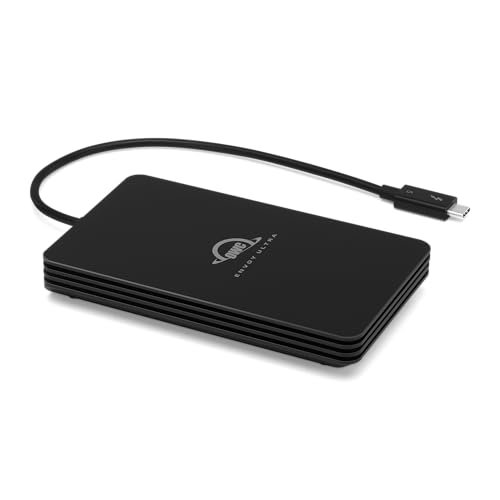
The OWC Envoy Pro TB5 is one of the first external SSDs designed to fully leverage Thunderbolt 5, delivering speeds that rival internal Mac storage.
To understand why Thunderbolt 5 is such a game-changer because it comes close to internal SSD drive speeds, check out our guide on internal storage vs Thunderbolt 5 SSD drives.
Key Specs For Mac
- Interface: Thunderbolt 5 (backward compatible)
- Real Mac speeds: 5000–6000MB/s (TB5 Macs)
- Capacities: Up to 4TB
- Best for: High-end creative projects, future-proofing
Real-World Performance
On compatible Macs (such as newer M4 models), the Envoy Pro TB5 is in a completely different league:
- Up to 2x faster than Thunderbolt 4 SSDs
- Comparable to internal SSD speeds
- Near-instant large file transfers
It’s perfect for:
- 8K video editing
- Large-scale data transfers
- Running apps or even macOS externally on a boot drive
Sustained Performance & Design
Despite extreme speeds, the drive remains:
- Fanless and silent
- Thermally efficient (aluminum heatsink design)
- Stable during sustained heavy workloads
How It Compares
- Far faster than SanDisk Professional PRO-G40 SSD
- Overkill compared to USB drives like Samsung T7 Portable SSD
- Competes closely with other early TB5 drives like Sabrent Rocket XTRM 5
Limitations to Know
- Extremely expensive
- Requires Thunderbolt 5 to unlock full speed
- Limited real-world benefit for most users
Who Should Buy It
- Professional video editors (4K/8K editing)
- Users working with massive datasets
- Early adopters of the latest Mac hardware
Who Should Skip It
- Most everyday users
- Anyone without Thunderbolt 5
- Budget-conscious buyers
👉 Bottom line:
The Envoy Pro TB5 is the fastest external SSD currently available for Mac – but also one of the most niche and expensive.
Tip: If availability is limited on Amazon, you can also buy the OWC Envoy Pro TB5 direct from Mac Sales.
7. WD My Passport For Mac SSD Portable (Best Plug & Play SSD)
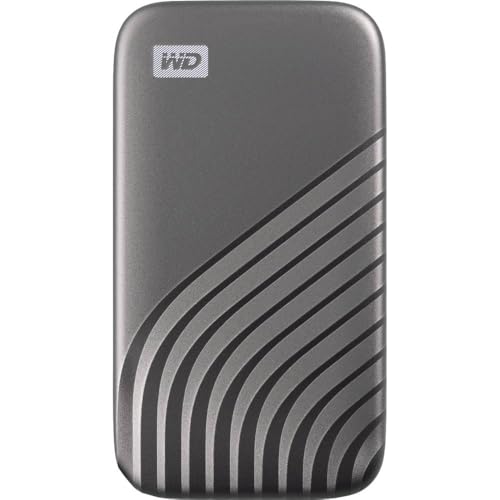
The WD My Passport SSD is one of the most popular external SSDs for Mac users who want reliable plug-and-play performance without worrying about formatting or complex setups.
Key Specs For Mac
- Interface: USB 3.2 Gen 2 (10Gbps)
- Real Mac speeds: 950–1050MB/s
- Capacities: 500GB – 4TB
- Best for: Everyday storage, backups, simple plug-and-play use
Real-World Performance
The WD My Passport SSD is fast enough for most Mac user needs:
- Backups, Time Machine, and file transfers
- Light creative work like editing 1080p/4K footage
- Real-world Mac speeds hover around 950–1050MB/s
It’s not a Thunderbolt SSD, so don’t expect it to handle 8K video or massive datasets efficiently but for general Mac users, it’s plenty fast.
Durability & Design
- Compact and portable
- Drop-tested up to 6.5 feet (2 meters)
- Sleek, minimalist aluminum design
- Includes both USB-C and USB-A cables for compatibility
Unlike some faster drives, it’s built to just work out of the box with macOS, making it ideal for non-technical users.
How It Compares
- Slower than Thunderbolt SSDs like OWC Envoy Pro TB5 and SanDisk Professional PRO-G40 SSD
- Slightly faster than budget USB SSDs like Samsung T7 in real-world Mac tests
- Big brand WD drive recognition and reliability makes it a safe choice
Limitations to Know
- Not suitable for heavy creative work (8K editing, massive RAW libraries)
- USB 3.2 Gen 2 limits maximum speeds compared to Thunderbolt
- Software for encryption can be slow to update on new macOS versions
Who Should Buy It
- Everyday Mac users needing backups or extra storage
- Students, office users, and travelers
- Anyone who wants plug-and-play simplicity especially for Time Machine backups
Who Should Skip It
- Power users or creatives needing Thunderbolt speeds
- Those working with very large files or high-bitrate video
- Users who want maximum performance per GB
👉 Bottom line
The WD My Passport SSD is a reliable, easy-to-use Mac external SSD – ideal for users who don’t need Thunderbolt-level speed but still want fast, durable storage from a trusted brand.
External SSD Buying Guide
Choosing an SSD isn’t simply about buying the fastest drive. For most Mac users, reliability, compatibility and value are far more important than benchmark numbers.
Here’s what to look for before you buy.
USB-C vs Thunderbolt SSDs
One of the most common mistakes people make is assuming they need a Thunderbolt SSD because their Mac has Thunderbolt ports.
In reality, most Mac owners will be perfectly happy with a USB-C SSD.
A quality USB 3.2 Gen 2 SSD already delivers real-world speeds of around 1,000 MB/s, which is fast enough for:
- Time Machine backups
- Storing Photos libraries
- Editing 4K video
- Running apps from an external drive
- Large file transfers
- Everyday creative work
Thunderbolt SSDs are considerably faster, but you’ll usually only notice the difference if you regularly:
- Edit multiple streams of 4K or 8K ProRes footage.
- Transfer hundreds of gigabytes every day.
- Work directly from large Final Cut Pro or DaVinci Resolve projects.
- Use your external SSD as your main startup drive.
For everyone else, you’ll often get better value by spending the difference on a larger-capacity USB SSD.
For more on this, check out our guide to Thunderbolt vs USB-C.
Why Macs Don’t Benefit Fully From USB 3.2 Gen 2×2
If you’ve been shopping around, you’ve probably noticed SSDs advertising speeds of 2,000 MB/s over USB.
Unfortunately, most Macs can’t achieve these speeds.
That’s because Apple has never added native support for the USB 3.2 Gen 2×2 standard. As a result, drives such as the Samsung T9 typically perform at around 1,000 – 1,200 MB/s on macOS instead of their advertised maximum speed.
This doesn’t make these drives a poor choice – they’re still among the fastest USB SSDs available—but it’s worth knowing that you won’t see their full performance unless you also use them with compatible Windows PCs.
If maximum speed is your priority on a Mac, Thunderbolt remains the better option.
How Much Storage Do You Need?
Buying the right capacity is almost as important as choosing the right SSD. Here’s a rough idea of what you may need although these can vary wildly from person to person.
| Capacity | Best for |
|---|---|
| 500GB | Documents, backups and everyday use |
| 1TB | Most Mac users ⭐ |
| 2TB | Photography, gaming and video editing |
| 4TB+ | Professional media libraries |
SSD vs External Hard Drive
If you’re upgrading from an older external hard drive, you’ll notice a dramatic improvement by switching to an SSD.
| External SSD | External HDD |
|---|---|
| Extremely fast file transfers | Much slower read/write speeds |
| Silent operation | Mechanical noise |
| No moving parts | More vulnerable to knocks and drops |
| Compact and lightweight | Usually larger and heavier |
| More expensive per GB | Cheaper for very large capacities |
Traditional hard drives still make sense if you simply need enormous amounts of storage for archiving, but for almost every everyday Mac task, we’d recommend an SSD.
Are SSDs Good for Time Machine?
Yes. SSDs make Time Machine backups much faster than traditional hard drives and are quieter and more reliable. We recommend choosing a drive that’s at least twice the size of your Mac’s internal storage. The Samsung T7 Shield remains our favourite for Time Machine thanks to its speed and reliability.
Can You Boot macOS From an External SSD?
Yes, you can easily create a boot drive from an external SSD.
Modern Macs allow you to install and boot macOS from an external SSD, making it a useful option if your internal storage is running out of space, your Mac is running slow, or you want to test beta versions of macOS.
USB SSDs work well for everyday use, while Thunderbolt SSDs provide an experience that’s much closer to using your Mac’s internal storage.
If you’re planning to run macOS externally every day, we’d recommend investing in a Thunderbolt SSD such as the SanDisk Professional PRO-G40 or OWC Envoy Pro TB5.
How to Format an External SSD for Mac
Most new SSDs arrive formatted as exFAT, allowing them to work with both Windows PCs and Macs.
If you’ll only use the drive with your Mac, however, it’s usually worth reformatting it as APFS, which offers better performance and supports features such as snapshots, encryption and Time Machine.
Here’s a quick guide:
- APFS – Best for Macs only and required for Time Machine on modern versions of macOS.
- exFAT – Best if you’ll regularly switch between Mac and Windows.
- Mac OS Extended (HFS+) – Only recommended for older Macs running legacy versions of macOS.
Formatting takes only a few minutes using Disk Utility, but remember that it erases everything on the drive, so make sure you’ve backed up any important files first.
For more, check out our guide on how to to format an external drive for a Mac.
How Long Do External SSDs Last?
A quality external SSD should last between five and ten years, and in many cases even longer. Unlike traditional hard drives, SSDs have no moving parts, making them much more resistant to knocks, drops and everyday wear.
However, SSDs don’t last forever. Every memory cell has a limited number of times it can be written to before it begins to wear out. Manufacturers measure this using a rating known as TBW (Terabytes Written), which indicates the total amount of data that can typically be written to the drive during its lifetime.
For example, a 1TB SSD might be rated for around 600TBW. To put that into perspective, you’d need to write around 160GB of data every single day for 10 years to reach that limit. For most Mac users, whether you’re backing up with Time Machine, storing photos or editing occasional videos, it’s unlikely you’ll ever come close.
There are also a few simple ways to maximise the lifespan of your SSD:
- Leave 10–20% of the drive free. SSDs perform best when they have spare space available for wear levelling and background maintenance.
- Keep the firmware up to date. Manufacturers such as Samsung, Crucial and SanDisk occasionally release firmware updates that improve performance, stability and reliability. These can usually be installed using the manufacturer’s utility software.
- Avoid excessive heat. Although portable SSDs are designed to withstand heavy use, prolonged high temperatures can reduce performance and, over many years, may shorten their lifespan. If you’re regularly transferring very large files, allow the drive to cool between extended workloads.
- Choose a reputable brand. Established manufacturers typically use higher-quality flash memory, better controllers and provide longer warranties than cheaper, unbranded alternatives. Spending a little more on a trusted SSD often pays off in better reliability and longer-term support.
For most Mac owners, an external SSD will become obsolete long before it wears out. As long as you choose a quality drive and keep regular backups of important files, you can reasonably expect it to provide many years of fast, dependable storage.
Conclusion
While there are faster external SSDs available than ever before, most Mac users don’t need to spend premium prices to get excellent performance.
Whether you choose an affordable USB-C SSD or invest in Thunderbolt 5, every drive in this guide offers a substantial upgrade over a traditional hard drive. For most Mac owners, a quality USB-C SSD provides the best balance of speed, reliability and value, while professionals working with demanding creative projects will benefit from Thunderbolt’s additional performance.
For the majority of people, the Samsung T7 Shield remains the best external SSD for Mac thanks to its combination of speed, reliability, durability and value. It’s fast enough for Time Machine, photo libraries, 4K video editing and everyday file transfers, making it the easiest recommendation for most Mac owners.
If you’re shopping on a tighter budget, the Crucial X9 Pro offers very similar real-world performance for less money. Meanwhile, creative professionals working on demanding video projects should consider investing in a Thunderbolt SSD such as the SanDisk Professional PRO-G40 or OWC Envoy Pro TB5, both of which offer substantially higher transfer speeds for compatible Macs.
Ultimately, the best SSD is the one that matches the way you use your Mac rather than the one with the highest benchmark score. By choosing the right balance of capacity, connection type and performance, you’ll end up with fast, reliable storage that should last for years.