

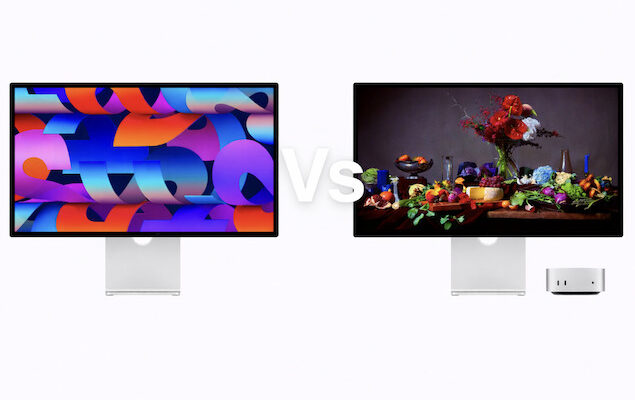
With Apple now officially unveiling the refreshed Studio Display and the all-new Studio Display XDR, the buying decision has changed significantly.
Apple’s Studio Display has long been one of the best 5K monitors for Mac and for months, a “Studio Display 2” was heavily rumored. That update has now arrived – and in a much bigger way than expected.
So the question is no longer whether you should wait for a refresh.
It’s now:
Should you buy the updated Studio Display, step up to the new Studio Display XDR or simply get one of the many excellent cheaper Studio Display alternatives instead?
Here’s a clear breakdown based on Apple’s official announcement.
Contents
Apple Studio Display (Current Model – 2022)
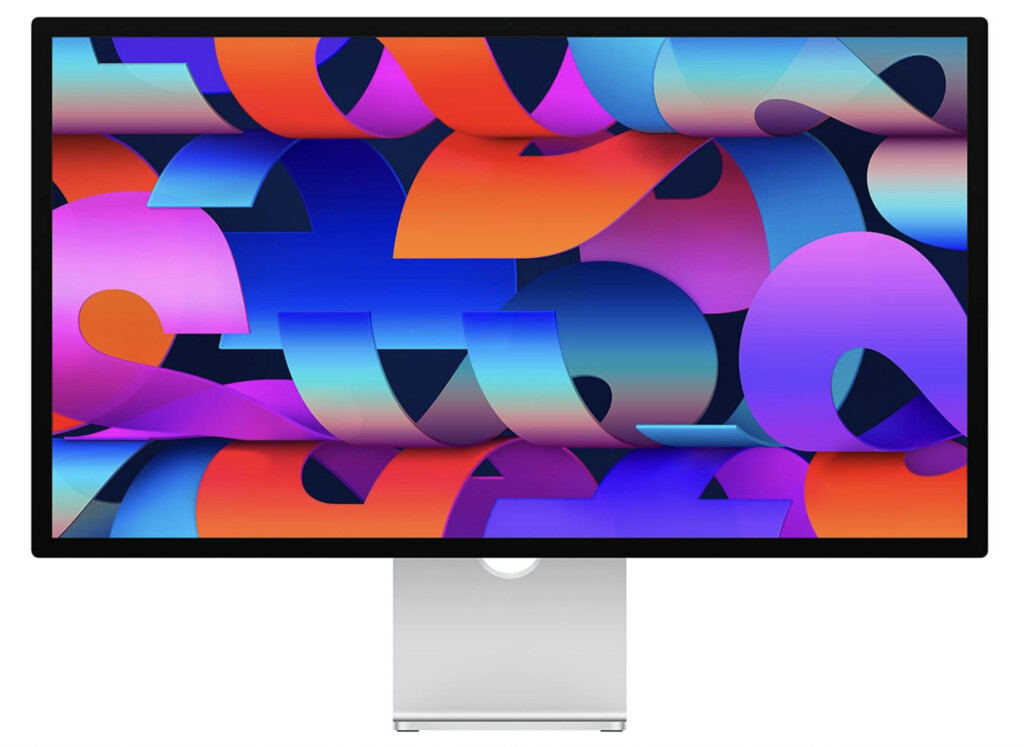
Apple’s original Studio Display remains one of the most Mac-optimized monitors ever made.
Key Specs:
- 27-inch 5K (5120 × 2880)
- 218 PPI Retina scaling
- 60Hz refresh rate
- 600 nits SDR brightness
- P3 wide color gamut
- Thunderbolt 3 (single input)
- 96W power delivery
- A13 Bionic chip
- 12MP Center Stage webcam
- Six-speaker Spatial Audio system
- Studio-quality microphone array
Why People Still Buy It
Despite the price, users consistently cite three standout advantages:
- Perfect macOS scaling (no tweaks and no resolution issues)
- Incredible built-in speakers – widely regarded as the only monitor speakers that are genuinely usable
- Apple’s support & warranty – there’s zero-tolerance for dead pixels and fast in-store repairs
- Apple Build Quality – the Studio Display oozes class and quality compared to other displays
- Incredible Color Reproduction – The intense colors mirror that of the Retina displays on MacBooks
While many alternatives to the Studio Display compromise on build quality, speakers, webcam quality, warranty support, or macOS integration, Apple still excels in these areas.
Apple Studio Display 2 (2026)
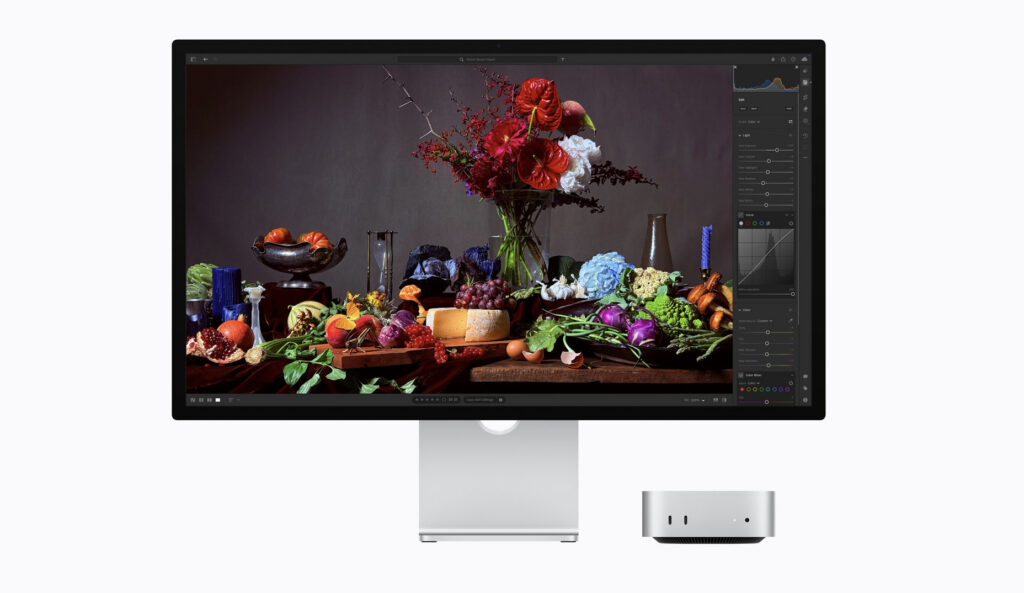
Apple has refreshed the Studio Display rather than replacing it with a radically different model.
Key Specs (2026 Model)
- 27-inch 5K (5120 × 2880)
- 218 PPI Retina scaling
- 600 nits brightness
- P3 wide color gamut
- Thunderbolt 5
- Up to 96W power delivery
- 12MP Center Stage camera (improved image processing)
- Six-speaker Spatial Audio system (30% deeper bass vs previous gen)
What’s New vs 2022 Model?
Compared to the Studio Display, the main upgrades are:
- Thunderbolt 5 instead of Thunderbolt 3
- Improved camera and internal processing
- Enhanced speaker performance
- Better connectivity for daisy-chaining and accessories
What Hasn’t Changed?
- Still 27-inch
- Still 5K
- Still 60Hz
- Still 600 nits SDR
- No mini-LED
- No HDR
This is important.
Many of the previous rumors – mini-LED, HDR, 120Hz – did not materialize in the standard Studio Display.
Apple has clearly positioned this as an evolution, not a dramatic redesign.
Studio Display XDR (2026)
This is where the real leap happens.
The new Studio Display XDR effectively replaces the old Pro Display XDR concept in a far more compact and accessible 27-inch format.
Key Specs
- 27-inch 5K Retina XDR
- Mini-LED backlight
- Over 2,000 local dimming zones
- Up to 2,000 nits peak HDR brightness
- 1,000,000:1 contrast ratio
- 120Hz with Adaptive Sync
- P3 + Adobe RGB support
- Thunderbolt 5
- Up to 140W power delivery
This model delivers the upgrades that were widely rumored – just not in the base display.
For a closer look at how it compares to the Studio Display refresh, check out our in-depth look at the Studio Display vs Studio Display XDR.
What Happened to the Rumors?
Much of the speculation came from reports including Bloomberg’s Power On newsletter.
Here’s how they played out:
| Rumor | Outcome |
|---|---|
| Mini-LED | ✔️ Yes – but only in Studio Display XDR |
| HDR | ✔️ Yes – but only in Studio Display XDR |
| Higher refresh rate | ✔️ 120Hz – XDR only |
| New internal chip | ✔️ Upgraded processing |
| Brighter panel | ✔️ XDR model reaches 2,000 nits |
So technically the rumors were correct – just not for the standard Studio Display.
Pricing
- Studio Display (2026): starts at $1,599 – the same as the first generation model
- Studio Display XDR: starts at $3,299 – significantly higher but less than the now discontinued Apple Pro XDR display at $4,999
Nano-texture and stand upgrades remain optional extras.
This confirms Apple’s strategy:
- Keep the base Studio Display as the “best 5K SDR Mac monitor”
- Introduce a higher tier for HDR, contrast and refresh rate upgrades
Should You Buy Now?
Buy the Studio Display (2026) if:
- You want perfect 5K macOS scaling
- You don’t care about HDR
- You prioritize speakers, build quality, and Mac integration
- 60Hz is fine for your needs
- You want the most affordable Apple 5K option
- You can find a refurb or used unit at a good price
It remains one of the most Mac-optimized monitors available.
Buy the Studio Display XDR if:
- You want mini-LED contrast
- HDR matters to you
- You want 120Hz smoothness for gaming or video
- You work in color-critical video or photography
- You plan to keep the display for many years
This is the display creative professionals were hoping for.
Consider Alternatives if:
- You need HDMI or multiple non-Thunderbolt inputs
- You want 120Hz at a lower price
- You’re willing to sacrifice speakers and macOS polish
For a lowdown on other options, check out our guide to the best Studio Display alternatives.
Summary
The situation is now much clearer than it was during the many rumors surrounding a long overdue update to the Studio Display.
Apple did not turn the standard Studio Display into a mini-LED, HDR, 120Hz monitor.
Instead, it created a new tier above it.
If you need a 5K Mac display today, the refreshed Studio Display remains an excellent choice.
If you want the biggest upgrade in contrast, HDR and refresh rate, the Studio Display XDR is the real next-generation model – but at a significantly higher price.
The good news? There’s no longer a reason to “wait for Studio Display 2.”
It’s already here – just in two very different forms.