

If photos, video clips, documents or other files have disappeared from an SD or microSD card, the most important thing is to stop using the card immediately. The less new data written to it, the better the chance that recovery software can find what is still there.
For most people, Disk Drill is the best all-round SD card recovery software for Mac because it is straightforward, has a useful free scan and preview, and can make a byte-for-byte image of a failing card before you attempt recovery. Stellar Photo Recovery is an excellent alternative if the card came from a camera and the priority is photos or video. More technical users should consider R-Studio, while PhotoRec and TestDisk provide decent free options for different kinds of recovery problem.
Quick recommendations
| Software | Best for | Why it stands out | Cost model |
|---|---|---|---|
| Disk Drill | Most Mac users | Polished interface, strong scan and preview tools, plus disk imaging | Free scan/preview; paid licence for normal recovery |
| Stellar Photo Recovery | Camera photos and video | Focused media recovery with broad RAW, image and video support | Free trial; paid plans |
| Prosoft Data Rescue 6 | Recovery with cloning | Strong deep scans, previews and cloning for unstable cards | Free scan and up to 1GB recovery for new users; US$79 for 30 days or US$399/year |
| R-Studio for Mac | Difficult or technical recoveries | Powerful file-signature scanning and disk-image workflow | Paid, with a demo to assess results |
| PhotoRec | Free file recovery | Open-source file carving that can find data on a damaged file system | Free |
| TestDisk | Lost partitions or an unmountable card | Repairs partition and boot-sector problems rather than being a simple photo-recovery app | Free |
Before you try to recover anything
Do these things first. They matter more than the particular app you choose.
- Remove the card from the camera or device. If it has a physical lock switch, set it to Lock before connecting it to your Mac.
- Do not take more photos, import files, format the card or run Disk Utility First Aid. Any of those actions can change the card and reduce the amount that can be recovered.
- If the card still opens, copy any intact files you can see to your Mac or another drive first. Do not move them.
- Use a separate, reliable card reader where possible. It is usually safer and more dependable than connecting the camera by USB.
- Recover files to a different drive. Never save recovered files back to the SD card you are trying to rescue.
- Stop if the card repeatedly disconnects, becomes unusually hot or has been physically damaged. Continued scanning can make a failing card worse. A professional data-recovery service is the sensible next step for irreplaceable material.
Important: Recovery software cannot guarantee a result. It is most successful when a file has been deleted or a card has been quick-formatted, but the underlying data has not yet been overwritten.
Can a Mac recover deleted files from an SD card?
Often, yes. When a camera or Mac deletes a file, it may remove the file’s directory entry rather than immediately erase every block of data. Recovery software looks for those remaining entries or scans the card for the distinctive signatures of JPEGs, RAW photos, MOV files, documents and other formats.
That is why a recently deleted photo may be recoverable, while a card that has been used for another day of shooting may not be. New photos and videos can overwrite the same storage area. A formatted card can sometimes be recovered too, but it should be treated as read-only until you have exhausted the recovery options.
The Best SD Card Recovery Software For Mac
1. Disk Drill — Best Overall For Most Mac Users
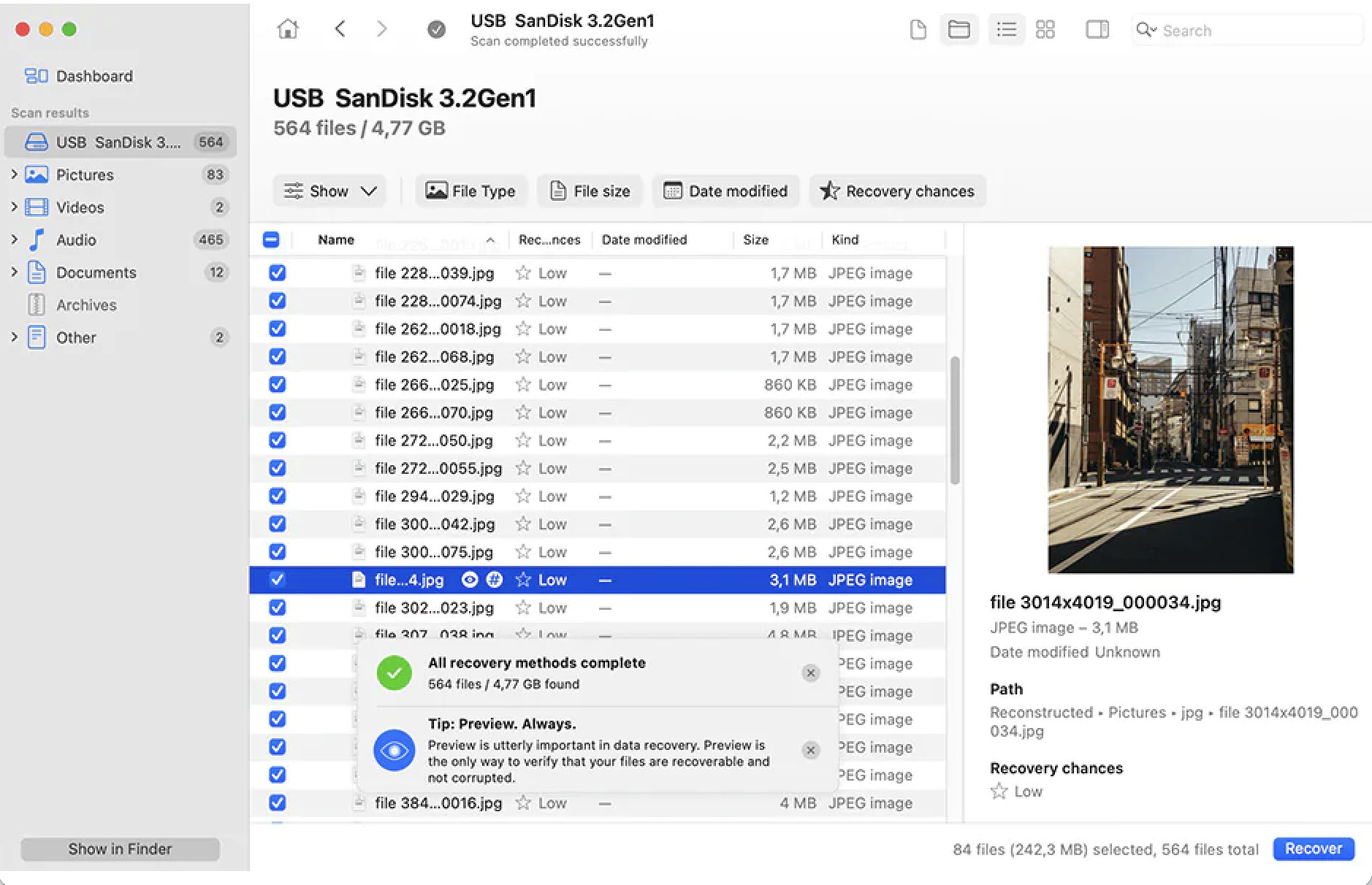
Disk Drill is the best place to start for most people. It has a polished Mac interface, can scan SD, microSD and other removable media, and makes it easy to filter results by file type, date and recoverability before spending money.
The free edition is particularly useful for finding and previewing recoverable files. On the Mac, treat it primarily as an evaluation tool: ordinary recovery normally requires a paid licence. That is still valuable because it lets you check whether your photos or videos are actually present before you buy.
One feature I especially like for an unstable card is its ability to create a byte-to-byte backup. Make an image first if the card intermittently disconnects, then scan the image rather than repeatedly putting the original card under strain.
Disk Drill 6.3 is designed for Intel and Apple Silicon Macs, with the developer currently listing macOS 10.15 through macOS 26.x. If you use macOS Golden Gate, install the latest build and confirm the developer’s current compatibility information before purchasing.
Why choose it: It strikes the best balance of simple workflow, detailed results and useful safeguards.
Watch out for: It is not a substitute for a professional lab when the card has a hardware fault, and the full recovery features are paid.
2. Stellar Photo Recovery — Best For Photographers and Videographers
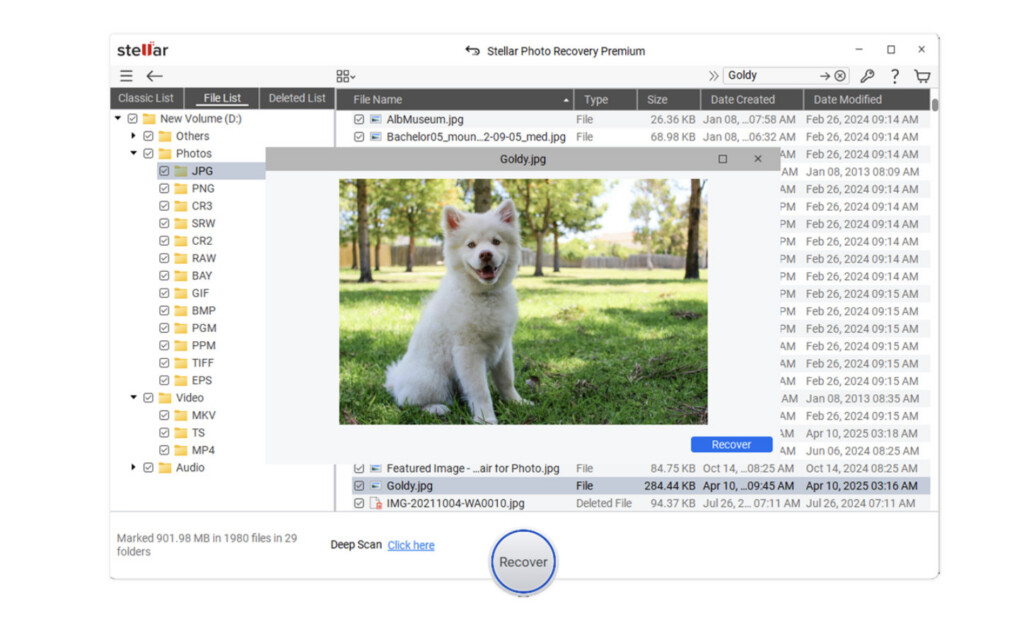
Stellar Photo Recovery is the strongest choice when the lost files are mainly camera photos, RAW files, audio or video. It supports recovery from memory cards, including SD, CF and USB media, and is built around media formats rather than trying to be a general-purpose Mac utility.
It can scan for common images such as JPEG, HEIC, TIFF and PNG, alongside many camera RAW formats and video formats such as MOV and MP4. The higher plans also separate recovery from photo and video repair features, which can be useful when files are found but will not open properly.
The free download is a good way to scan the card and judge the likely result. Do not assume that every file shown in a scan will be perfect: preview a selection of the most important photos or clips before committing to a paid plan.
As with any recovery app immediately after a new macOS release, download the latest version and check the developer’s current macOS compatibility information before buying if your Mac runs Golden Gate.
Why choose it: A strong camera-media focus, wide format support and a straightforward way to assess a recovery before paying.
Watch out for: It is less compelling if the card contains a mixed collection of work files, archives and folders rather than primarily media. In that situation, Disk Drill or R-Studio is usually a better fit.
You can also read our full Stellar Data Recovery for Mac review for a look at Stellar’s broader data-recovery software.
3. Prosoft Data Rescue 6 — Best For Recovery With Cloning

Prosoft Data Rescue 6 is an established and capable recovery tool for Mac users that can retrieve lost files from SD and microSD cards, CompactFlash cards, USB drives, SSDs and hard drives.
It is particularly useful if the card is slow, unreliable or has started disconnecting. Data Rescue can create a clone of the problem card, allowing you to scan the copy rather than repeatedly stressing the original. It also offers Quick Scan and Deep Scan modes, file previews and recovery for photos, camera RAW files, video, documents and other common file types.
New users can scan and preview files for free, with up to 1GB of free recovery. Paid licences currently start at US$79 for 30 days of unlimited recovery, while the Professional plan costs US$399 per year. One licence covers both Mac and Windows.
There is one important caveat for 2026: Prosoft’s published compatibility information has not yet explicitly confirmed macOS Tahoe or macOS Golden Gate support. If you are using one of those versions of macOS, download the free version and confirm it can see and scan your card before paying.
Why choose it: A mature recovery app with strong preview, deep-scan and cloning tools, plus a useful free recovery allowance.
Watch out for: The licensing is subscription/time-limited rather than a simple permanent purchase, and modern macOS compatibility should be verified first.
Read our full Prosoft Data Rescue review.
4. R-Studio for Mac — Best For Advanced Recovery Work
R-Studio for Mac is powerful software for people prepared to spend more time understanding the results. It is not as beginner-friendly as Disk Drill or Stellar, but it is excellent when a card has been formatted, has a damaged file system or needs a more forensic approach.
Its Known File Types scan searches for file signatures, so it can identify documents, JPEGs and other files even where the original file system is badly damaged. It can also create and work from disk images, which is exactly the right approach when the physical card is unreliable.
Use the demo first to see whether it finds the files that matter. Expect a denser, more technical interface than the consumer-focused alternatives.
Why choose it: Very capable scans, detailed control and a strong disk-image workflow.
Watch out for: Overkill for a simple accidental deletion, and less welcoming if you only want to click a button and retrieve family photos.
5. PhotoRec — Best Free SD Card Recovery Tool
PhotoRec is free, open-source recovery software from the makers of TestDisk. It works by looking for the signatures of known file types directly on the card, so it can still find files when the card’s file system is corrupted or missing.
The trade-off is convenience. PhotoRec is a more technical, terminal-style tool on the Mac, and recovered files frequently lose their original filenames and folder structure. You may end up with a large collection of generically named files that need sorting afterwards.
It is still an excellent option if your budget is zero and you are comfortable following technical instructions. The official Mac download requires macOS 10.15 or later; the project notes that its Intel build can run on M-series Macs.
Why choose it: Completely free, read-only recovery approach and often surprisingly effective on badly corrupted cards.
Watch out for: It takes patience, does not preserve the neat organisation of the original card and is not the best first choice for a beginner.
6. TestDisk — Best For Partition & Card-Structure Problems
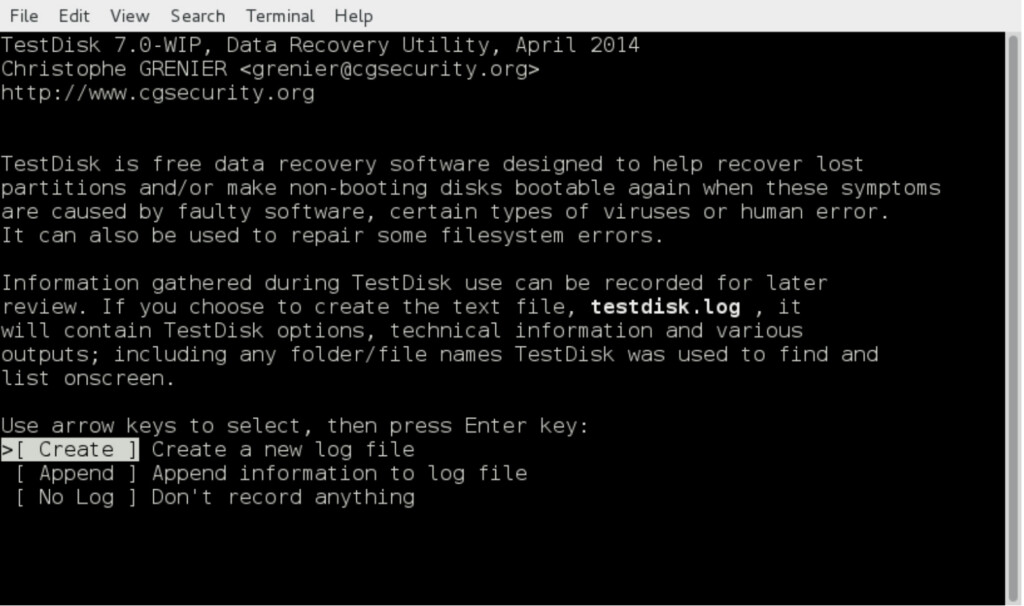
TestDisk is the companion utility to PhotoRec. It is not primarily a photo-recovery app; it is designed to repair or recover partitions, boot sectors and file-system structures.
Use it when the card looks unformatted, a volume has disappeared or the issue appears to be with the card’s structure rather than individual deleted files. If the data is important, create an image first and work on that image. Do not use TestDisk as a casual first step after accidentally deleting a few photos.
Why choose it: A serious free tool for a specific type of card failure.
Watch out for: Terminal-based and potentially confusing. It is better suited to confident users than to a quick, routine recovery.
How to recover data from an SD card on a Mac
The exact screens vary between apps, but the safest general process is the same:
- Connect the SD or microSD card with a card reader. If it is a microSD card, use a good-quality microSD-to-SD adapter or USB-C reader.
- Open Disk Drill, Stellar or R-Studio and select the physical card, not your Mac’s internal drive. If the card has been formatted or its volume is missing, scan the entire device.
- Run the initial scan and filter the results by the files you need — for example, JPEG, HEIC, CR3, NEF, MOV or MP4.
- Preview several important results. A found filename does not always mean that the image or video is intact.
- If the card is unstable, make a disk image before running repeated deep scans. Scan the image instead of the original card wherever possible.
- Recover the selected files to your Mac’s internal storage or another external drive with enough free space.
- Open the recovered files in Preview, Photos or the relevant application to check them before you erase or reuse the card.
What if the SD card does not appear on your Mac?
First, try another USB-C port, card reader or Mac. Check Disk Utility and choose View > Show All Devices to see whether the physical card is detected. At this stage, do not click Erase, First Aid or Partition.
If the Mac cannot see the physical card at all, no recovery app can read it. The problem may be the reader, the adapter, the card contacts or the card itself. Try a different reader before assuming the card is dead.
If the card appears and disappears, or takes a long time to mount, stop repeatedly reconnecting it. That is a strong case for imaging the card once with a reliable recovery tool, or using a specialist recovery service if the files are irreplaceable.
Do Macs have an SD card reader?
Some do. Current MacBook Pro and Mac Studio models have a built-in UHS-II SDXC card slot, so they can read full-size SD cards without an adapter. MacBook Air, Mac mini and iMac users normally need a USB-C card reader. A microSD card will either need a microSD-to-SD adapter or a reader with a dedicated microSD slot.
The presence of an Apple Silicon chip does not by itself tell you whether your Mac has an SD card slot. Check the ports on your exact model before buying a reader.
FAQ
What is the best free SD card recovery software for Mac?
PhotoRec is the best genuinely free option. It can recover many file types, but you should be prepared for a more technical process and files that have lost their original names. Disk Drill and Stellar both offer free scanning and previewing, which is often the easier way to find out whether recovery is possible before paying.
Can I recover files from a formatted SD card?
Sometimes. A quick format often recreates the file-system structure without immediately overwriting all file data. Stop using the card, do not format it again, and run a scan as soon as possible. The more the card has been used since formatting, the lower the chance of a complete recovery.
Can SD card recovery software fix a physically damaged card?
No. Software can help with deleted files, formatting and logical corruption, but it cannot repair cracked, water-damaged or electrically failed memory cards. If the data is valuable, avoid further DIY attempts and contact a reputable professional recovery service.
Can I recover data from a microSD card?
Yes. A microSD card is recovered in the same way as a full-size SD card once it is connected through a compatible reader or adapter. The key rule is still to save the recovered data to a different drive.
Will Time Machine recover files that were only on an SD card?
Usually not. Time Machine backs up files stored on your Mac, not the original contents of a removable camera card. If you had already imported or copied the files to your Mac before they were lost, check your Time Machine backup before paying for recovery software.
Final verdict
If you want the simplest and most balanced option, start with Disk Drill. If the card came from a camera and the loss is mainly photos or video, Stellar Photo Recovery is a very good alternative. For a completely free attempt, use PhotoRec — but expect more manual work.
Whichever tool you choose, do not write anything new to the card and never recover files back onto it. Those two decisions make the biggest difference to your chances of getting the data back.