

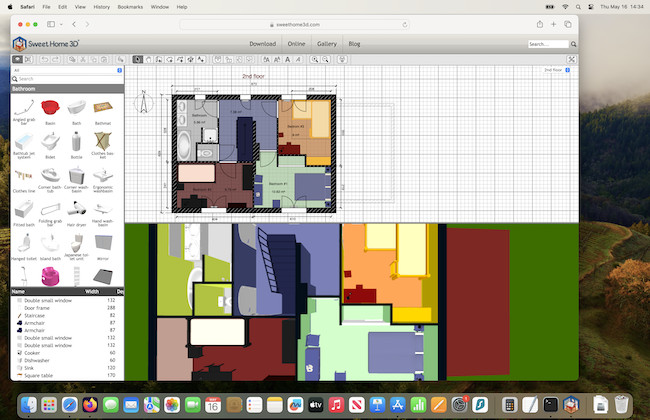
Sweet Home 3D has been around for almost 20 years, yet it’s still one of the most popular free home design applications available for Mac.
Unlike many modern floor planners that have moved entirely to the cloud and require expensive subscriptions, Sweet Home 3D remains open-source and offers a genuinely capable free version that runs locally on your Mac.
However, there have been some changes in 2026 including the introduction of a paid subscription to the enhanced Mac App Store version.
I spent some time testing the latest macOS version to see how it compares with newer alternatives and whether it’s still worth using in 2026.
Is Sweet Home 3D Free?
Yes—but there are now several different versions, which can be confusing.
The official desktop version available from Sourceforge is completely free and open source. It includes all of the core floor planning and interior design tools and lets you save projects locally on your Mac.
There’s also a free web version that runs in your browser. It offers the same basic design experience but limits you to 100 furniture models and 26 textures. You’ll also need to create a free account if you want to save your projects online.
There is also a Mac App Store version which used to be a one-time purchase. However, it has now switched to a subscription model costing $4.99 per week, $19.99 per month or $49.99 per year.
The subscription removes the furniture and texture limits found in the free web version, bundles a much larger catalog (currently around 1,600 furniture models and more than 400 textures) and provides automatic updates through the Mac App Store.
That pricing is difficult to justify though, especially since the free desktop version already includes the same core design tools and can be expanded with additional furniture libraries downloaded from the Sweet Home 3D community.
For most Mac users, I’d recommend downloading the free desktop version directly from the developer rather than subscribing through the App Store.
Compatibility
Sweet Home 3D runs on both Intel and Apple Silicon Macs and supports current versions of macOS.
Because it’s written in Java, performance is consistent across different Mac models, although it won’t feel quite as smooth or polished as native Mac applications like Live Home 3D.
Some users have reported difficulties running Sweet Home 3D on the latest versions of macOS although the Mac App Store version states it supports macOS 10.15 or later.
Web vs Desktop Interface
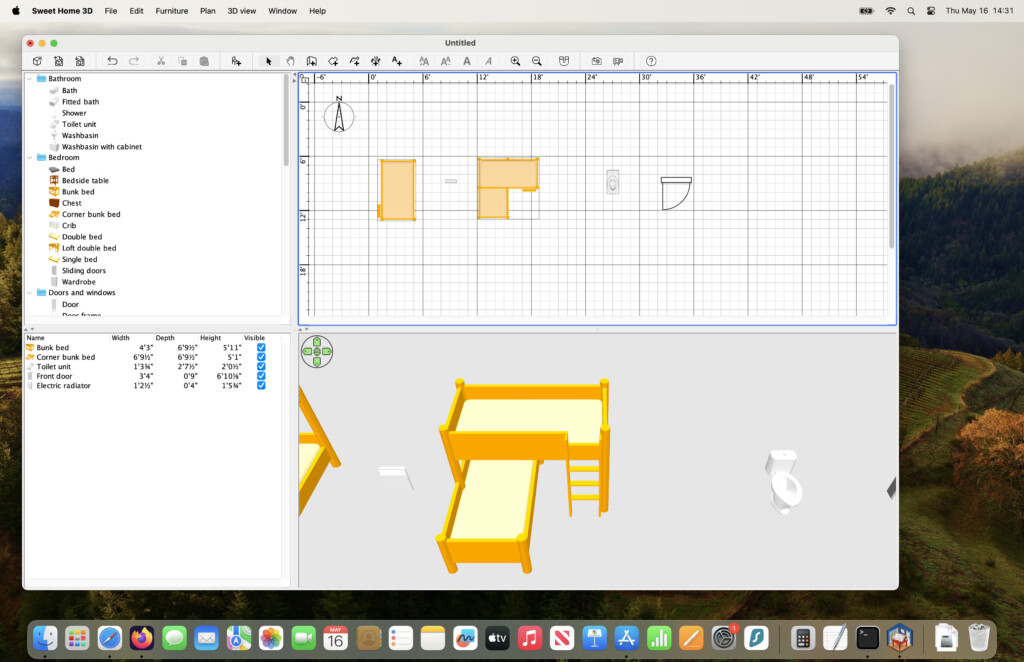
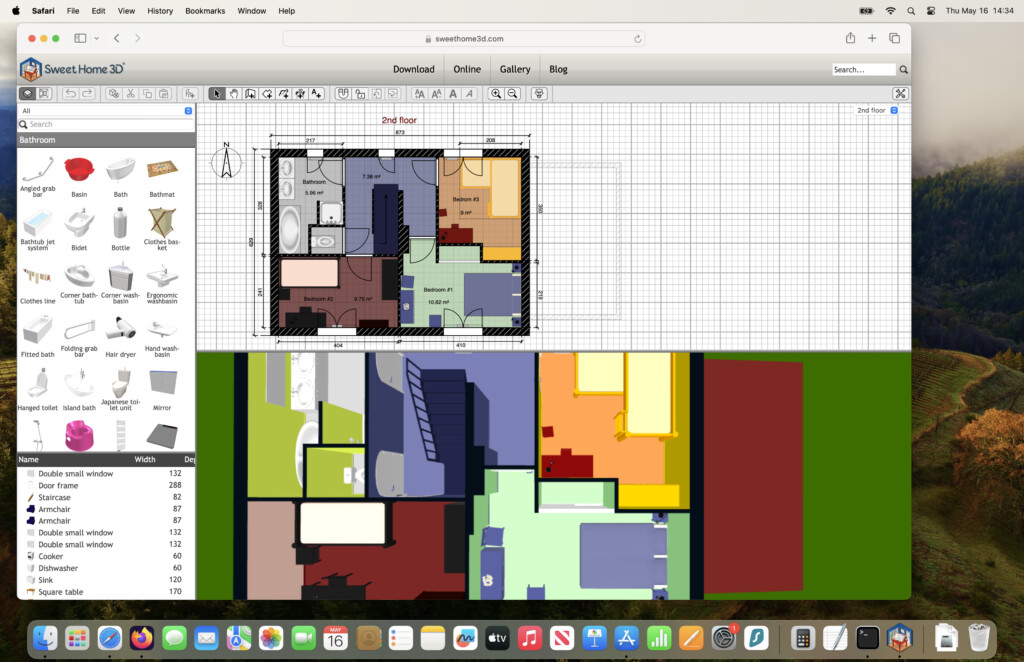
The interface is a simple user friendly drag-and-drop canvas but definitely looks a bit dated nowadays in both the web and desktop versions.
The desktop version looks like this:
Whereas the web interface looks like this:
Interface & Ease of Use
The interface is simple enough that most people can start drawing rooms within a few minutes.
It certainly shows its age though.
The windows, icons and menus haven’t changed dramatically over the years and feel much closer to classic desktop software than today’s cleaner Mac apps.
The workspace is divided into four areas:
- Furniture catalog
- Home object list
- 2D floor plan editor
- Live 3D preview
Despite the dated appearance, the layout actually works very well because you can always see both your floor plan and 3D model at the same time.
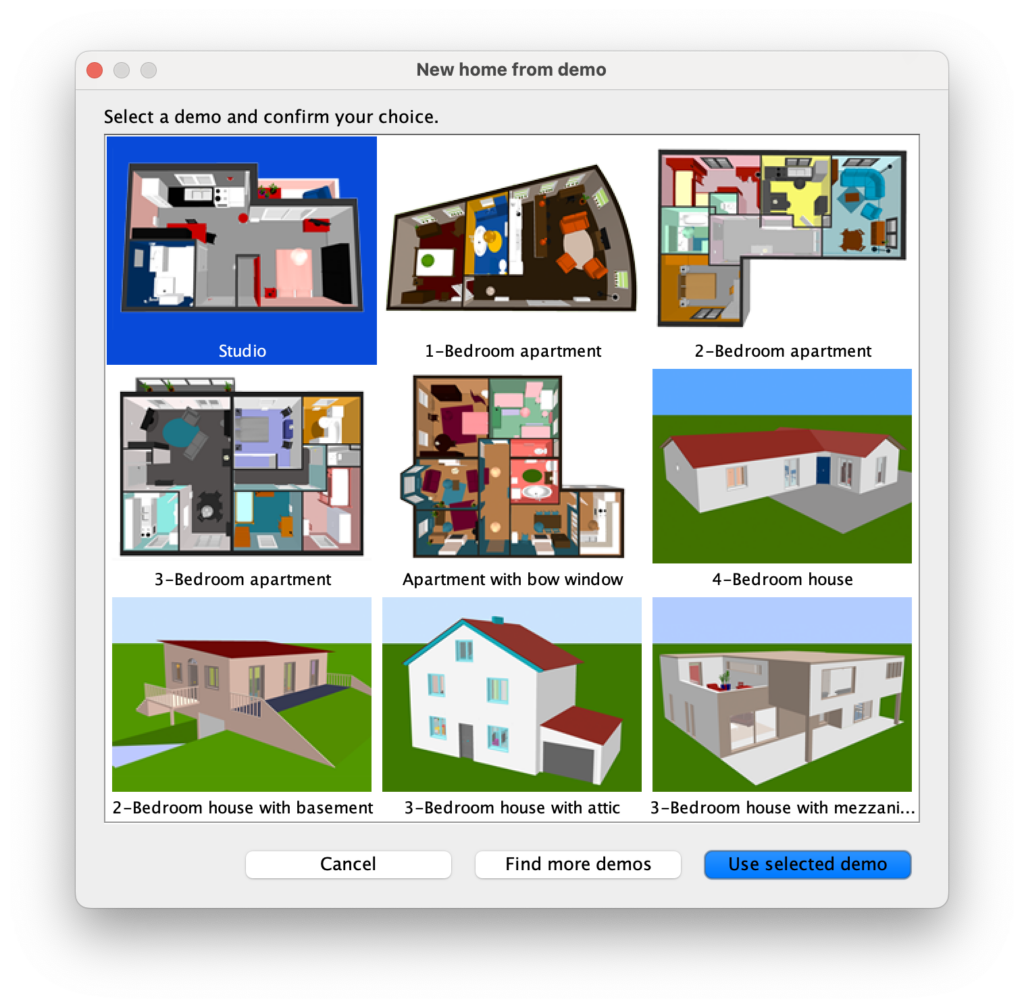
The browser version starts with several template homes, while the desktop version opens a blank project by default. If you’re using the desktop app, you can load example projects via File > New Home From Demo, with additional examples available from the Sweet Home 3D website.
I also found the desktop version gives you easier access to settings such as measurement units, wall thickness, grid snapping (“Magnetism”) and other editing preferences.
The web also version requires you to create an account and login if you want to save designs whereas the desktop version allows you to save them on your desktop.
I also found the desktop version makes it easier to change specific settings such as changing measurements from imperial to metric, snap to grid (called “magnetism”), wall thickness and more.
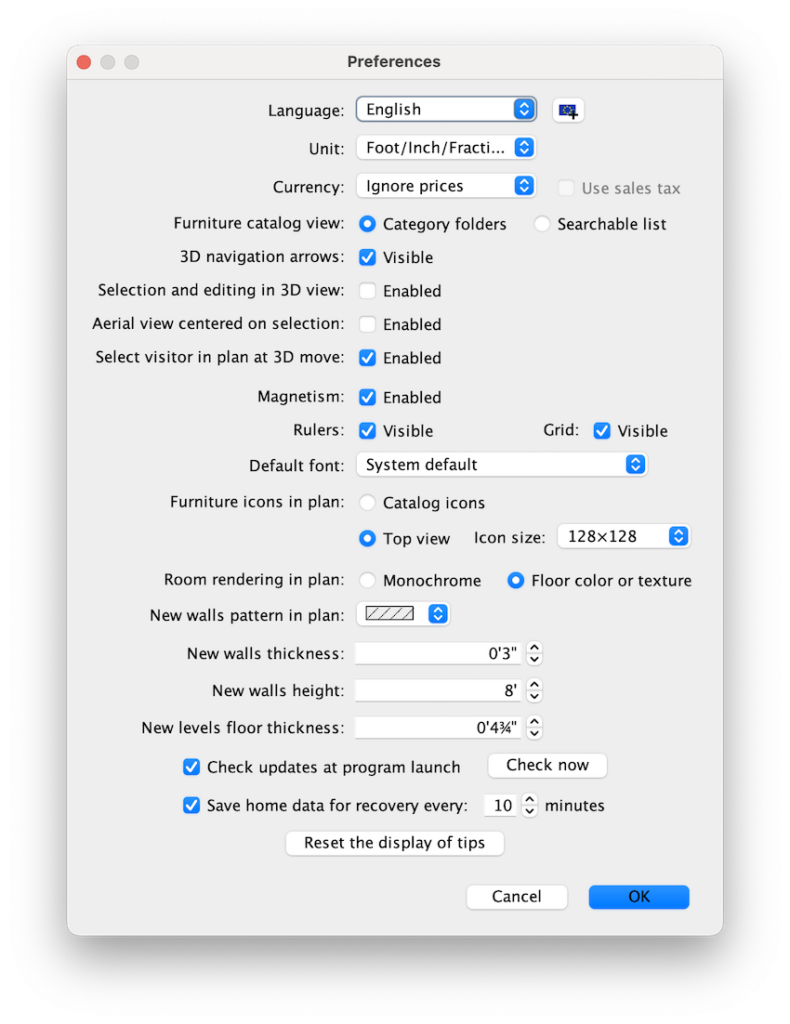
However, apart from that, the two version function the same.
You can also create designs in the desktop version and import them into the web version if you wanted to share them with a Windows users for example.
Designing in 2D and 3D
One of Sweet Home 3D’s biggest strengths is how naturally it combines 2D drafting with a live 3D visualization.
As you draw walls in the 2D editor, the 3D window updates instantly, making it easy to understand how rooms will actually look.
You can see below how I drew the basic outline of a room using the plotting tool in 2D and watched it take form in 3D.
This remains one of the software’s strongest features because you don’t need to switch between different viewing modes or generate time-consuming renders every time you make a change.
Furniture can simply be dragged into rooms and resized, rotated or stretched proportionally.
Doors and windows automatically insert themselves into walls, while dimensions update as you edit.
For quickly experimenting with layouts, it’s still one of the easiest programs to use.
Furniture, Textures & Custom Models
The built-in furniture selection isn’t enormous in the free versions, but it’s larger than many people initially realize.
One advantage of Sweet Home 3D is its active community.
The developer provides thousands of additional furniture models, textures and complete example homes that can be downloaded separately at no cost.
You can also import your own OBJ, DAE, 3DS and other common 3D model formats if you need specific furniture or decorative items.
This flexibility means the software can grow with your projects instead of locking everything behind a subscription.
Performance
During testing, Sweet Home 3D was responsive and stable.
Some users have reported occasional crashes or graphics glitches, but I didn’t encounter any significant problems on macOS.
Because projects are relatively lightweight, the software runs comfortably even on older Macs.
The graphics aren’t particularly advanced, but that’s also one reason it performs well.
Is It Good For Beginners?
Absolutely.
Sweet Home 3D was clearly designed for homeowners rather than architects.
You don’t need any CAD experience to create floor plans, rearrange furniture or visualize renovation ideas and there are plenty of tutorial videos and instructions to get you started.
If you’re planning an extension or remodel, it’s an excellent way to communicate your ideas to builders or designers before work begins.
However, if you need construction drawings, BIM workflows or professional architectural documentation, you’ll quickly outgrow it.
What Sweet Home 3D Doesn’t Do Well
While Sweet Home 3D is excellent for interior layouts, it isn’t a full architectural design package.
Its rendering engine also feels dated compared to modern AI-assisted home design software.
If you’re looking for photorealistic visualizations, advanced lighting simulation or virtual walkthroughs, newer competitors offer much more.
Likewise, while you can create simple outdoor areas, anyone planning a full garden redesign will probably be better served by dedicated landscape design software.
Help & Community
Another reason Sweet Home 3D has survived for so long is its excellent community support.
The official website includes tutorials, documentation, downloadable content and active discussion forums where users share furniture packs and answer questions.
Because the software has been around for nearly two decades, it’s also easy to find YouTube tutorials covering almost every feature.
Alternatives To Sweet Home 3D
If you’re simply looking to sketch room layouts, plan a remodel or experiment with furniture placement, Sweet Home 3D is still well worth downloading.
However, if you want a more polished interface, higher-quality rendering and a more modern macOS experience, I’d recommend looking at Live Home 3D or SmartDraw instead