

Sometimes there’s no avoiding the need to run Windows on your Mac to use specific applications or games.
Unless you’re going to either buy a PC or even build your own like we did, you’re going to need a way to use your Mac to run Windows.
We’ve tested every available way of using Windows and Windows applications/games on a Mac so if you’re unsure how to do it or which method is best, you’re in the right place.
Quick Picks: Best Way To Run Windows on Mac
The “best” way to run Windows on your Mac will depend what you need it for.
By far the easiest way to run Windows on a Mac in 2026 is to use a virtual machine like Parallels Desktop (best performance) or VMware Fusion (free option).
Using a virtual machine is also the easiest way to open an EXE file on a Mac although other methods also work for this too.
For those that need Windows for gaming, you’re better off using a compatibility layer like CrossOver.
And for those with Intel Macs, Boot Camp offers the most convenient, free way to use Windows on a Macx.
All the methods we’ve tested and reviewed, you can see in our comparison table below.
Comparison Table
| Method | Best For | Pricing |
|---|---|---|
| Parallels Desktop | Seamless macOS + Windows use, productivity apps, light gaming especially on Apple Silicon Macs (M1, M2, M3, M4 & M5) | $99.99/yr (Standard) Currently 45% off |
| VMware Fusion | Productivity apps, tech-savvy users; free alternative to Parallels | Free |
| UTM | Running Windows ARM on Apple Silicon for experimentation | Free |
| CrossOver | Running Windows apps/games without installing Windows; Apple Silicon compatible | $74/yr or Lifetime option – currently 30% off |
| Boot Camp | Native Windows performance on Intel Macs; gaming and GPU-heavy apps | Free (Windows license required) |
| Wine | Advanced users running niche or older apps | Free |
| Remote Desktop Software | Accessing a Windows PC remotely | Mostly Paid (some free options like Chrome Remote Desktop) |
How To Run Windows on a Mac (Step-by-Step)
The easiest and fastest way to run Windows on a Mac is using a virtual machine, preferably Parallels. You can watch exactly how quick and easily we were able to install Windows on a Mac using Parallels in the video below.
Here’s how we did it in just a few easy steps.
- Download and install a virtual machine (we recommend either Parallels Desktop (paid) or VMware Fusion (free)
- Both Parallels and VMware Fusion will automatically download and install Windows 11 from Microsoft
- Create a new virtual machine in the software
- Follow the setup installation steps
- Start using Windows apps on your Mac
As you can see in the video, we were up and running using Windows in little more than 3 minutes using Parallels.
You can try a free trial of Parallels to test it for yourself.
What’s The Best Way To Run Windows on a Mac?
For most people, a virtual machine is the best way to run Windows on a Mac.
It allows you to:
- Use Windows and macOS at the same time
- Run Windows apps in their own windows
- Copy and paste files between both systems
Other methods like Boot Camp or CrossOver are better suited to specific use cases (such as gaming or Intel Macs), but virtual machines offer the best balance of ease, performance, and flexibility.
Here we’ll look at all of these methods in more detail to help you see the pros and cons of each.
Virtual Machines (Best Method Overall)
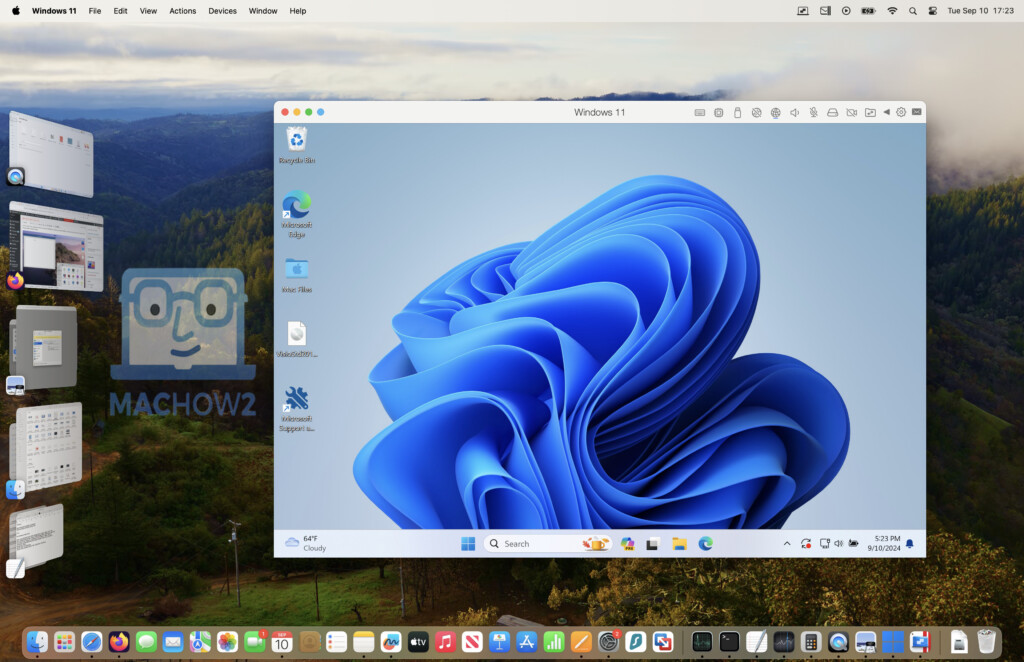
For most Mac users, the simplest and most seamless way to run Windows is with a virtual machine. This lets you use Windows and macOS side-by-side without restarting your Mac.
A virtual machine (VM) is software that creates a virtual Windows PC inside your Mac. You can run Windows apps in their own window, share files between macOS and Windows, and switch between them instantly.
The best virtual machines for Mac are:
- Parallels Desktop (best performance and integration)
- VMware Fusion (free and very capable)
- UTM (free but more limited)
- VirtualBox (free but less optimized for macOS)
Parallels Desktop is the most polished option, with the best performance on Apple Silicon Macs and the easiest setup. It supports DirectX 11 and partial DirectX 12 via Metal, making it suitable for many Windows apps and some games.
VMware Fusion is a strong free alternative. While it’s not quite as smooth or powerful as Parallels, it works on both Intel and Apple Silicon Macs and is ideal for productivity apps.
UTM and VirtualBox are also free, but they require more setup and offer lower performance, making them better suited to advanced users or experimentation.
For a full look at all virtual machine options, check our guide to the best virtual machines for Mac.
✔️ Pros
- Some options (like VMware Fusion, UTM or VirtualBox) are completely free
- Simple installation process for Windows on macOS
- Run Windows and macOS side-by-side – no need to reboot
- Ideal for running Windows apps and lightweight games
- Supports Windows keyboard shortcuts on your Mac
- Great for IT teams deploying Windows environments across Macs
❌ Cons
- Won’t run games with anti-cheat protection
- DirectX 12 support in Parallels is only partial
- Some apps like Parallels require a subscription
- Not as fast for gaming – limited GPU acceleration compared to Boot Camp
Best Free Way To Run Windows on a Mac
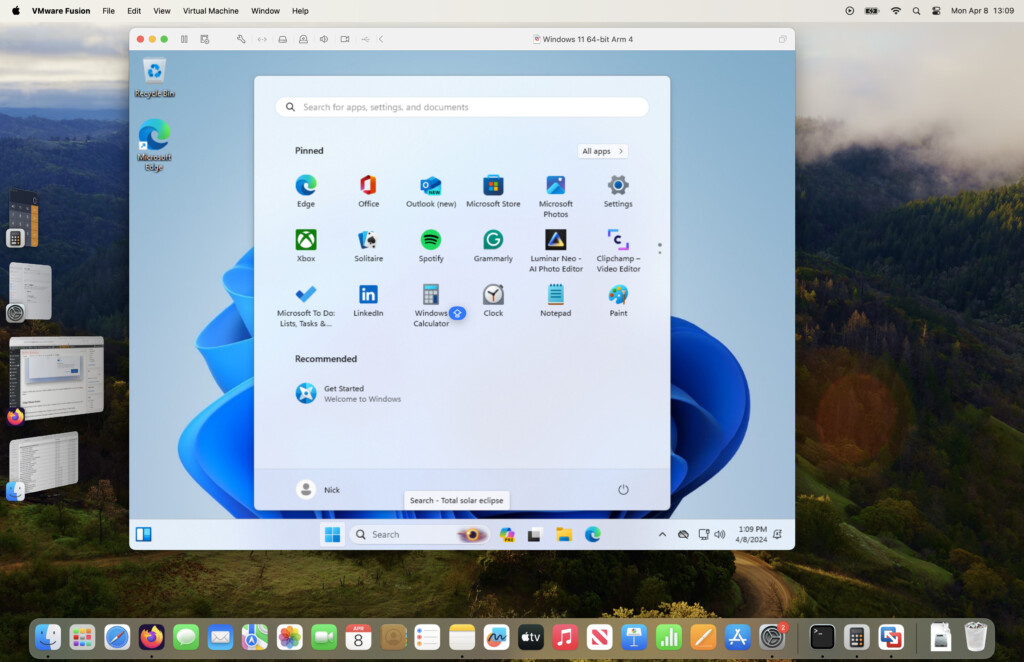
If you want to run Windows on a Mac for free, the best option is to use the VMware Fusion virtual machine.
VMware Fusion is now completely free for personal, educational, and even commercial use, making it the closest thing to a full-featured Windows experience on macOS without paying for software.
Like premium tools such as Parallels Desktop, it allows you to run Windows alongside macOS, switch between apps instantly, and share files between both operating systems.
Why VMware Fusion is the Best Free Option
- Completely free with no subscription required
- Runs Windows and macOS side-by-side
- Works on both Intel and Apple Silicon Macs
- Good performance for productivity apps and general use
- Supports Windows 11 (including ARM on Apple Silicon Macs)
In our testing, VMware Fusion offers the best balance of performance, usability, and cost (free), although it’s not quite as fast or as polished as Parallels Desktop – especially for graphics-intensive tasks or gaming.
You can watch us installing a Windows application on a Mac using VMware Fusion below to see just how smooth and easy it is.
For a full comparison of free vs paid tools, see our virtual machines section above.
Are There Other Free Ways to Run Windows on a Mac?
Yes, but they come with more limitations:
- UTM – Free and works on Apple Silicon Macs, but slower and harder to set up
- VirtualBox – Free but less optimized for macOS and not ideal on Apple Silicon
- Wine – Free compatibility layer, but complex to configure and limited compatibility
These options can work in specific situations, but for most users, VMware Fusion is by far the easiest and most reliable free solution.
Do You Still Need a Windows License?
Even if the virtual machine software is free, you’ll still need a Windows license to fully activate Windows.
However, Microsoft allows you to install and use Windows 10 or 11 without activation, with only minor limitations such as restricted personalization options.
Other Ways To Run Windows on a Mac (Gaming, Intel & Remote Access)
There are several alternative ways to run Windows apps or access Windows on a Mac – each suited to different use cases such as gaming, older Intel Macs, or remote access.
UTM (Free, Flexible Virtual Machine for Mac)
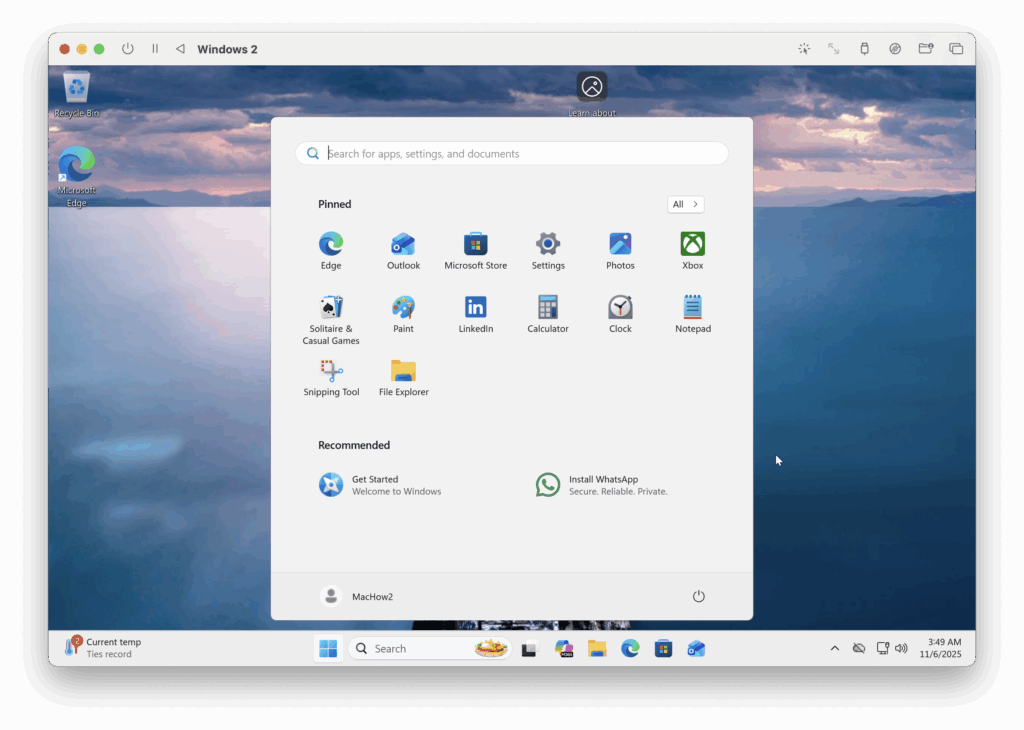
UTM is a free, open-source virtual machine tool that lets you run Windows, Linux and other operating systems on your Mac without paying for commercial software like Parallels.
UTM is often used as a lightweight alternative for users who want to experiment with virtual machines or run less demanding operating systems on macOS. It’s particularly popular with developers, hobbyists, and Apple Silicon Mac users who want a flexible setup without a subscription.
Unlike Crossover, which translates Windows apps so they run directly in macOS, UTM creates a full virtual machine that runs an entire operating system inside macOS. This makes it more powerful in terms of compatibility, but also more resource-intensive.
While other free tools like VMware Fusion offer better performance and a more polished experience for everyday Windows use, UTM is more hands-on and requires more manual configuration. It doesn’t prioritize ease of use or optimization, but instead focuses on flexibility and openness.
You can read our full UTM review for more.
✔️ Pros
- Completely free and open source
- Works on both Intel and Apple Silicon Macs
- Good for Linux and lightweight Windows setups
- Highly flexible for testing and development
- No subscription or licensing costs
❌ Cons
- Slower and less optimized than VMware Fusion or Parallels
- More technical setup process
- Limited macOS integration features
- Not suitable for gaming or heavy Windows workloads
- Less polished user experience overall
Crossover (Best For Playing Windows Only Games)
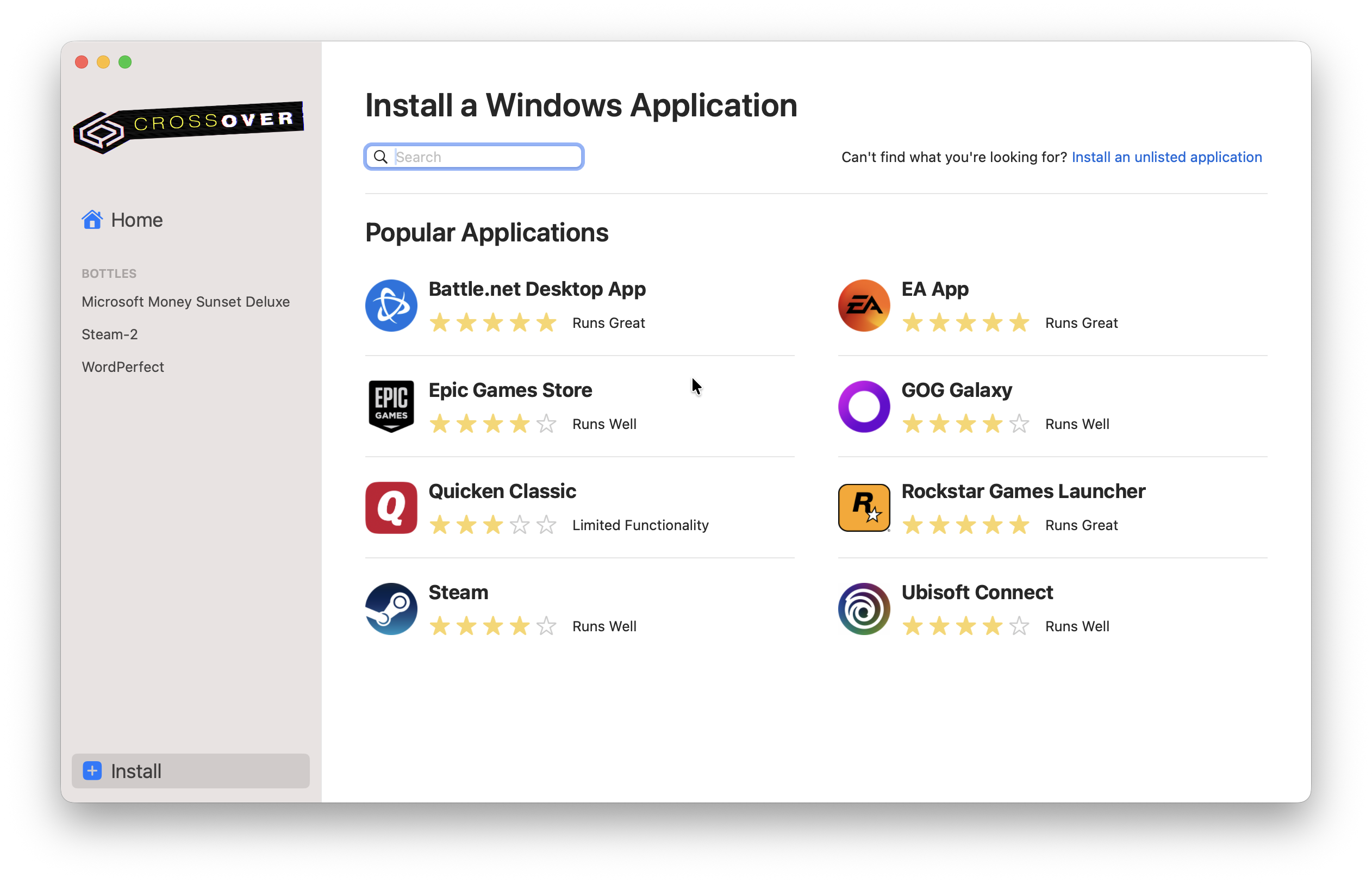
If you’re looking to run Windows games or apps on your Mac without actually installing Windows, Crossover is one of the smartest and no-fuss solutions – especially for Apple Silicon Macs.
In fact we voted it the best way to play Windows games on a Mac (including Steam titles) too.
Crossover works by translating Windows commands into macOS-compatible instructions in real-time. It’s based on the open-source Wine project, but comes wrapped in a much more user-friendly interface, regular updates, and professional support.
Crossover is continually improving support for modern games and AAA titles – especially ones that won’t run in virtual machines or need advanced graphics support.
For example it supports many DirectX 12 games via VKD3D, though compatibility and performance vary by title.
The preview version of Crossover is also available to subscribers to try and often allows you to play games that aren’t yet supported by the official version.
You can watch-us playing installing and playing Where Winds Meet on a Mac using the Preview version of Crossover below.
If Crossover looks interesting, you may also want to check out our review of Pixel Port which is a new compatibility layer similar to Crossover but is free to use.
Pricing for Crossover starts at $74 per year but you can get a free trial with 15% off.
Read our full Crossover for Mac review for more.
✔️ Pros
- No Windows installation required
- No reboot needed – run Windows apps and games directly in macOS
- Apple Silicon compatible
- Supports DirectX 12 and DXVK for better game performance
- Lifetime plan available for long-term value
❌ Cons
- Requires a subscription (or upfront lifetime purchase)
- Doesn’t work with all Windows games/apps (check the full compatibility list first)
- Updates can lag slightly behind major macOS releases
Boot Camp (Best For Intel Macs Only)
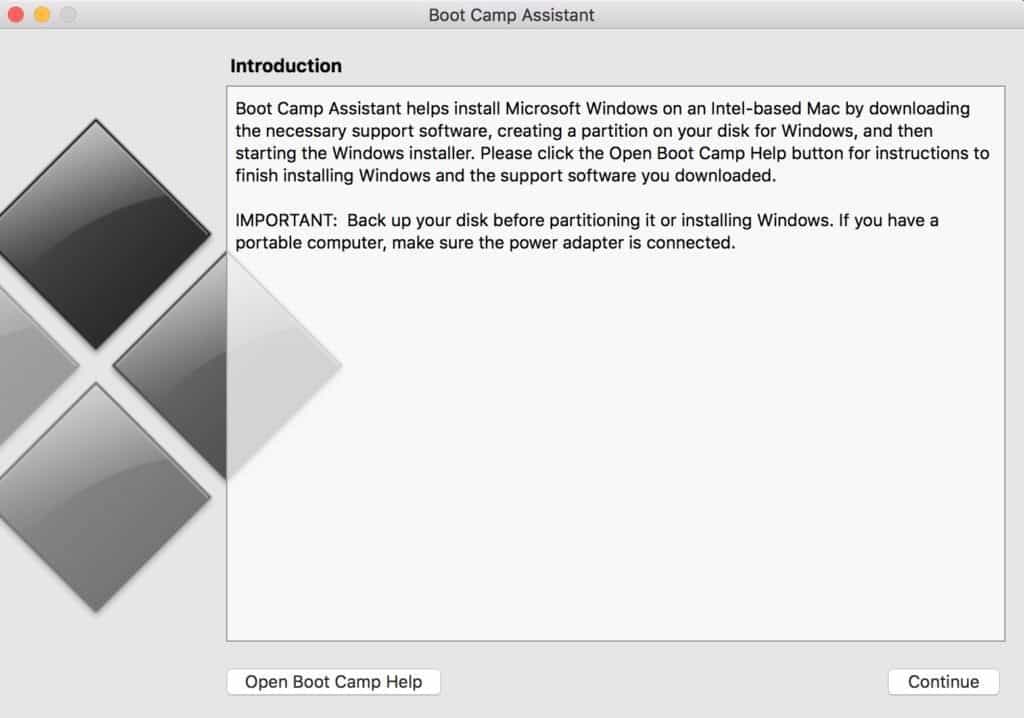
If you’re using an older Intel Mac, Boot Camp was once the go-to method for running Windows natively on your Mac.
Boot Camp lets you install Windows directly on your Mac’s hard drive in a separate partition. When you start up your Mac, you choose to boot into either macOS or Windows.
However, Boot Camp is no longer available on Apple Silicon Macs and is effectively legacy software limited to older Intel hardware.
If you do still have an Intel Mac, simply search for “Boot Camp” on your Mac to get going with it.
You can also check out our guide on how to install Windows for free with Boot Camp.
✔️ Pros
- Free and built into macOS (on Intel Macs only)
- Gives Windows direct access to all Mac hardware
- Best option for GPU-heavy games and performance-demanding apps
- Works with anti-cheat software and supports DirectX 12
❌ Cons
- Not compatible with Apple Silicon Macs
- Requires a reboot every time you switch between macOS and Windows
- Takes up hard drive space with a dedicated Windows partition
- Lacks the convenience of virtualization (can’t run both operating systems at once)
Wine (Best For Advanced Users)
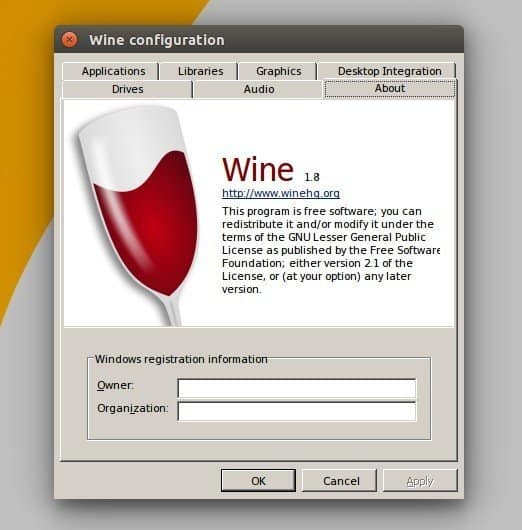
Wine – short for “Wine Is Not an Emulator” – is a completely free and open-source way to run some Windows apps and games on your Mac without installing Windows or using a virtual machine.
Wine is actually the basis upon which Crossover and Pixel Port have been built although it’s a lot less basic on its own.
Instead of emulating Windows, Wine acts as a compatibility layer: it translates Windows system calls into macOS commands in real time.
Wine can run Windows apps natively within macOS with no full Windows installation required
While Wine has improved a lot in recent versions, it’s still best for advanced users comfortable with Terminal, manual configuration, and troubleshooting.
Experimental DirectX 12 support is available via VKD3D, but reliability is inconsistent and setup is complex.
If raw Wine is too technical (we think it is), you can also consider using Wine-based tools like:
- Sikarugir (formerly Kegworks) – macOS-native Wine bundle with less setup
- PlayOnMac – GUI-based Wine tool aimed at simplifying app management
- Pixel Port – a new compatibility layer that’s free for playing Windows Steam games on Macs
✔️ Pros
- Completely free
- No Windows license needed
- Works on Intel and Apple Silicon Macs
- Can run some older or niche Windows apps
❌ Cons
- Difficult to install and configure
- Not compatible with many modern Windows programs
- Breaks often with macOS updates
- DirectX 12 support is unreliable
- Little to no support for high-performance gaming
Remote Desktop Software (Best For Remote Access)
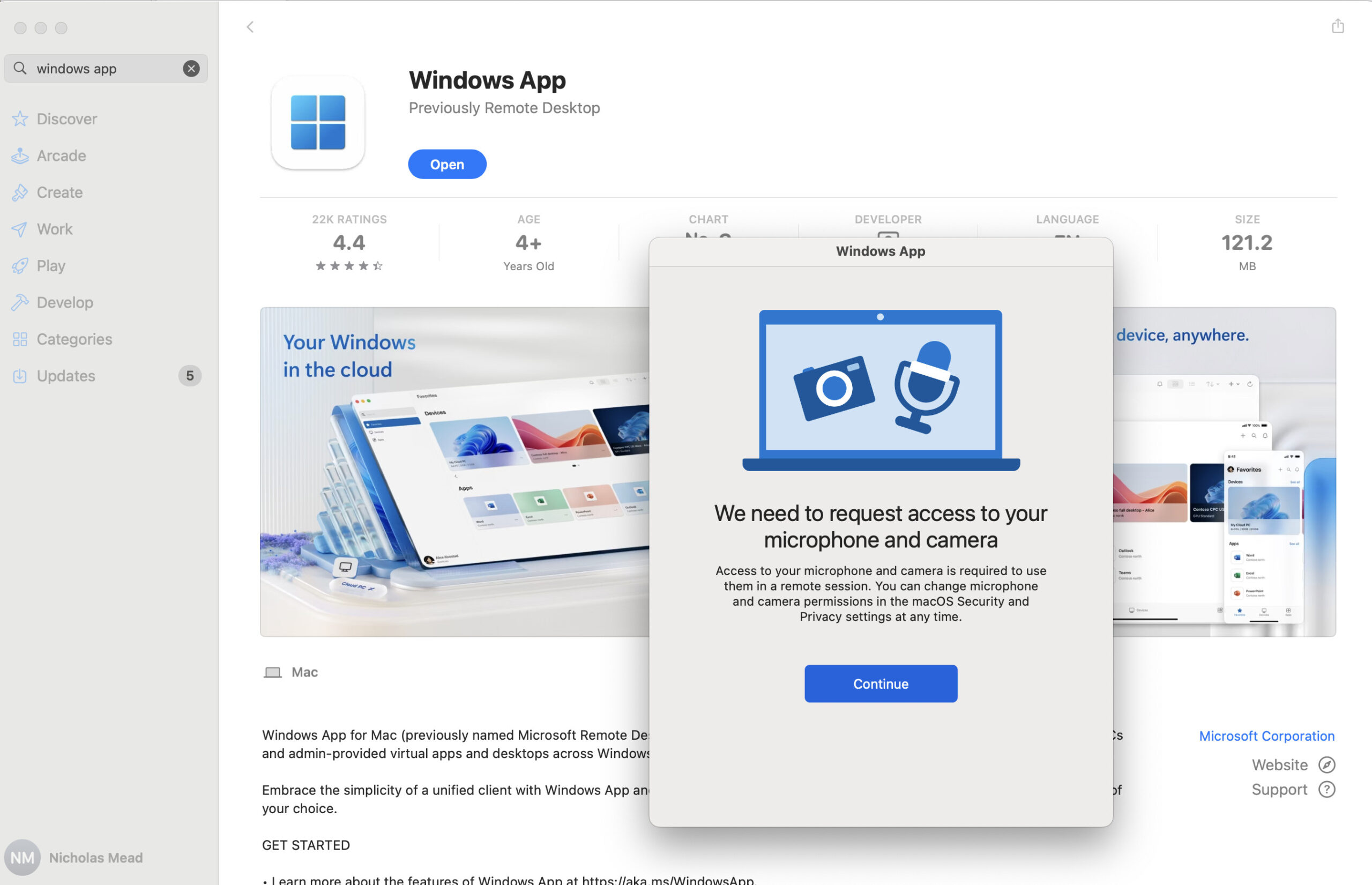
If you already have a Windows PC and just need occasional access to it from your Mac, remote desktop software can be a simple, cost-effective solution – especially for business use.
Instead of running Windows natively or virtually on your Mac, remote desktop apps allow you to connect to a PC remotely and control it as if you were sitting in front of it.
This is particularly handy for Apple Silicon Macs since it allows them to access the standard version of Windows since they can only run Windows ARM using virtual machines.
They allow you to open and edit files, transfer documents, and even print remotely.
While remote desktop apps can be very handy, they don’t offer the speed or responsiveness of local virtualization tools like Parallels or VMware Fusion.
We’ve looked in detail at the best remote desktop software for Macs but some suggestions include:
- Windows App – Microsoft’s official tool, now rebranded and optimized for M-series Macs
- Chrome Remote Desktop – Light and simple free remote desktop software for Macs
- RemotePC and ZohoAssist – Good for commercial and cross-platform remote access
✔️ Pros
- No need to install Windows on your Mac
- Access real Windows apps from anywhere
- Great for business, IT support, and document access
- Allows Apple Silicon Macs to access any version of Windows
- File transfers, remote printing, and remote DirectX 12 app support
❌ Cons
- Laggy performance, especially with slow internet
- Not suitable for gaming or heavy 3D graphics
- Some apps require subscriptions for full features
- Requires access to an existing Windows PC
FAQ
Can I run Windows on an Apple Silicon Mac?
Yes, you can run Windows on Apple Silicon Macs with the M1-M5 chips using virtualization tools like Parallels Desktop, VMware Fusion, CrossOver, and UTM.
However, note that Apple Silicon Macs can only run Windows ARM using virtual machines and Boot Camp is not available for them.
Why Do Apple Silicon Macs Only Run Windows ARM?
It’s essential to understand that if you’re using an Apple Silicon Mac (M1-M5 or newer), these Macs do not run the standard x86 version of Windows used on most PCs.
Instead, Apple Silicon Macs run Windows on ARM.
Windows ARM is a version of Windows designed specifically for ARM-based processors like Apple’s M-series chips. While it looks and behaves just like regular Windows 11, there are some important compatibility differences.
Most modern Windows applications work on Windows ARM thanks to Microsoft’s built-in x86 and x64 emulation. This means popular software such as Microsoft Office, many productivity tools, and a large number of games will run without issue.
However, some software still doesn’t work properly on Windows ARM, including:
- Older Windows programs that rely on legacy drivers
- Games with kernel-level anti-cheat systems (such as some competitive online titles)
- Certain hardware drivers and low-level utilities
- Some professional software that hasn’t been updated for ARM compatibility
This is why performance and compatibility can vary depending on how you run Windows on a Mac.
- Virtual machines (like Parallels Desktop or VMware Fusion) run Windows ARM directly on Apple Silicon
- Compatibility layers (like CrossOver, Wine and Pixel Port) bypass Windows entirely and translate Windows apps into macOS instructions
- Remote desktop tools give you access to a full x86 version of Windows running on another PC
Understanding this distinction helps explain why some Windows apps and games work perfectly on a Mac, while others don’t – even when using the latest hardware.
Which method is best for running Windows on a Mac?
The best method depends on your needs:
- Virtual Machines: Either Parallels Desktop (best for seamless switching between macOS and Windows) or VMware Fusion (similar to Parallels with slower performance but free).
- Boot Camp: Best for native performance but only available for Intel Macs.
- CrossOver: Best for running specific Windows applications without installing Windows.
- Wine: Best if you’re comfortable configuring and setting-up open source software.
- Remote Desktop: Best if you have access to a Windows PC remotely.
Do I need a Windows license to run Windows in macOS?
Yes, you need a valid Windows license to install and run Windows on your Mac using Boot Camp, Parallels Desktop, VMware Fusion, or UTM.
Will running Windows on my Mac affect performance?
Running Windows on your Mac using virtualization tools can slightly impact performance compared to running it natively on a Windows PC.
However, Apple Silicon Macs are more powerful than the previous generation of Intel Macs and performance issues are much less of an issue than they were.
Boot Camp offers the best performance since it runs Windows natively.
Can I run Windows games on a Mac?
Yes, you can run Windows games on a Mac using any of these methods although we wouldn’t recommend remote desktop software (too much lag) or the UTM virtual machine (no 3D graphics acceleration) for this.
For more on this, check out our guide on the best ways to run Windows games on a Mac.
Are there any free methods to run Windows on Macs?
Yes, the following methods are completely free to use:
- VMware Fusion Pro is now free to use for personal, educational and commercial usage.
- UTM is a free virtualization tool for Apple Silicon Macs. Boot Camp is also free, but it requires a valid Windows license.
- Wine is free if you can set it up properly. If you can’t, Sikarugir (formerly Kegworks) is an adaption of Wine that makes things a bit easier.
- Whisky is another popular free tool to play Windows only games on a Mac and is based on Crossover but is no longer being developed so we don’t recommend it anymore.
- There are also free Remote Desktop apps if you already have access to a Windows PC.
How can I transfer files between macOS and Windows?
Most of the methods we have covered allow you to exchange files and folders but we found that Parallels Desktop and VMware Fusion are the only ones that make it easy to share folders, allowing you to easily transfer files between macOS and Windows.
Are there any risks installing Windows on my Mac?
There are absolutely no risks running or accessing Windows on your Mac. All of the methods we have covered effectively isolate the rest of your Mac from any potential problems with viruses, malware or adware.
If a Windows installation on a virtual machine or Boot Camp were to get a virus or corrupted in some way, it wouldn’t damage macOS. You can simply delete the Windows installation and reinstall it.
If you choose to access Windows remotely with remote desktop software then there’s even less risk as Windows isn’t even hosted on your Mac.
However, we always recommend backing-up your Mac with Time Machine before trying any of these methods to be on the safe side.
Is installing Windows on a Mac legal?
Installing Windows on any Mac (or any other computer) is perfectly legal.
In fact, Apple actively encourages it by providing Boot Camp in Intel Macs and there’s no issues with the Windows EULA installing it on Macs using any of these methods.
You can also use both Windows 10 and Windows 11 for free perfectly legally. Microsoft only requires you to purchase a product key for Windows if you want to personalize things like the desktop wallpaper, theme and other minor tweaks.
Future Outlook: Running Windows on Macs in 2026 and Beyond
The landscape of running Windows on Macs continues to evolve, especially with Apple Silicon shaping what’s possible:
- Apple Silicon gaming is improving via Metal – Virtualization tools like Parallels are now translating DirectX 12 commands through Metal, allowing more Windows games to run smoothly on M-series Macs. Performance is still not native, but the gap is narrowing.
- CrossOver remains the primary go-to for Windows apps and gaming – Actively maintained and updated for Apple Silicon, CrossOver offers a stable, user-friendly way to run Windows applications without installing a full Windows OS.
- Whisky is discontinued – While it was once popular for gaming, Whisky is no longer supported. Existing installs may work for older titles, but CrossOver is now the recommended solution for both apps and games. Pixel Port is another innovative free solution which we’d currently recommend over Whisky.
- Virtualization tools unlikely to fully support anti-cheat systems – For competitive gaming, native Windows installations (via Boot Camp on Intel Macs) still offer the best performance. On Apple Silicon, anti-cheat remains a major limitation.
- Boot Camp is effectively legacy – Only Intel Macs can use it, and Apple Silicon Macs have no native dual-boot option. Moving forward, virtualization and compatibility layers will dominate Windows-on-Mac solutions.