

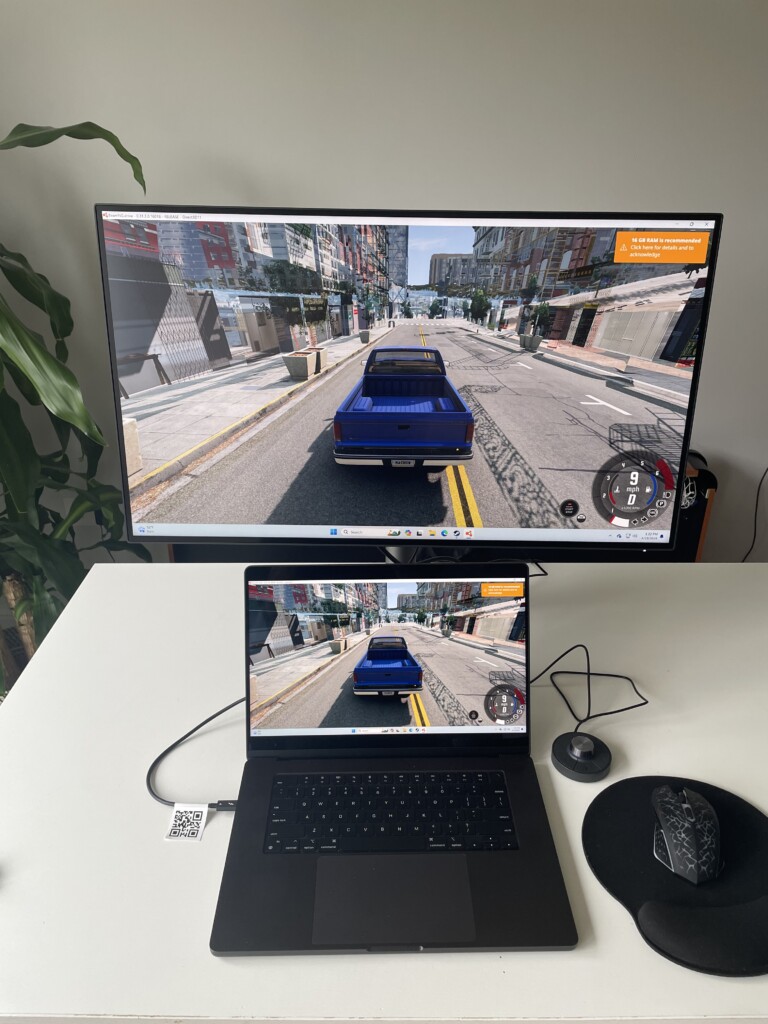
If you want the best Mac for gaming in 2026, our top choice is the 16-inch MacBook Pro with the M5 Pro chip. It offers the best balance of graphics performance, active cooling, a superb 120Hz display and portability.
If you do not need a laptop, however, the new Mac mini with M5 Pro is much better value. It gives you a powerful 16-core GPU, 24GB of unified memory and active cooling for considerably less than a comparable MacBook Pro, although you must supply the monitor, keyboard and mouse.
Mac gaming has improved dramatically. Native Apple Silicon versions of games such as Cyberpunk 2077: Ultimate Edition, Assassin’s Creed Shadows, Baldur’s Gate 3, Resident Evil 4 and Death Stranding Director’s Cut show what modern Macs can do.
There are also increasingly effective ways to play Windows games on a Mac, including CrossOver, Pixel Port, GeForce Now and Xbox Cloud Gaming.
However, there is still an important caveat: if gaming is the main reason you are buying a computer and you want the widest possible choice of AAA and competitive multiplayer games, a Windows gaming PC or console is still a better purchase. Even the most powerful Mac cannot run a game that is incompatible with macOS or blocked by anti-cheat software.
Update: 25 August 2026: Apple has announced new M6 and M5 Pro Mac mini models and M5 Max and M5 Ultra Mac Studio models. They are available to pre-order now and will be released on 22 September 2026. Because they are not yet available for independent testing, our recommendations for these new desktops are based on their confirmed specifications and Apple’s published performance figures. We will update this guide again once they have been tested.
You may also find our guide on how to optimize a Mac for gaming useful after choosing one.
Quick Recommendations
- Best overall Mac for gaming: 16-inch MacBook Pro with M5 Pro
- Best-value desktop Mac for gaming: Mac mini with M5 Pro
- Best budget Mac for gaming: Mac mini with M6
- Most powerful Mac for gaming: Mac Studio with M5 Max
- Best smaller gaming MacBook: 14-inch MacBook Pro with M5
- Best for casual and cloud gaming: MacBook Air with M5
Best Gaming Macs Compared
| Mac | Starting specification | Display | Best for | Main drawback | Current US starting price* |
|---|---|---|---|---|---|
| 16-inch MacBook Pro M5 Pro | 18-core CPU, 20-core GPU, 24GB memory, 1TB SSD | 16.2-inch XDR, 120Hz | Best overall | Expensive | $2,999 |
| Mac mini M5 Pro | 15-core CPU, 16-core GPU, 24GB memory, 512GB SSD | External display required | Best desktop value | No monitor or accessories | $1,699 |
| Mac mini M6 | 12-core CPU, 12-core GPU, 16GB memory, 256GB SSD | External display required | Budget gaming | Base SSD is too small | $899 |
| Mac Studio M5 Max | 18-core CPU, 32-core GPU, 36GB memory, 512GB SSD | External display required | Maximum local performance | Overkill for cloud gaming | $2,499 |
| 14-inch MacBook Pro M5 | 10-core CPU, 10-core GPU, 16GB memory, 1TB SSD | 14.2-inch XDR, 120Hz | Portable gaming | Far slower GPU than M5 Pro | $1,999 |
| MacBook Air M5 | 10-core CPU, 8-core GPU, 16GB memory, 512GB SSD | 13.6-inch, 60Hz | Casual and cloud gaming | Fanless design | $1,299 |
*Apple’s starting prices at the time of writing. Prices vary by country and may change. The new Mac mini and Mac Studio models are available from 22 September 2026.
Which Mac Gaming Setup Do You Need?
Before spending more on a Pro, Max or Ultra chip, decide how you intend to play. The right Mac for native gaming is not necessarily the right one for cloud gaming.
Native Mac Games
Native Apple Silicon games provide the best experience because they are designed for the Mac’s ARM architecture and Metal graphics system. This is where a faster GPU, active cooling and additional unified memory make the biggest difference.
For demanding native games, we recommend an M5 Pro, M5 Max or newer equivalent chip with at least 24GB of unified memory. A base M5 or M6 chip can still run many games, but you will usually need to reduce the resolution, graphics quality or ray-tracing settings.
Windows Games Using CrossOver or Pixel Port
Compatibility layers translate Windows graphics instructions so that games can run in macOS without installing Windows. They also benefit from a stronger GPU, but performance is only half the issue: every game has to be compatible with the translation layer.
In our testing, CrossOver is the best overall way to run Windows games locally on a Mac. Pixel Port is easier and free during its beta phase, but it supports fewer games and is still prone to bugs.
No amount of extra memory or GPU power will make an incompatible or anti-cheat-protected game work.
Cloud Gaming
If you mainly use GeForce Now or Xbox Cloud Gaming, the game runs on a remote server rather than your Mac.
In that case, a MacBook Air or base Mac mini is powerful enough. Your internet connection, network latency and the service’s streaming quality matter far more than whether your Mac has a Pro or Max chip.
The new Mac mini is particularly well suited to cloud gaming because it includes 2.5Gb Ethernet, Wi-Fi 7 and Bluetooth 6, although your router and internet connection must also support the relevant speeds.
1. 16-inch MacBook Pro With M5 Pro (Best Overall)

The 16-inch MacBook Pro with M5 Pro is the best all-round gaming Mac in 2026.
The starting M5 Pro configuration has an 18-core CPU, 20-core GPU, 24GB of unified memory and 1TB SSD. It also has hardware-accelerated ray tracing and substantially more graphics power and memory bandwidth than the standard M5 chip.
Its biggest advantage over the desktop Macs is the built-in 16.2-inch Liquid Retina XDR display. It supports ProMotion adaptive refresh rates up to 120Hz, HDR and a 3456 x 2234 resolution, making it far better for gaming than the 60Hz displays fitted to the MacBook Air and iMac.
The MacBook Pro also has internal fans. This allows it to maintain performance during long gaming sessions more effectively than the fanless MacBook Air, which may reduce performance as it gets warmer.
The M5 Max version is faster and can be configured with up to a 40-core GPU. However, we would only pay for M5 Max if you also need it for demanding video editing, 3D work, AI or other professional software. The M5 Pro is the better balance for gaming because macOS compatibility, rather than raw GPU performance, is often the limiting factor.
For the best performance, play while connected to power. Gaming will reduce the MacBook Pro’s battery life considerably compared with Apple’s general video-playback figures.
Pros
- Excellent M5 Pro graphics performance
- 16.2-inch 120Hz Liquid Retina XDR display
- Active cooling for sustained gaming
- 24GB of unified memory and 1TB storage as standard
- Portable and requires no separate display or keyboard
- HDMI and Thunderbolt 5 for high-refresh external monitors
Cons
- Very expensive compared with the Mac mini
- Large and relatively heavy
- M5 Max upgrades offer poor value if gaming is your only demanding task
- Still cannot run every Windows game
2. Mac mini With M5 Pro (Best Value)
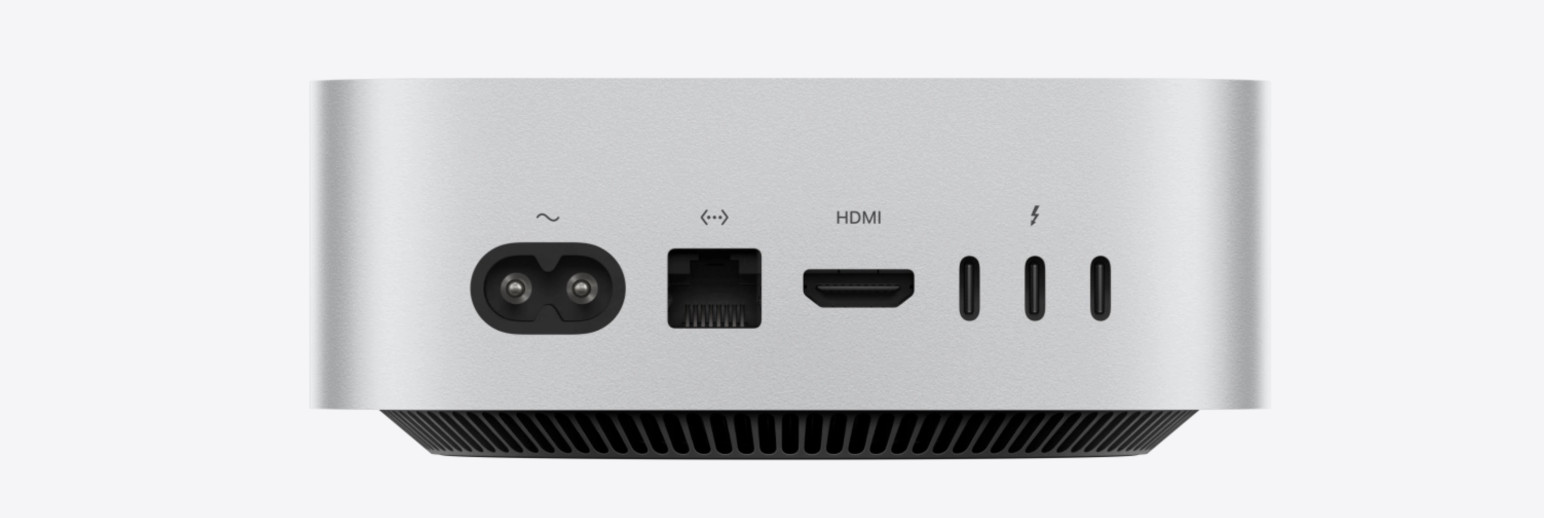
The new Mac mini with M5 Pro is our top desktop recommendation and arguably the most sensible gaming Mac for anyone who already owns a good monitor.
The base model includes a 15-core CPU, 16-core GPU, 24GB of unified memory and 512GB SSD. It can be upgraded to an 18-core CPU and 20-core GPU, putting its graphics specification close to the M5 Pro MacBook Pro while costing considerably less.
Apple says the M5 Pro Mac mini delivers up to 1.5 times the ray-traced gaming performance of the M4 Pro model in Cyberpunk 2077. We have not yet been able to verify that figure because the new model does not ship until 22 September 2026, but the confirmed GPU and memory-bandwidth improvements make it a strong choice for native Mac games and compatible Windows titles.
The mini also has an active cooling system, so it is better suited to sustained local gaming than the MacBook Air. Its HDMI port and Thunderbolt 5 connections support high-refresh external displays, including 4K at up to 240Hz in supported configurations.
The main extra cost is the rest of the setup. You must add a monitor, keyboard, mouse or controller and speakers or headphones. Even after doing so, it can still be better value than a 16-inch MacBook Pro, especially if you already own some of these.
If you want a desktop Mac mainly for gaming and everyday work, we would choose the M5 Pro Mac mini before the Mac Studio.
Pros
- Best balance of price and local gaming performance
- Up to a 20-core GPU with hardware ray tracing
- 24GB of unified memory as standard
- Active cooling
- HDMI, Thunderbolt 5, 2.5Gb Ethernet and Wi-Fi 7
- Compact and quiet
Cons
- Not available until 22 September 2026
- Requires a monitor, keyboard and mouse
- Base 512GB SSD may fill quickly
- More expensive than previous Mac mini generations
3. Mac mini With M6 (Best Budget)
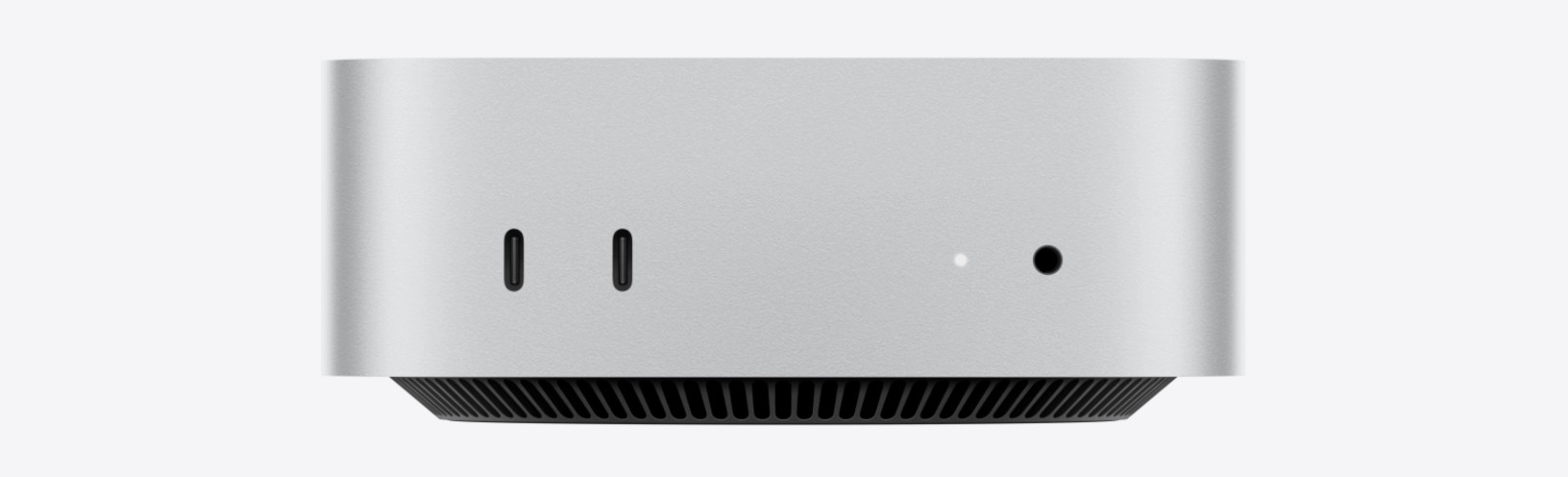
The M6 Mac mini is the cheapest current Mac we recommend for a mixture of native, compatibility-layer and cloud gaming.
Its new M6 chip has a 12-core CPU and 12-core GPU with hardware-accelerated ray tracing. Apple claims up to twice the ray-traced gaming performance of the M4 Mac mini in Cyberpunk 2077, although this is another manufacturer figure that needs independent verification once the computer ships.
For less demanding native games, Apple Arcade, emulation and cloud gaming, the base M6 should be more than sufficient. It also supports up to three external displays and can drive one 4K display at up to 240Hz.
The main problem is storage. The cheapest model has only a 256GB SSD, which is not enough for a useful collection of modern games after allowing space for macOS, applications, updates and temporary files.
We recommend at least 512GB, and preferably 1TB, for local gaming. An external SSD is a cheaper way to expand storage, although not every Mac game or launcher handles external libraries in the same way.
If upgrading the M6 model to more memory and storage brings it close to the price of the M5 Pro Mac mini, buy the M5 Pro instead. Its additional GPU cores and much higher memory bandwidth will be more valuable for demanding local games.
Pros
- Cheapest current desktop Mac
- Faster 12-core GPU with ray tracing
- 16GB of unified memory as standard
- Active cooling
- Supports high-refresh external monitors
- Excellent for cloud gaming
Cons
- Not available until 22 September 2026
- 256GB base SSD is too small for local gaming
- Considerably less powerful than M5 Pro
- Monitor and accessories are not included
4. Mac Studio With M5 Max (Most Powerful)
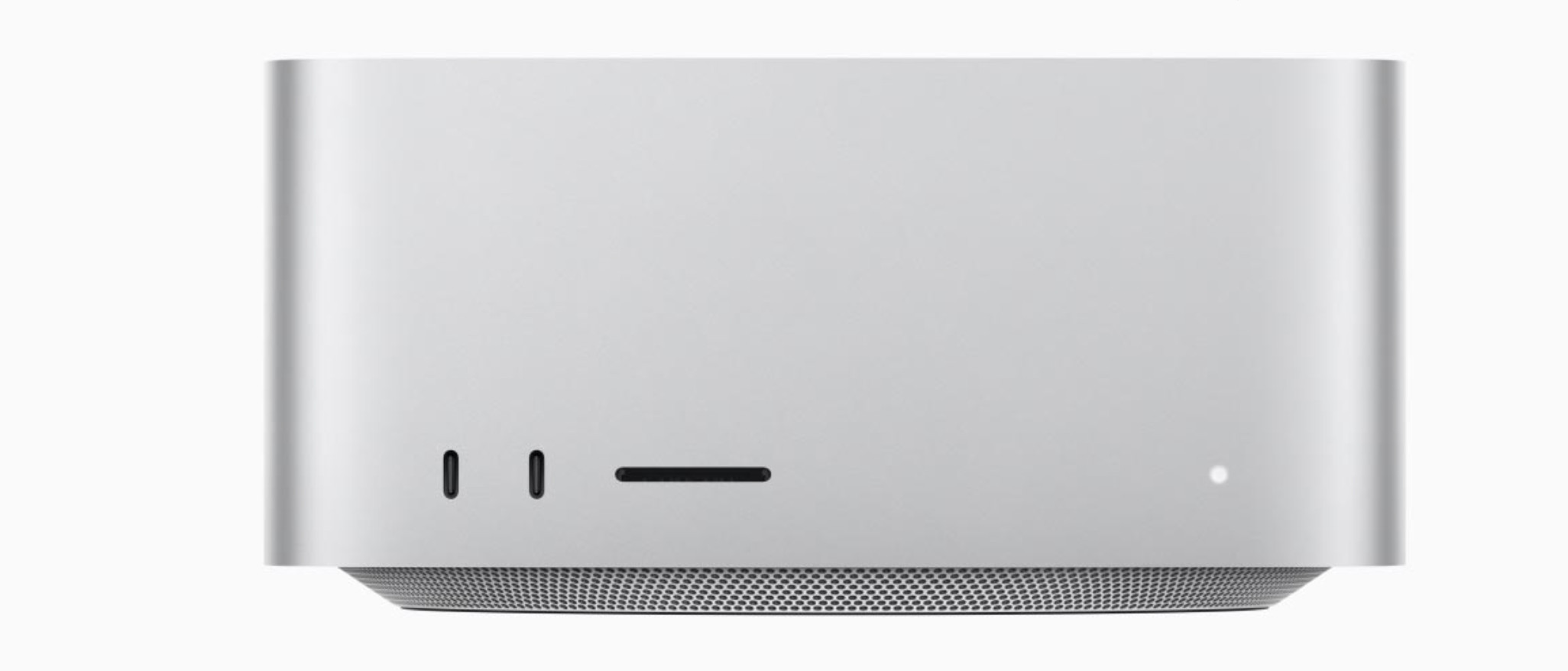
The Mac Studio with M5 Max is the best choice if you want maximum sustained local gaming performance and also need a powerful Mac for professional work.
The entry model has an 18-core CPU, 32-core GPU, 36GB of unified memory and 512GB SSD. It can be configured with a 40-core GPU and up to 128GB of memory. Its larger cooling system also allows the chip to sustain high performance while remaining relatively quiet.
It supports up to five external displays, including 4K displays at up to 240Hz in supported arrangements. Connectivity includes Thunderbolt 5, HDMI, USB-A, USB-C, 10Gb Ethernet and an SD card slot.
Apple also offers an M5 Ultra version with up to an 80-core GPU and 512GB of unified memory. That is technically the most powerful Mac available, but we do not recommend the M5 Ultra purely for gaming.
It starts at $5,499, and many games will not make effective use of all that hardware. The extra money is better spent on a gaming monitor, storage or even a separate Windows PC unless you also need the Ultra for AI models, 3D rendering, video production or another specialist workload.
Even the M5 Max Studio is difficult to justify for cloud gaming or lighter native games. Its value lies in combining high-end gaming with demanding professional use in one compact desktop.
Pros
- Fastest sensible Mac configuration for gaming
- 32-core GPU and 36GB of memory as standard
- Excellent sustained performance and cooling
- Extensive ports and high-refresh display support
- Compact and quiet for its performance
Cons
- Expensive
- Not available until 22 September 2026
- 512GB starting storage is disappointing at this price
- Requires a separate display and accessories
- M5 Ultra is unnecessary for gaming alone
5. 14-inch MacBook Pro With M5 (Best Smaller MacBook)

The 14-inch MacBook Pro with M5 is a good choice if you want a smaller gaming laptop and cannot justify the price of an M5 Pro configuration.
It has a 10-core CPU, 10-core GPU, 16GB of unified memory and 1TB SSD. The GPU is significantly less powerful than the M5 Pro, but it still supports hardware-accelerated ray tracing and can handle many native games at sensible settings.
More importantly, it retains the MacBook Pro’s active cooling and excellent 14.2-inch Liquid Retina XDR display with a refresh rate of up to 120Hz. This makes it a much better sustained gaming machine than the similarly powered MacBook Air.
The 1TB starting SSD is also far more practical for games than the 256GB or 512GB storage included with some cheaper Macs.
If you regularly play demanding native AAA games, upgrading the 14-inch model to M5 Pro is worthwhile. If you mostly use GeForce Now, Xbox Cloud Gaming, Apple Arcade or less demanding games, the standard M5 model is enough.
Pros
- Compact and portable
- Excellent 120Hz XDR display
- Active cooling
- 1TB SSD as standard
- Good for a mixture of work and casual-to-moderate gaming
Cons
- Only a 10-core GPU
- Expensive for its graphics performance
- Smaller display is less immersive than the 16-inch model
- M5 Pro is much better for demanding local games
6. MacBook Air With M5 (Best for Casual and Cloud Gaming)
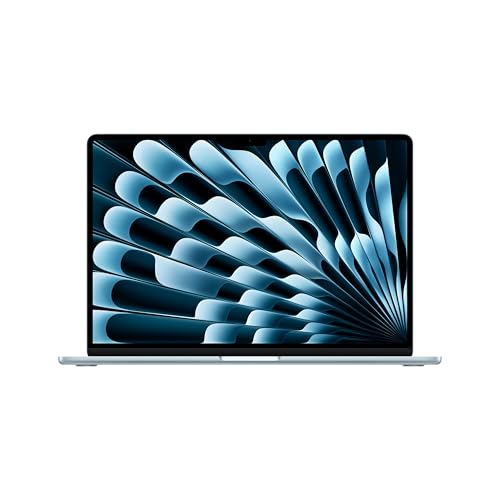
The M5 MacBook Air is not a dedicated gaming laptop, but it is perfectly suitable for casual games, Apple Arcade, emulation and cloud gaming.
The base model includes a 10-core CPU, 8-core GPU, 16GB of unified memory and 512GB SSD. A 10-core GPU option is also available. It supports hardware ray tracing and can run a growing number of native Mac games, especially with the resolution and detail settings reduced.
The limitation is its fanless design. The Air is silent, but during long and demanding gaming sessions it may reduce performance to control temperature. This is normal thermal management rather than dangerous overheating, but it means the MacBook Pro will usually provide more consistent frame rates.
Its display is also limited to 60Hz. You can connect an external high-refresh monitor, but if you intend to do this regularly, the Mac mini offers better value.
For GeForce Now or Xbox Cloud Gaming, these limitations matter much less because the Mac is only decoding the video stream. In that situation, the Air is an excellent lightweight option and there is little reason to buy an M5 Pro or M5 Max just for gaming.
Pros
- Lightweight and silent
- Excellent for cloud gaming
- Handles casual and less demanding native games
- 16GB of memory and 512GB SSD as standard
- Available in 13-inch and 15-inch sizes
Cons
- No fan for sustained high performance
- 60Hz display
- Much weaker GPU than M5 Pro
- Not the best choice for regular local AAA gaming
Macs We Would Not Buy Specifically for Gaming
MacBook Neo
The A18 Pro MacBook Neo is designed as an affordable everyday laptop. It can handle casual App Store titles and cloud gaming, but its graphics performance, 60Hz display and more limited port selection make it a poor choice for demanding local games.
24-inch iMac
The M4 iMac can run many games, but its 10-core GPU and 60Hz 4.5K display are not especially gaming-focused. A Mac mini and a high-refresh gaming monitor give you more flexibility and generally better value.
Intel Macs
An Intel Mac can still use Boot Camp to run the full x86 version of Windows, which gives it access to games that will not run on Apple Silicon. However, we would not buy an Intel Mac for gaming in 2026. Apple has now moved completely to Apple Silicon, newer macOS releases are ending Intel support and even the best Intel Mac GPUs are ageing.
Mac Studio With M5 Ultra
This is the most powerful Mac on paper, but it is built for specialist professional workloads rather than gaming value. The M5 Max Studio is already more than enough for almost any Mac-compatible game.
Are Macs Good for Gaming in 2026?
Macs are now far better gaming computers than they were a few years ago, but they are still not direct replacements for Windows gaming PCs.
The hardware is no longer the main weakness. Current Apple Silicon chips have fast integrated GPUs, high-bandwidth unified memory and hardware-accelerated ray tracing. Apple has also improved macOS gaming with Game Mode, the Apple Games app, Game Overlay, Metal 4, MetalFX upscaling and frame interpolation.
Apple’s Game Porting Toolkit 4 also makes it easier for developers to evaluate and port Windows games to Apple platforms.
The remaining problem is the library. Many major games are still released only for Windows, while kernel-level anti-cheat systems used by some competitive multiplayer titles will not run through CrossOver, Pixel Port or a Windows virtual machine.
For this reason, the overall Mac gaming experience depends on the games you want to play:
- Native Mac games offer the best performance and reliability.
- CrossOver is the best local solution for many Windows games.
- Pixel Port is an easier free option but is still experimental.
- GeForce Now and Xbox Cloud Gaming are the most reliable choices for supported Windows-only and anti-cheat games.
- Parallels and VMware Fusion are better for Windows applications than modern gaming.
- Boot Camp works only on older Intel Macs.
Check the requirements and compatibility of your favourite games before buying a Mac specifically to play them.
How Much Unified Memory Do You Need for Mac Gaming?
For gaming in 2026, we recommend:
- 16GB: Enough for casual games, cloud gaming and many native titles.
- 24GB: The best target for demanding native games and compatibility layers.
- 32GB to 36GB: Useful for high-end gaming combined with demanding professional work.
- 64GB or more: Unnecessary for gaming alone.
Unified memory is shared by the CPU and GPU, but adding more does not automatically increase frame rates. Once a game has enough memory, the GPU, cooling and game optimization matter more.
Because memory cannot be upgraded after purchase, 24GB is the safest choice if you expect to keep the Mac for several years and play demanding games locally.
How Much Storage Do You Need?
We recommend a minimum of 512GB, but 1TB is preferable for a gaming Mac.
Modern games can require well over 100GB each, and you also need free space for macOS, applications, updates, shaders and temporary installation files. This is why we do not recommend the 256GB M6 Mac mini configuration for local gaming.
Apple’s internal storage upgrades are expensive. A fast Thunderbolt external drive or USB4 SSD can provide much cheaper additional capacity, particularly for Steam libraries and games that explicitly support external installation.
Choosing a Gaming Monitor for a Mac
For gaming, refresh rate, response time, HDR performance and variable refresh rate support are generally more important than Retina pixel density.
Look for a display with:
- At least a 120Hz refresh rate
- Variable refresh rate support
- Low input lag and fast response time
- HDMI 2.1, DisplayPort over USB-C or Thunderbolt
- 1440p or 4K resolution, depending on the Mac and games
The standard Apple Studio Display is excellent for sharp text and creative work, but its 60Hz refresh rate makes it a poor-value gaming monitor.
The Studio Display XDR supports 120Hz and Adaptive Sync, but it is extremely expensive. A dedicated gaming display such as the 240Hz 4K BenQ MOBIUZ EX271UZ we tested with a Mac is a more gaming-focused alternative. You can also see our roundup of the best 4K monitors for Mac for more options.
Connecting a Controller to a Mac
macOS supports many Xbox, PlayStation and other Bluetooth controllers. In most cases, put the controller into pairing mode and connect it in System Settings > Bluetooth.
Controller support can still vary by game and by the compatibility or cloud service you are using. See our guide to connecting an Xbox or PlayStation controller to a Mac for full instructions.
Which Mac Is Best for Gaming?
For most people who want a laptop, the 16-inch MacBook Pro with M5 Pro is the best Mac for gaming in 2026. It combines strong graphics performance with active cooling and one of the best displays available on any laptop.
For a desktop setup, the Mac mini with M5 Pro is our recommendation. It is considerably cheaper than the MacBook Pro and Mac Studio while still providing enough power for demanding native games and many Windows games running through CrossOver or Pixel Port.
Choose the M6 Mac mini if you are on a tighter budget, the M5 Max Mac Studio only if you also have demanding professional workloads, and the M5 MacBook Air if most of your gaming will be casual or streamed from the cloud.
Above all, check whether the games you want are available natively, work through a compatibility layer or are offered by a cloud gaming service. On a Mac, software compatibility matters just as much as the chip inside it.
Mac Gaming FAQ
What is the best MacBook for gaming?
The 16-inch MacBook Pro with M5 Pro is the best MacBook for gaming. It has a powerful 20-core GPU, active cooling and a 16.2-inch Liquid Retina XDR display with a refresh rate of up to 120Hz. The M5 Max is faster but much more expensive.
Is the MacBook Air good for gaming?
The M5 MacBook Air is good for Apple Arcade, casual native games, emulation and cloud gaming. It can run some demanding games at reduced settings, but its fanless design and 60Hz display make it less suitable than the MacBook Pro for long local gaming sessions.
Is the Mac mini good for gaming?
Yes. The M5 Pro Mac mini is one of the best-value gaming Macs, while the M6 model is a good budget option. Both have active cooling and support high-refresh external displays. Remember to budget for a monitor, keyboard, mouse and sufficient storage.
Can a Mac run Steam games?
Yes. Steam has a native Mac app, but only games marked as compatible with macOS will install directly. Many Windows-only Steam games can also run using CrossOver or Pixel Port, while supported titles can be streamed through GeForce Now.
Can Apple Silicon Macs use Boot Camp?
No. Boot Camp works only on Intel Macs. Apple Silicon Macs can run Windows 11 ARM in virtual machines, but this is not the best solution for demanding games or titles that use anti-cheat software.
Do Apple Silicon Macs support eGPUs?
No. Apple Silicon Macs do not support external GPUs. Choose the GPU configuration you need when buying the Mac because it cannot be upgraded later.
Is a Mac or PC better for gaming?
A Windows PC is still better if gaming is your main priority because it supports more games, graphics cards, upgrades, VR headsets and anti-cheat systems. A Mac makes more sense if you prefer macOS for work or everyday use and want gaming as an additional capability.